Barcelona's Strong Start in La Liga: A 2–0 Victory Over Athletic Club
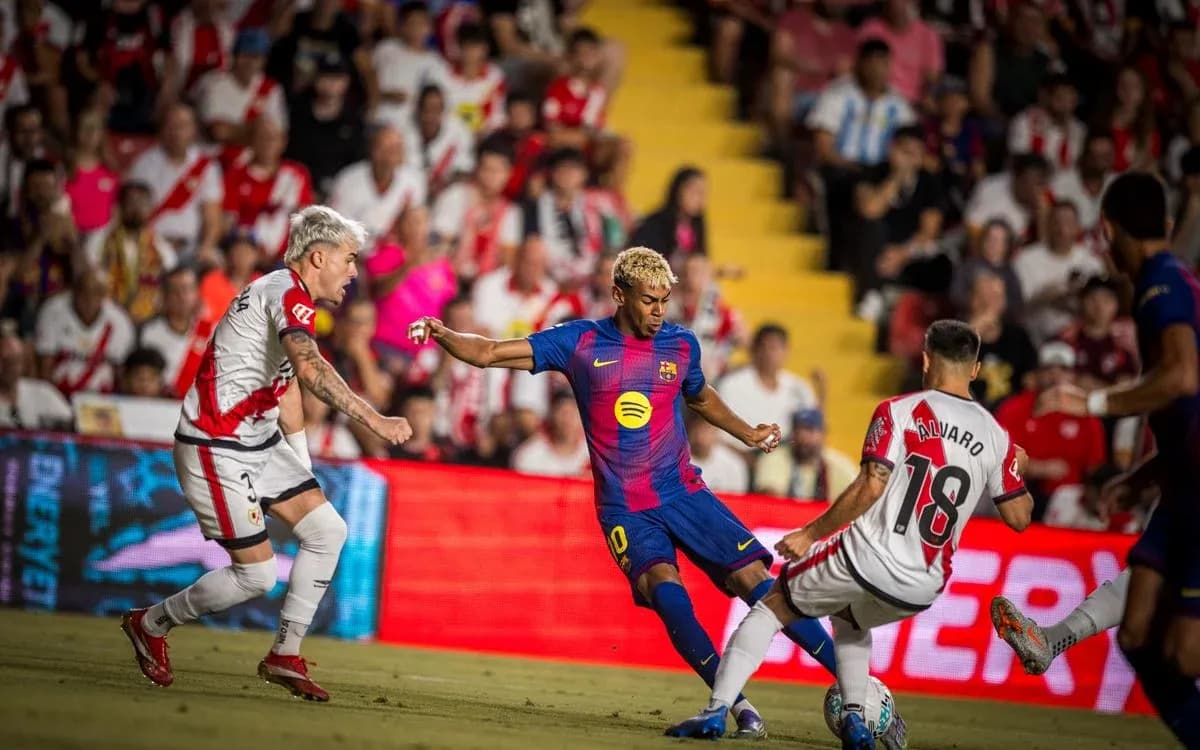
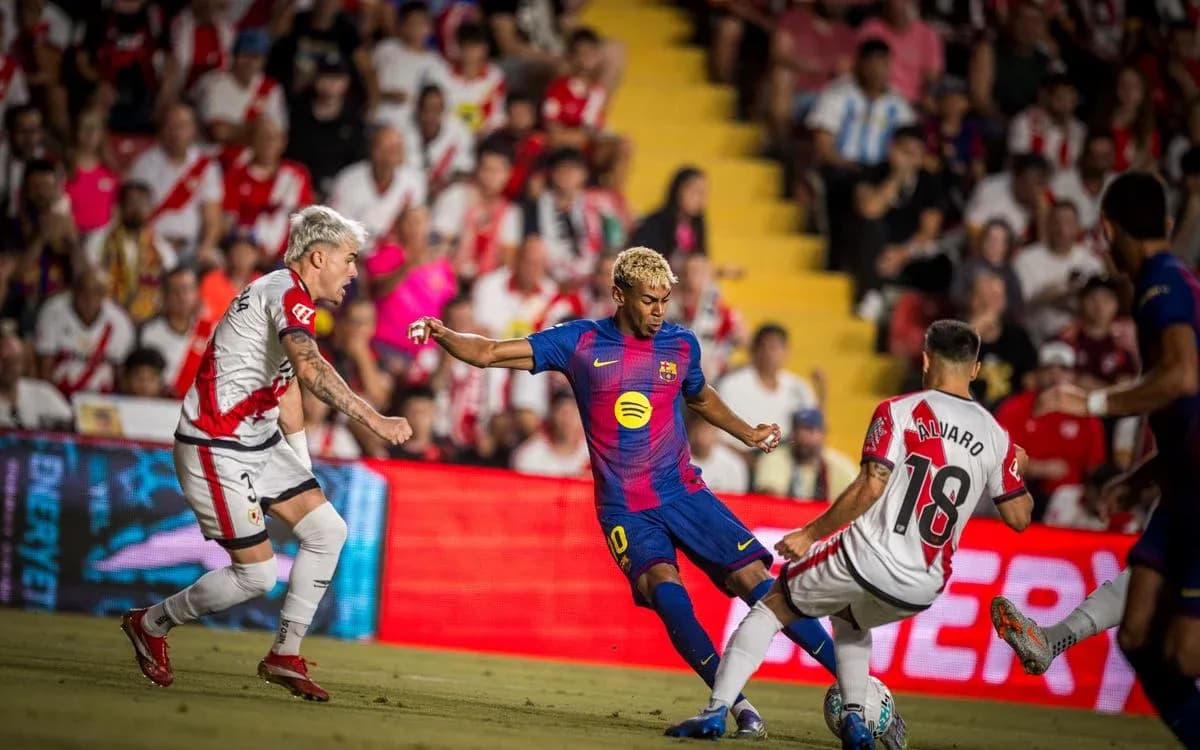
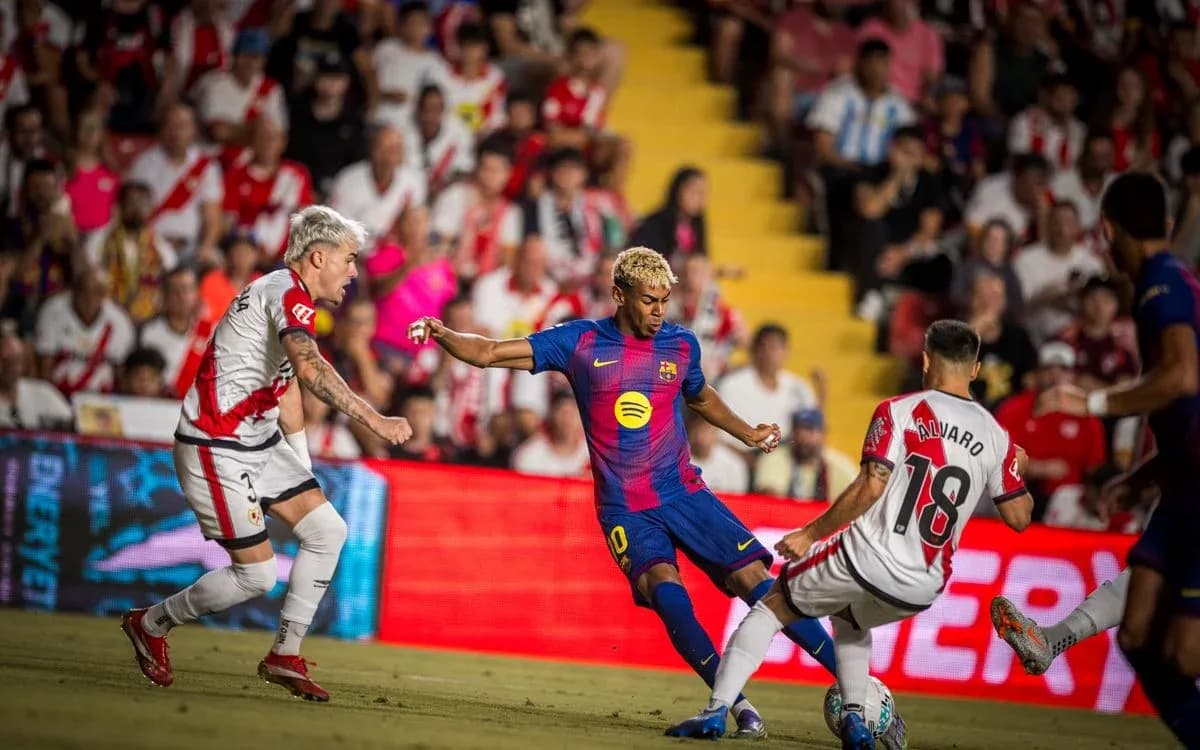
Under the Camp Nou lights, this felt less like an opening skirmish of a long La Liga campaign and more like a statement of intent. Barcelona’s 2–0 win over Athletic Club in Regular Season - 1 was the logical extension of everything the numbers had been whispering heading into the game: one side accelerating into a new era with clarity, the other still searching for its structure and edge.
I. The Big Picture – Two Trajectories, One Scoreline
Barcelona arrived as a team already humming. Overall this campaign they have taken 6 points from 2 matches, scoring 7 and conceding 0; the goal difference of 7 underlines a dominance that is both attacking and defensive. At home, they have now played 1 league match, won it, scored 2 and conceded none – a clean, controlled start in front of their own crowd.
Athletic Club, by contrast, came into Camp Nou carrying the weight of an early relegation-zone tag. Overall this season they have lost both of their first 2 league games, scoring just 1 and conceding 5 for a goal difference of -4. Away, they had already fallen 2–0 once; this defeat simply deepened the pattern.
The formations told the story before a ball was kicked. Hansi Flick’s 4-3-3 for Barcelona is a declaration of front-foot football: J. Garcia in goal behind a back four of X. Espart, G. Martin, P. Cubarsi and E. Garcia, a midfield triangle of Pedri, M. Bernal and Fermín, and a fluid front three of A. Gordon, Raphinha and Lamine Yamal. Edin Terzic’s Athletic responded with a 4-2-3-1: U. Simon in goal, a line of H. Rincon, Y. Alvarez, A. Laporte and J. Louis-Jean, double pivot M. Jauregizar and P. Canales, with I. Williams, O. Sancet and N. Williams supporting lone striker G. Guruzeta.
II. Tactical Voids – Absences and Discipline
Barcelona’s squad list carried some heavy absences. Gavi and F. de Jong were both out with knee injuries, R. Bardghji also sidelined by a knee problem, while D. Livakovic was inactive and M. Casado and H. Fort were omitted by the coach. On paper, that’s a huge chunk of control and creativity missing from midfield zones. In practice, it forced Flick to lean even harder into Pedri’s orchestration and Fermín’s vertical energy, with M. Bernal tasked to knit the phases.
Athletic Club’s missing spine was just as telling. U. Egiluz (knee injury), A. Gorosabel (muscle injury), B. Prados Diaz (thigh injury), D. Vivian (hamstring injury) and N. Serrano (coach’s decision) stripped Terzic of depth in defence and midfield. The absence of Vivian and Gorosabel, in particular, left A. Laporte and Y. Alvarez as the central pillars with little experienced rotation behind them.
Disciplinary trends framed the risk. Overall this season Barcelona’s bookings have been minimal: just a single yellow card, arriving between minutes 16–30. No reds, no late-game accumulation. Athletic, however, have lived on the edge. Their yellow cards are spread evenly: 25.00% in each of the 16–30, 46–60, 61–75 and 76–90 minute windows. More ominously, they have already seen a red card in the 0–15 minute range, a sign of early-game over-aggression or poor emotional control. Against a side like Barcelona, that volatility is a tactical liability.
III. Key Matchups – Hunter vs Shield, Engine Room Battles
The clearest “Hunter vs Shield” duel was Barcelona’s attacking trident against an Athletic defence already creaking. Overall this campaign, Barcelona average 3.5 goals per match, with 2.0 at home and an explosive 5.0 on their travels. They had also converted 1 penalty from 1 overall, underlining clinical edge when chances are high value. Athletic, on the other hand, concede 2.5 goals per match overall, with 3.0 at home and 2.0 away.
Within that, individual threats sharpened the picture. Raphinha entered this fixture as one of La Liga’s most in-form attackers: 3 goals and 1 assist overall across 2 appearances, with an 8.9 rating and 5 shots, 4 on target. His ability to both finish and create (6 key passes overall) meant H. Rincon and Y. Alvarez could never simply show him one side and relax. On the opposite flank, A. Gordon had become an early creative hub, with 2 assists overall, 3 key passes and 91% passing accuracy. His tendency to drive at full-backs and then slip angled passes into the box made J. Louis-Jean’s evening a constant calculation between stepping out and holding the line.
In the “Engine Room” duel, Fermín was the fulcrum. Overall this campaign he has 3 goals from midfield in 2 appearances, with 5 shots all on target and a robust 8.15 rating. He is not just a late-arriving runner; his 76 completed passes and 18 duels overall, winning 10, make him the heartbeat of Flick’s press-and-play model. Up against him, M. Jauregizar and P. Canales were tasked with both screening the back four and sparking transitions. Yet Athletic’s overall attacking numbers – just 1 goal in 2 matches, with 0.5 goals per game and a complete failure to score away – suggested that even if they broke Barcelona’s first line, the end product was unlikely to match the home side’s ruthlessness.
Further ahead, G. Guruzeta embodied Athletic’s uneasy edge. He leads the league in cards from their squad, with 2 yellow cards overall in just 139 minutes. That physicality is an asset in duels – he has contested 19 overall, winning 8 – but against a technical back line like P. Cubarsi and E. Garcia, the line between useful disruption and dangerous free-kicks is thin.
IV. Statistical Prognosis – Control, Clean Sheets and the Narrative Ahead
Following this result, Barcelona’s defensive record remains immaculate: 0 goals conceded overall in 2 matches, 0.0 conceded at home and 0.0 on their travels. Two clean sheets overall, and not a single match where they have failed to score. The blend of a possession-heavy 4-3-3, a penalty record of 1 scored from 1 overall, and a form line of “WW” suggests a side whose underlying xG profile would be comfortably above their opponents in most fixtures, even if the raw xG values are not listed here.
Athletic Club’s trajectory is the mirror image. Overall they have yet to keep a clean sheet, have failed to score in 1 of their 2 matches, and their form line of “LL” is backed by structural issues: a defence conceding 5 overall, an attack producing just 1, and a disciplinary record that already includes a red card in the opening quarter-hour of a match. Their 4-2-3-1 has been consistent in shape – used in both league games – but not yet in outcome.
Tactically, this match underlined a simple truth. Barcelona’s collective and individual quality – from Raphinha’s dual role as scorer and creator, to Fermín’s surging midfield presence and A. Gordon’s wide playmaking – is being expressed inside a coherent, high-control structure. Athletic’s plan, by contrast, still feels reactive: reliant on the Williams brothers’ transitions and Guruzeta’s physical presence, but undermined by a back line that spends too much time under siege.
As the season stretches ahead, the numbers and the eye test converge on the same forecast. Barcelona look built to sustain a title challenge, their clean sheets and scoring averages hinting at strong underlying xG and defensive solidity. Athletic Club, rooted near the bottom with a negative goal difference and disciplinary red flags, face a different kind of campaign: one where tightening the back four and calming their early-game aggression may be as important as any tactical tweak higher up the pitch.