Benfica Dominates Aarhus in Tactical Display
Benfica’s 3–1 win over Aarhus at Estádio da Luz was a tactical demonstration of territorial dominance and structure. In a UEFA Europa League Play-offs tie, Marco Silva’s 4-1-3-2 controlled both space and tempo, pinning Jakob Poulsen’s 3-5-2 into a deep, reactive block. The 71% possession and 13 shots on goal to Aarhus’s single effort reflected not just technical superiority but a clear plan: overload the half-spaces, compress transitions, and force the Danish side to defend for long stretches with minimal counter-attacking release.
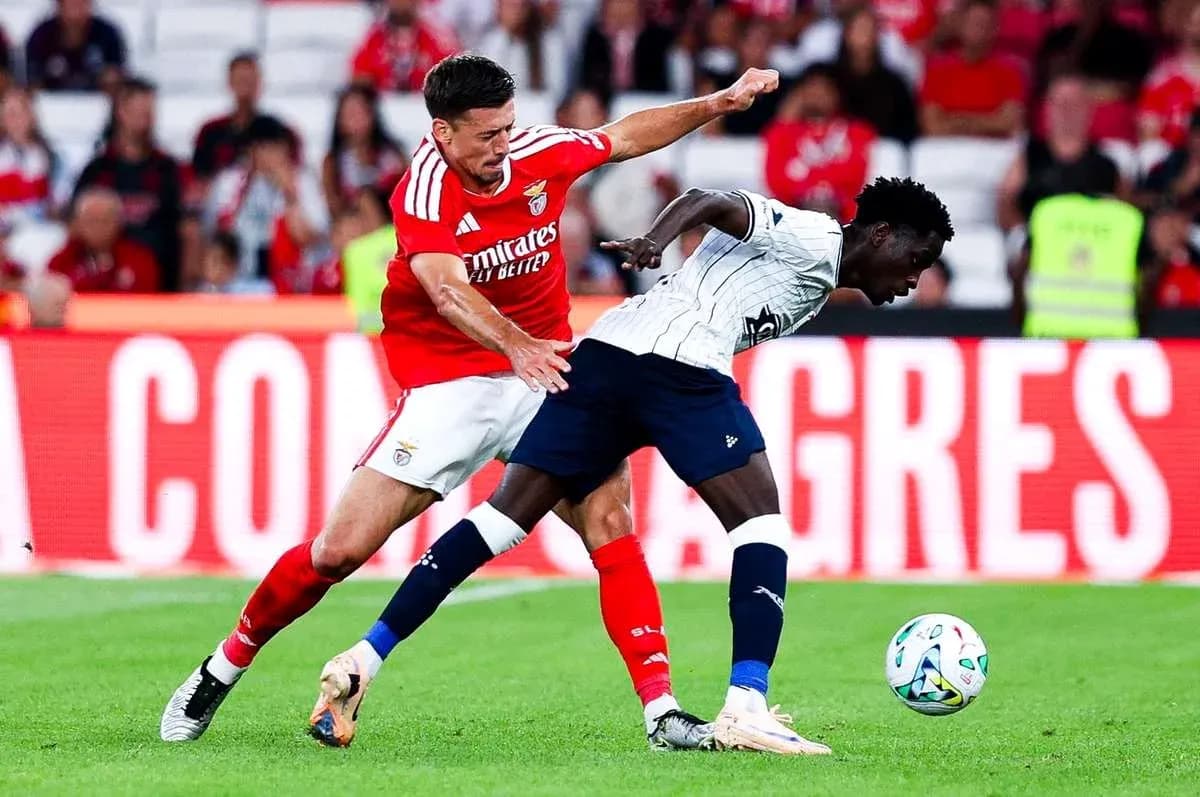
From the outset, Benfica’s shape was aggressive and vertically oriented. In possession, the nominal 4-1-3-2 often morphed into a 2-3-5: full-backs A. Bah and S. Dahl pushed high, while the centre-backs C. Lenglet and Tomás Araújo held a wide rest-defence platform. L. Barreiro anchored in front of them, screening Aarhus’s front two and offering a constant short outlet to recycle play. Ahead of him, G. Sudakov, E. Barrenechea and G. Prestianni operated as a fluid midfield line, with Rafa Silva and V. Pavlidis stretching the back three.
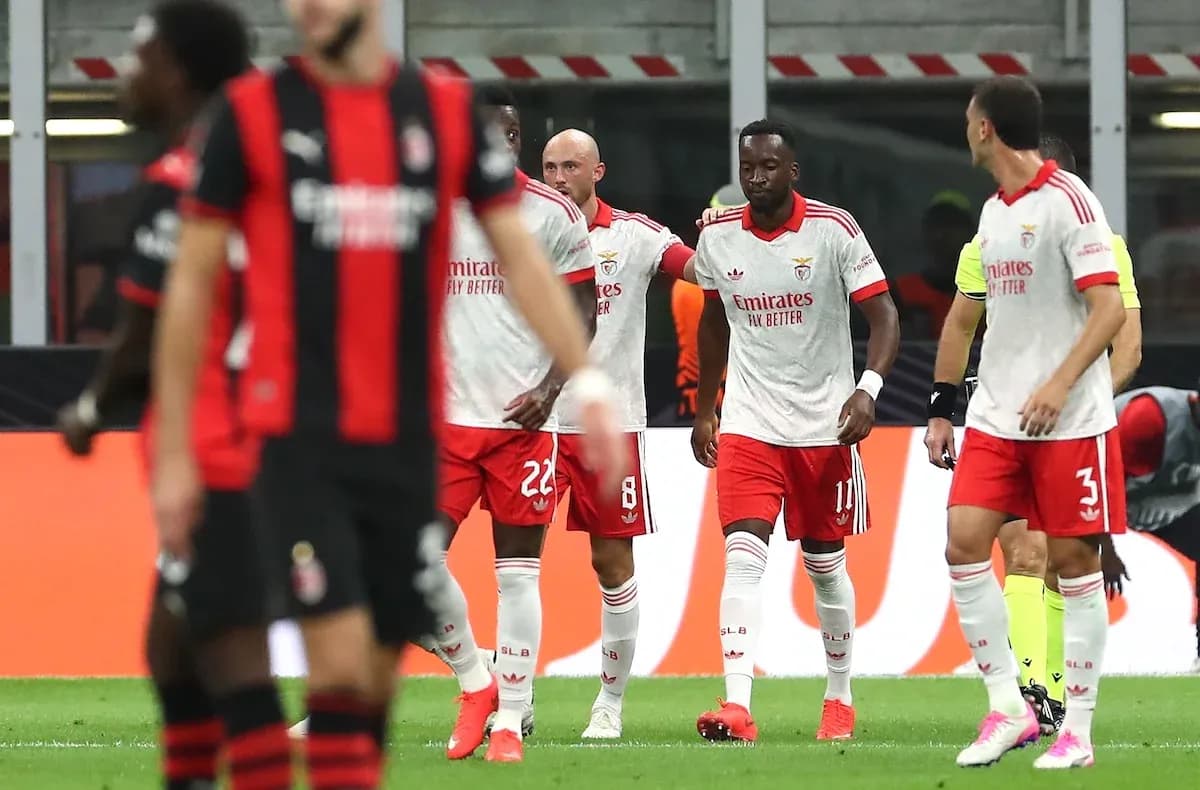
The early goal at 2' from Rafa Silva underlined Benfica’s intent: immediate pressure, high tempo, and occupation of the box. With Aarhus defending in a 5-3-2 without the ball, Benfica repeatedly created 3v2 and 4v3 overloads between the lines. Sudakov drifted into the left half-space, while Prestianni held width or inverted on the right, forcing Aarhus’s wing-backs J. Andersen and F. Emmery (later replaced) into constant defensive decisions. The 11 corner kicks Benfica earned were a direct product of this sustained territorial pressure and frequent final-third entries.
Crucially, Barreiro’s role was two-way. His goal at 31' was the reward for his late surges from the pivot zone, but tactically his main contribution was to lock Aarhus’s transitions. With Aarhus managing only 1 shot on goal and 1 shot off goal, Benfica’s counter-press was clearly effective: as soon as possession was lost, Barreiro and Barrenechea closed the central lanes, while the centre-backs stepped aggressively into midfield to prevent J. Bogere and T. Bech from turning.
Aarhus’s 3-5-2 was designed to offer central density, but with only 29% of the ball and a single corner, it became a low block rather than a springboard. The back three of C. Rosler, M. Camara and E. Kahl were pinned deep, and the midfield line – S. Jorgensen, K. Arnstad, M. Knudsen plus the wing-backs – spent long stretches shuttling laterally. Their best moment came with S. Jorgensen’s goal at 36', assisted by J. Andersen, exploiting a rare lapse when Benfica’s rest defence was slightly stretched after a wide attack. But structurally, those moments were exceptions; the shot volume tells the story of how rarely Aarhus could climb the pitch in numbers.
The penalty sequence just before half-time was decisive tactically. VAR confirmed the spot-kick for Vangelis Pavlidis at 45+1', and his converted penalty at 45' effectively killed any Aarhus ambition to press higher in the second half. At 3–1 up by the break, Benfica could manage the game through controlled possession rather than chasing further goals, yet they still maintained a high attacking rhythm, reflected in the 13 shots on goal and 11 blocked shots – a sign that Aarhus’s last-ditch defending, rather than proactive control, was doing most of the work.
Poulsen’s substitutions around the 57'–73' mark – R. Carstensen for C. Rosler, S. Tchamche for S. Jorgensen, J. Jonsson for M. Knudsen, G. Links for F. Emmery, and M. Anderson for J. Bogere – indicated a search for fresh legs and more vertical running. However, the underlying pattern did not shift: with only 1 corner and 17 fouls, Aarhus’s main tool remained breaking play and trying to disrupt Benfica’s rhythm rather than constructing sustained attacks.
Marco Silva’s changes were more about energy conservation and maintaining control than altering the structure. R. Rios for L. Barreiro at 66' preserved the single-pivot balance. Later, J. Duran for V. Pavlidis and A. Schjelderup for G. Prestianni at 72' refreshed the front line without sacrificing the 4-1-3-2 spacing. F. Aursnes for G. Sudakov and J. Kaminski for Rafa Silva at 84' further solidified midfield control, allowing Benfica to close the match with the ball rather than in a low block.
The disciplinary profile reinforced the tactical picture. Benfica committed 10 fouls to Aarhus’s 17, a ratio consistent with the home side dictating play while the visitors resorted more often to halting transitions and duels. Benfica’s two yellow cards – to Leandro Barreiro at 9' and Tomás Araújo at 24' – arrived early, reflecting aggressive counter-pressing and front-foot defending in midfield and the back line. Aarhus’s single yellow, to Stefen Tchamche at 83', came late and symbolised a side increasingly stretched and forced into recovery tackles as Benfica continued to circulate the ball and probe.
Without recorded goalkeeper saves or passing metrics, the clearest statistical lens is shot volume, possession, corners and fouls. Benfica’s 71% possession, 13 shots on goal, 11 blocked shots and 11 corners outline a team that lived in the attacking third, continuously forcing Aarhus into emergency defending. Aarhus’s 1 shot on goal, 1 shot off goal and 1 corner show how rarely they escaped Benfica’s structure. The 3–1 scoreline at Estádio da Luz aligned closely with the tactical reality: a one-sided territorial contest where Benfica’s 4-1-3-2 systematically dismantled Aarhus’s 3-5-2, allowing the Portuguese side to control both scoreboard and game state with authority.