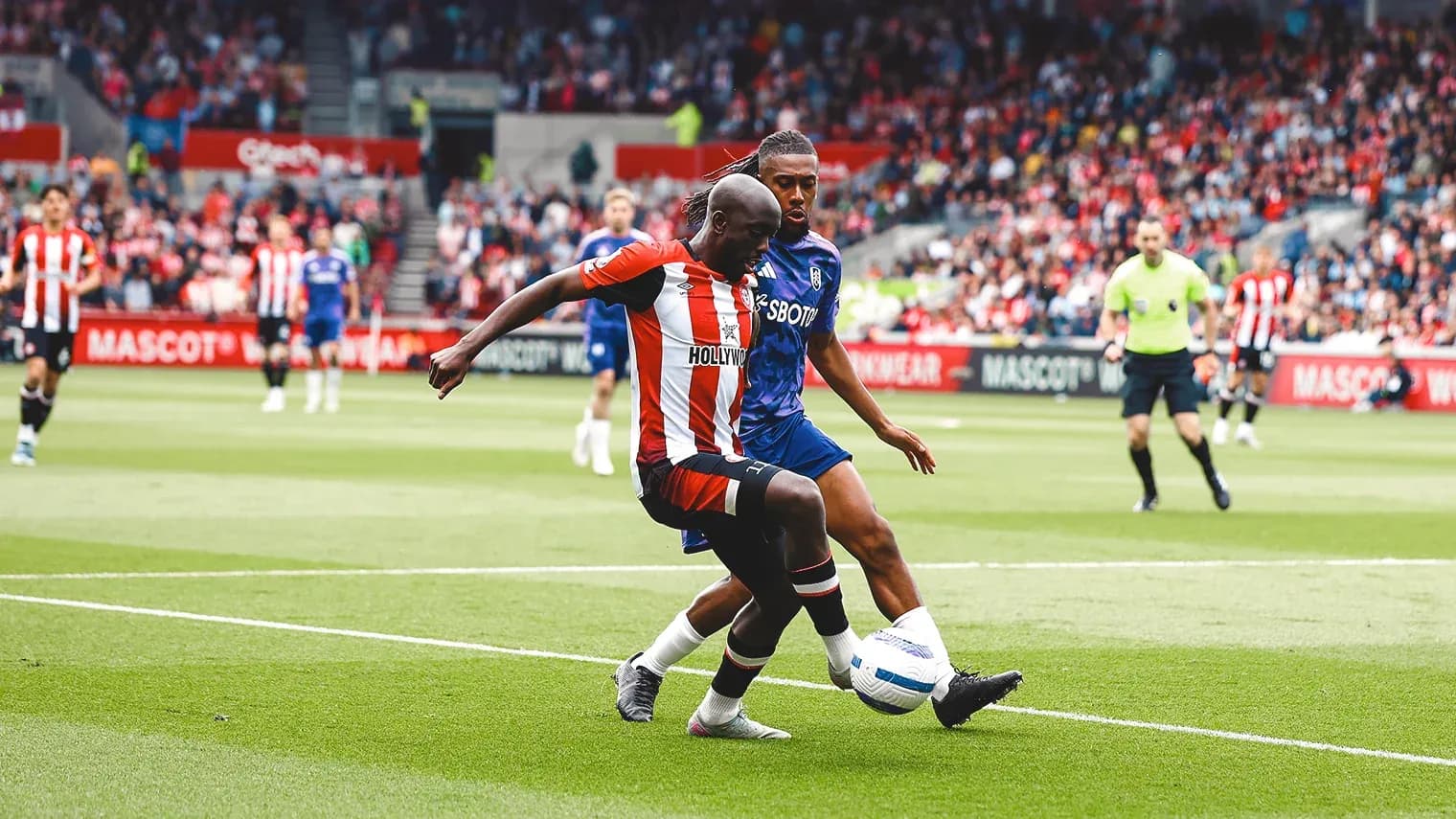
Brentford vs Fulham: A Tactical Stalemate in the London Derby
The April light hung flat over the Brentford Community Stadium as Brentford and Fulham walked out for a west London derby that, on paper, promised far more incision than the 0-0 that ultimately unfolded. Following this result, it felt like a meeting of two sides whose seasonal identities are clear but imperfect: Brentford, 7th in the Premier League with 48 points and a goal difference of +4 (48 scored, 44 conceded); Fulham, 12th with 45 points and a goal difference of -3 (43 scored, 46 conceded). Both have played 33 league matches, both have 13 wins, and both arrived with contrasting forms and tactical questions that this stalemate only partially answered.
I. The Big Picture – Two 4-2-3-1s, one locked contest
Both coaches leaned into their most-used shapes. Brentford, under Keith Andrews, reverted to the familiar 4-2-3-1 that has underpinned 25 of their league lineups this season. Marco Silva matched that structure, deploying Fulham in the 4-2-3-1 that has started 30 of their matches.
Brentford’s season-long numbers set the tone for how they approached this: at home they average 1.6 goals for and 1.1 against, a profile of controlled aggression with enough defensive stability to justify front-foot football. Across 17 home fixtures they have 7 wins, 7 draws and only 3 defeats, and their overall goal difference of +4 is built on a relatively balanced attack and defence.
Fulham arrived as a more volatile proposition. On their travels they average just 0.9 goals for and 1.6 against, with 4 away wins, 4 draws and 9 defeats from 17 away matches. Their total defensive record – 46 conceded – hints at fragility, especially compared to their stronger home returns. Yet their 13 total wins and 7 clean sheets show a side capable of shutting games down when the structure holds.
The match itself, goalless at half-time and at full-time, reflected both teams’ seasonal tendencies: Brentford’s ability to keep things tight at home (they have 4 home clean sheets in total) and Fulham’s willingness to accept a slower, more cautious rhythm away when their attack is blunted.
II. Tactical Voids – Who was missing, and what that changed
Brentford were heavily stripped in midfield and wide areas. F. Carvalho, J. Dasilva, K. Furo, J. Henderson, R. Henry, V. Janelt and A. Milambo were all listed as “Missing Fixture”, with a cluster of knee, muscle and foot issues. That is a significant volume of technical and rotational depth removed from Andrews’ toolbox. It explains why Y. Yarmolyuk and M. Jensen anchored the double pivot, and why the back four featured K. Lewis-Potter as a nominal left-back rather than as a winger.
Those absences pushed Brentford towards a more functional, less flamboyant attacking band of D. Ouattara, M. Damsgaard and K. Schade behind I. Thiago. With so many ball-progressors and controllers missing, the plan became simpler: compress the middle, trust the structure that has earned 9 clean sheets overall, and rely on their elite finisher to find a moment.
Fulham’s list was shorter but not irrelevant. Kevin and K. Tete were both ruled out with foot injuries, removing a natural right-back option and some depth. In response, Silva anchored his back line with T. Castagne, J. Andersen, C. Bassey and R. Sessegnon – a unit that, when protected, can look imposing but has been exposed away from home across the season.
Disciplinary patterns also shaped the risk appetite. Brentford’s yellow card profile shows a pronounced late-game spike: 25.86% of their yellows arrive between 76-90 minutes, part of a broader 61-90 stretch where tempers and intensity climb. Fulham, meanwhile, see 24.24% of their bookings between 91-105 minutes and 19.70% in both the 46-60 and 76-90 windows. Both sides are late-game agitators, and that undercurrent of potential chaos may have nudged each coach toward risk management rather than full-throttle pursuit of a winner as the second half wore on.
III. Key Matchups – Hunter vs Shield, Engine Room vs Enforcer
The headline duel was clear: Igor Thiago vs Fulham’s central defence. Thiago entered as one of the league’s most dangerous forwards: 21 total league goals, 7 penalties scored and 1 missed, with 39 shots on target from 61 attempts. His physical profile and work rate – 457 total duels, 181 won – make him as much a reference point as a finisher.
Against him, Fulham’s “shield” was a unit that concedes 1.6 goals per away game and has allowed 27 away goals in total. The tactical question was whether Andersen and Bassey could hold a high enough line to compress space around Thiago without exposing the channels for Schade and Ouattara.
Schade himself is a fascinating two-way piece. With 7 goals, 3 assists and a notable defensive contribution – 36 tackles, 3 blocked shots, 18 interceptions – he embodies Brentford’s demand that wide players press and recover aggressively. His disciplinary record matters too: 6 yellows and 1 red this season, including a penalty record of 0 scored and 1 missed from the spot. He is a chaos agent, and Brentford leaned on his vertical running to unsettle Fulham’s left side.
Fulham’s counterpunch came from the “engine room” and the right flank. H. Wilson, both their top scorer and top assist provider in the league, is the creative hub: 10 goals, 6 assists, 33 key passes and 46 shots (24 on target), with an 80% passing accuracy. Operating from the right in the line of three behind Rodrigo Muniz, Wilson’s duel with Lewis-Potter and the covering of Jensen was central to Fulham’s plan.
Behind him, S. Lukic and T. Cairney offered balance and circulation, trying to play through Brentford’s double pivot. But with Brentford’s home defensive average at 1.1 goals against and their structure drilled in the 4-2-3-1, the central zones became a traffic jam rather than a highway.
IV. Statistical Prognosis – xG, solidity and what the 0-0 really says
We do not have explicit xG values from the data, but the underlying season metrics offer a proxy. Brentford’s overall scoring average of 1.5 goals per match and Fulham’s 1.3 would normally tilt this fixture toward goals. However, the intersection of strengths and weaknesses hints at why it locked instead.
Brentford’s home attack (1.6 goals per game) ran into a Fulham side that, for all their away frailties, has managed 3 away clean sheets and can still compress space when the double pivot sits deep. Fulham’s away attack (0.9 goals per game) was always likely to find it hard against a Brentford defence that, at home, concedes just 1.1 on average and has kept 4 clean sheets.
Layer on Brentford’s penalty profile – 7 scored from 7 overall, 0 missed in league play this season – and Fulham’s perfect 4 from 4, and you have two sides that are ruthlessly efficient from the spot. Yet in open play, both have issues breaking down set defences, particularly when key creators are missing or locked down.
Following this result, the tactical verdict is of two well-scouted game plans cancelling each other out. Brentford’s structure and Thiago-focused attack were contained by Fulham’s compact 4-2-3-1; Fulham’s Wilson-led right flank was smothered by a disciplined home block. The numbers suggest that, on another day, marginal xG swings – a half-chance for Thiago, a Wilson cut-back – might have produced a narrow 1-0 either way. Instead, the derby froze into a stalemate that underlined both teams’ identities: Brentford as a solid, system-first side with an elite finisher, Fulham as an inconsistent but tactically flexible outfit whose away ceiling remains stubbornly capped.