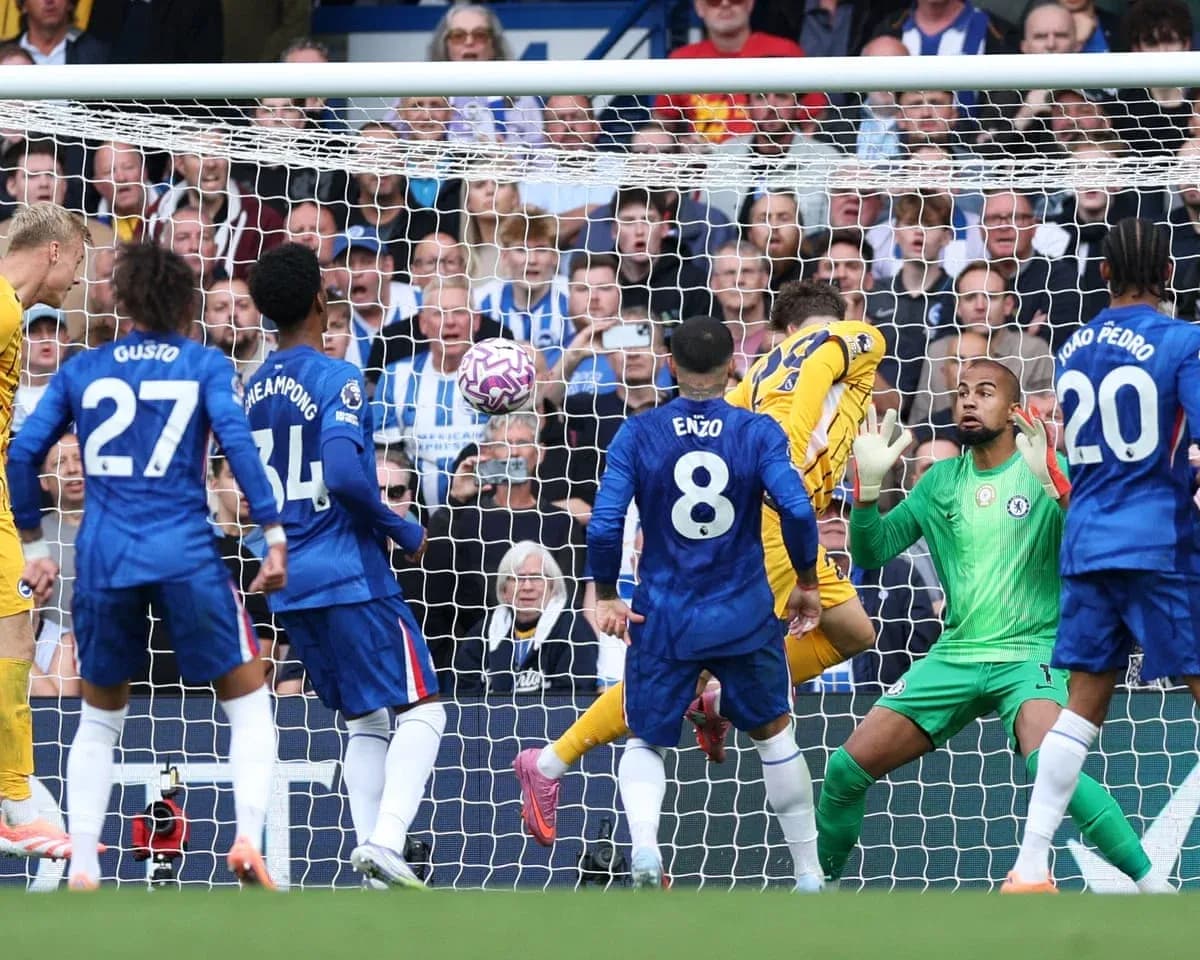
Brighton vs Chelsea: Premier League Mid-Table Clash with European Implications
At the Amex Stadium in Regular Season - 34 of the Premier League, Brighton (10th, 46 points, 43:37 goals in the league phase) host Chelsea (6th, 48 points, 53:41 goals in the league phase) in a mid‑table clash with European implications. For Brighton, a win compresses the gap to Chelsea to a single point and keeps late European hopes alive; for Chelsea, victory would consolidate their current Europa League league-phase position and create a five-point cushion over a direct mid-table rival.
Head-to-Head Tactical Summary
The recent head-to-head pattern tilts towards Brighton, especially at home. On 27 September 2025 at Stamford Bridge in the Premier League, Brighton overturned a 1-0 half-time deficit to win 3-1 away. Earlier in 2025, Brighton hosted Chelsea twice at the American Express Stadium: on 14 February 2025 in the Premier League they led 2-0 at half-time and finished 3-0; on 8 February 2025 in the FA Cup 4th Round they went in 1-1 at half-time and edged a 2-1 win. Chelsea’s last success at Brighton came on 15 May 2024 in the Premier League, when they led 1-0 at half-time and held on for a 2-1 away win. Chelsea also recorded a 4-2 home win on 28 September 2024 at Stamford Bridge in the league, leading 4-2 at half-time and seeing the scoreline unchanged after the break. Overall, Brighton have taken three of the last five meetings, with both sides showing they can score multiple goals in this fixture.
Global Season Picture
- League Phase Performance: In the league phase, Brighton sit 10th with 46 points from 32 matches, scoring 43 and conceding 37 (goal difference +6). Their home record is solid: 7 wins, 6 draws, 3 losses, with 24 goals for and 17 against. Chelsea are 6th with 48 points from 32 matches, with a more expansive profile of 53 goals scored and 41 conceded (goal difference +12). Away from home, Chelsea have 7 wins, 4 draws, 5 losses, scoring 30 and conceding 21.
- All-Competition Metrics: Across all phases of the competition, Brighton average 1.3 goals scored and 1.2 conceded per match (43 for, 37 against over 32 games), reflecting a balanced but slightly conservative attack and a reasonably tight defence. Chelsea, across all phases of the competition, show a more aggressive attacking profile with 1.7 goals scored per match and 1.3 conceded (53 for, 41 against), underlining a higher-risk, higher-reward style. Card data suggests Brighton’s discipline is relatively controlled, with yellow cards most concentrated between 46–60 minutes (23 yellows, 28.75%), while Chelsea’s aggression spikes later, with 21.25% of yellows in each of the 61–75 and 76–90 minute ranges, plus a spread of red cards across multiple time bands, hinting at a more combustible defensive approach.
- Form Trajectory: In the league phase, Brighton’s recent form string of “WWWLW” indicates four wins in their last five, with just one defeat, pointing to an upward trajectory and growing confidence. Chelsea’s “LLLWL” shows a sharp downturn: four losses in their last five, with only one win breaking the negative run. This contrast sets up a clash between a side trending upwards and a side trying to arrest a slide while still sitting higher in the table.
Tactical Efficiency
Across all phases of the competition, Brighton’s goal averages (1.3 scored, 1.2 conceded) depict a controlled, medium-tempo side whose attack is efficient but not explosive, and whose defence is relatively compact. Chelsea’s 1.7 goals scored and 1.3 conceded across all phases point to a more expansive attacking unit that creates and converts more, but leaves slightly more space defensively. Without explicit numeric Attack/Defense Index values from the comparison block, the relative picture is clear: Chelsea’s attacking index should grade higher than Brighton’s, aligned with their superior goals-for tally (53 vs 43 across all phases), while Brighton’s defensive index is marginally stronger in terms of goals against (37 vs 41). Translating that into tactical terms, Brighton’s efficiency lies in game control and limiting chances, particularly at home (24:17 goals in the league phase), whereas Chelsea’s efficiency leans on away attacking output (30 goals in 16 league-phase away games, 1.9 per match across all phases away), even if their defensive stability is slightly looser.
The Verdict: Seasonal Impact
This fixture carries significant seasonal weight for both clubs. For Chelsea, a win away at Brighton would break a poor recent form pattern, solidify their hold on 6th, and keep them strongly positioned for Europa League qualification via the league phase, with an outside chance of pushing higher if teams above them falter. A draw would maintain a fragile advantage but prolong their negative trend, inviting pressure from teams below. A defeat, given their current “LLLWL” trajectory, would deepen the crisis, potentially dragging them back towards the mid-table pack and turning the run-in into a battle just to secure European football rather than to climb. For Brighton, victory would cut the gap to Chelsea to a single point, validating their recent surge (“WWWLW”) and keeping late European aspirations alive; it would also reinforce the Amex as a stronghold and extend their positive head-to-head run at home. A draw keeps them comfortably mid-table but likely leaves European spots dependent on a near-perfect finish. A loss would not immediately endanger them in terms of relegation, but it would stall momentum and likely reframe the rest of 2026 as consolidation rather than a push for Europe. In summary, this is a pivotal mid-table six-pointer: more about European qualification dynamics than titles or relegation, but with the potential to redefine the narrative of both clubs’ 2026 campaigns.