Cagliari's Tactical Statement in Serie A Victory Over Torino
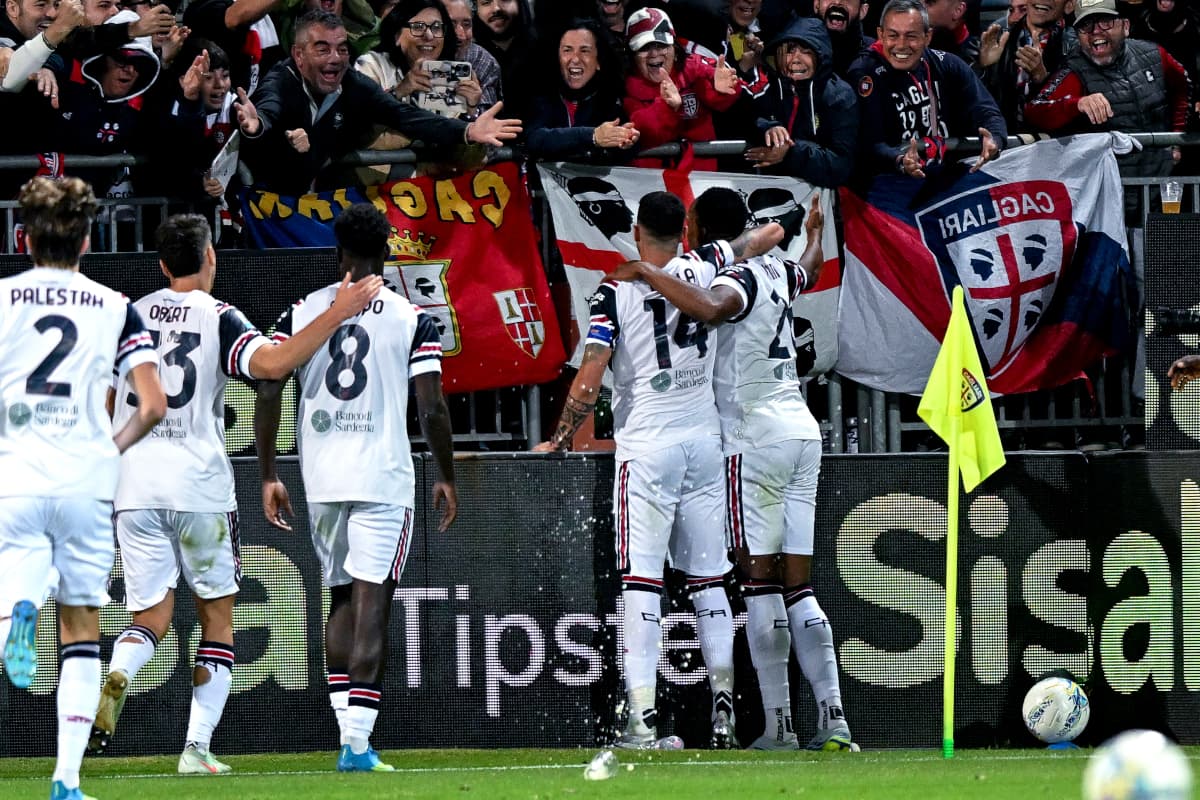
On a warm evening at the Unipol Domus, Cagliari closed their home campaign in Serie A with a performance that felt like a manifesto. In a season defined by survival and volatility, a 2–1 win over Torino in Round 37 was more than three points; it was a tactical statement about who they have become under Fabio Pisacane.
Heading into this game, the table framed the stakes clearly. Cagliari sat 16th with 40 points, their overall goal difference at -14, built from 38 goals scored and 52 conceded across 37 matches. Torino, 12th with 44 points and a harsher overall goal difference of -19 (42 for, 61 against), arrived as the more expansive but far more porous side. The match-up was a study in two flawed teams trying to lean into their identities.
I. The Big Picture – Shapes, context, and seasonal DNA
Pisacane’s choice of a 4-3-2-1 was revealing. Cagliari have flirted with back threes all season – their most used shape overall is 3-5-2 (17 matches) – but the switch to a back four against Torino’s front line showed a desire for cleaner wide coverage and better control of the half-spaces. E. Caprile anchored a back four of G. Zappa, Y. Mina, A. Dossena and A. Obert, with a midfield triangle of M. Adopo, G. Gaetano and A. Deiola. Ahead of them, the double band of M. Palestra and S. Esposito supported lone forward P. Mendy.
Torino responded with a 3-4-2-1, fully in line with their season-long preference for three at the back. Leonardo Colucci placed A. Paleari behind a trio of L. Marianucci, S. Coco and E. Ebosse, with wing-backs M. Pedersen and R. Obrador flanking a central duo of E. Ilkhan and M. Prati. In attack, G. Simeone and N. Vlasic floated behind D. Zapata.
The contrast in seasonal profiles was stark. At home, Cagliari have averaged 1.2 goals for and 1.2 against, a tight, attritional balance that has produced 7 home wins, 4 draws and 8 defeats. Torino, on their travels, have averaged 0.9 goals for and 1.8 against, with 4 away wins, 5 draws and 10 losses. On their travels they concede heavily; Cagliari at home are rarely spectacular, but stubborn.
II. Tactical Voids – Absences and discipline
The absentees list shaped both benches. Cagliari were without M. Felici, R. Idrissi, J. Liteta, L. Mazzitelli and L. Pavoletti, all through injury, while J. Pedro was suspended for yellow cards. That stripped Pisacane of a classic penalty-box reference and a key creative presence between the lines, pushing more responsibility onto Esposito and Gaetano to carry progression and final-third invention.
Torino’s missing group – Z. Aboukhlal and A. Ismajli through muscle injuries, F. Anjorin with a hip problem, and G. Gineitis suspended – removed both depth and variety. Without Gineitis in particular, Torino’s midfield lost a ball-winning and tempo-breaking profile, forcing Ilkhan and Prati into double duty as both screeners and first passers.
Disciplinary patterns across the season hinted at how the game might turn chaotic. Cagliari’s yellow-card distribution shows a pronounced late-game spike: 27.85% of their cautions arrive between 76–90 minutes, with a further 10.13% between 91–105. Their red cards are concentrated entirely in the 76–90 window. Torino’s bookings climb as matches wear on too, with 20.00% of yellows between 76–90 and 21.43% between 91–105. This is two squads that grow ragged under pressure, and a 2–1 scoreline suggests precisely the kind of narrow margin where nerves fray.
III. Key Matchups – Hunter vs Shield, Engine Room
The “Hunter vs Shield” narrative centred on G. Simeone against a Cagliari defence that, at home, concedes an average of 1.2 goals. Simeone’s season has been defined by volume and persistence: 11 goals overall, from 58 shots (28 on target), with 22 key passes and 50 dribble attempts. He is not a pure poacher; his 283 duels and 39 fouls drawn underline a forward who constantly engages defenders physically and positionally.
Against him, Cagliari’s back line leaned heavily on A. Obert, one of Serie A’s most combative defenders this season. Obert’s profile is that of an aggressive front-foot stopper: 65 tackles, 18 blocked shots and 40 interceptions, plus 230 duels with 123 won. His 9 yellow cards and one yellow-red underline the risk baked into his style. In a 4-3-2-1, Obert’s timing in stepping out to Simeone and Vlasic was critical: get it right, and Cagliari could compress Torino’s central lanes; get it wrong, and Torino’s front three could spin into the space behind.
In the “Engine Room” battle, S. Esposito stood at the heart of Cagliari’s plan. With 7 goals and 5 assists overall, 954 passes and 67 key passes, Esposito is the side’s creative metronome and their top assist provider. His 52 fouls drawn and 44 committed show a midfielder who lives on the edge of contact, constantly inviting pressure and then playing through it. Against Ilkhan and Prati, his ability to receive between Torino’s midfield and defence and link with Palestra and Mendy was the hinge on which Cagliari’s attacks turned.
Torino, by contrast, lacked a single standout creator in the data provided, leaning more on collective movement from Vlasic, Obrador and Pedersen. That placed even more emphasis on Simeone’s ability to finish half-chances rather than rely on repeated high-quality service.
IV. Statistical Prognosis – xG logic and defensive realities
Even without explicit xG numbers, the season’s shot and goal patterns allow a clear reading. Torino’s overall profile – 42 goals for and 61 against, with an away average of 0.9 scored and 1.8 conceded – points to a team that often concedes more chances than it creates, especially away. Their 7 away clean sheets suggest that when their back three is protected, they can lock games down, but the 6–0 and 5–1 heavy defeats in their “biggest loses” category reveal a fragility once the first line is breached.
Cagliari, overall, are more modest but more balanced: 38 goals for, 52 against, with 8 clean sheets in total. At home, 22 scored and 23 conceded underline their tendency to be in games, rarely blown away. Their penalty record – 2 taken, 2 scored, no misses – shows clinical execution from the spot when chances arise, a small but significant edge in tight contests.
Overlaying these profiles onto the tactical shapes, a narrow Cagliari win always felt like the most probable outcome. Their home average of 1.2 goals for set against Torino’s away concession rate of 1.8 aligns neatly with the 2 goals they scored. Conversely, Torino’s away scoring rate of 0.9 against Cagliari’s home concession of 1.2 sits comfortably with the single goal they managed.
Following this result, the numbers and the narrative converge: Cagliari’s cautious, structure-first approach, anchored by Obert’s aggression at the back and Esposito’s craft in midfield, found just enough incision to exploit Torino’s away frailty. Torino’s reliance on Simeone’s individual edge was not sufficient to overturn a match where the underlying defensive trends were always tilting towards the hosts.