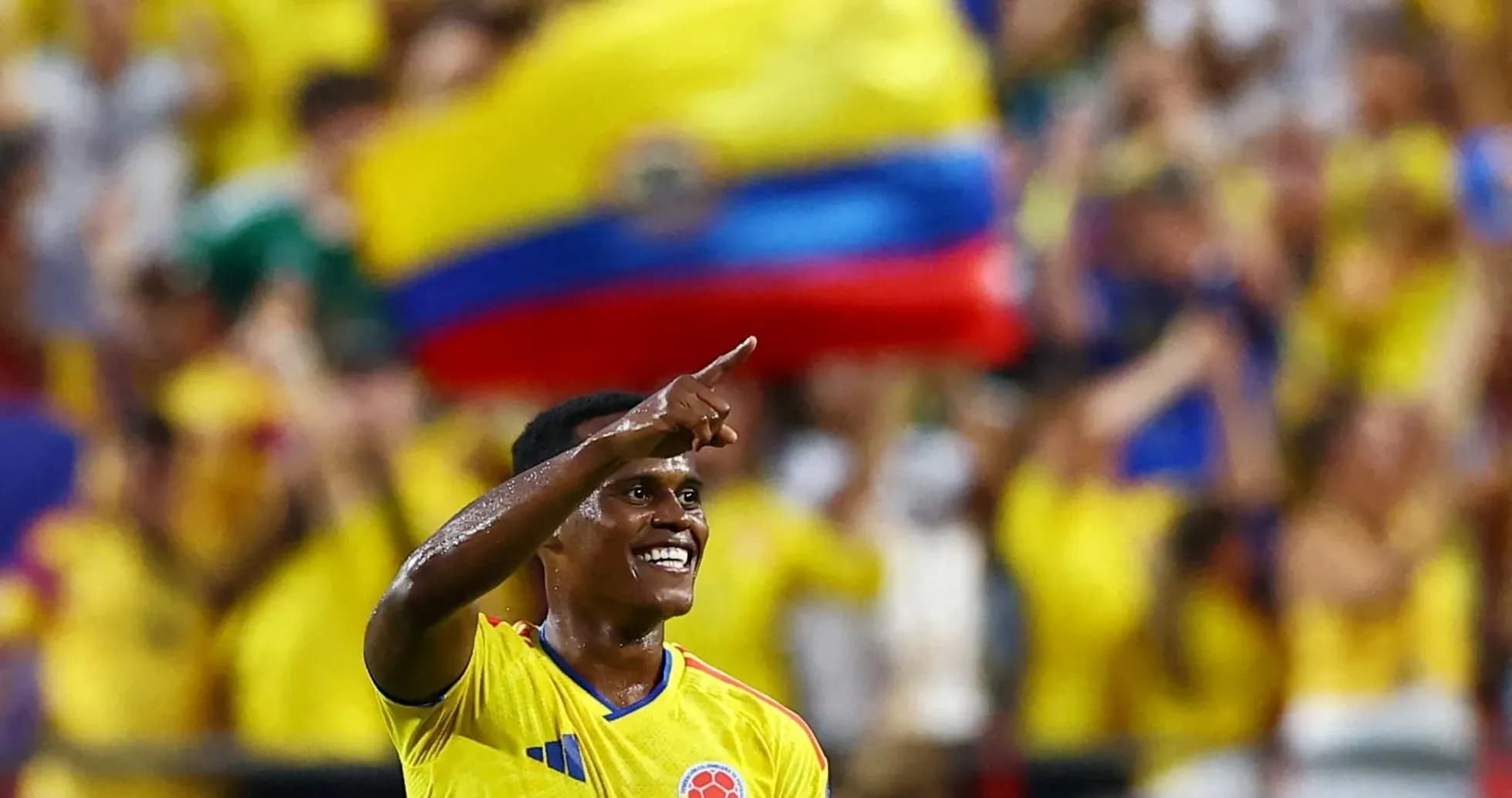
Colombia Advances to World Cup Round of 16 with Jhon Arias' Goal
Jhon Arias needed only one chance.
In the heavy, breathless heat of Kansas City, the winger’s precise finish settled a tense contest and pushed Colombia into the World Cup round of 16 with a 1-0 win over Ghana, a result that confirmed what this tournament has been hinting at for days: Nestor Lorenzo’s side are no longer just an intriguing outsider. They are a problem for anyone.
Arias strikes, Colombia don’t blink
The decisive moment came early, in the 14th minute, from a combination few had pencilled in before kick-off.
Jhon Cordoba lasted just eight minutes before a groin injury forced him off. On came Luis Suarez, an unexpected early protagonist, and the game tilted. Given space on the right, Suarez shaped his body and whipped a measured cross to the back post, where Arias had ghosted free, unnoticed by a distracted Ghana back line.
Arias didn’t rush. With time to choose his finish, he opened up and guided the ball into the bottom corner, side-footed and certain, beyond Lawrence Ati-Zigi. One chance, one touch of class, and Colombia had the lead their bright start deserved.
From there, the pattern hardened. Colombia controlled, Ghana chased shadows, and Lorenzo’s men never really let the game go.
A home far from home
If the match was in Kansas City, it rarely felt like it.
The stadium pulsed in yellow. Tens of thousands of Colombia supporters turned this last-16 decider into something closer to a Barranquilla night, their flags and scarves swirling in the oppressive 30-degree Celsius heat. Black-and-white sombrero vueltiao hats doubled as makeshift fans, waving furiously between songs.
They didn’t just sing. They drove the game. Every Colombian attack was met with a roar, every defensive intervention with a guttural approval. Chants of “Vamos Colombia! Esta noche tenemos que ganar!” rolled around the stands, a constant soundtrack that made Ghana’s task feel even steeper than the 60-place gap in the rankings already suggested.
Colombia responded with authority. Calm on the ball, ruthless in their pressing, they looked every inch a side that had quietly gone unbeaten through a tricky group with Portugal, Uzbekistan and DR Congo.
Diaz turns the screw, Ati-Zigi stands tall
If there was one Colombian who seemed determined to turn a solid win into a statement, it was Luis Diaz.
He probed from the left, darting inside, demanding the ball, testing Ghana’s defensive line whenever space appeared. In the first half he tore into the side netting with a fierce drive, a warning that the lead was not going to make Colombia retreat.
After the break, Diaz thought he had his moment. Arias, again involved, slid a clever cross into the box and Diaz arrived to sweep it home, wheeling away in celebration. The Colombian fans exploded. Then the flag went up. Offside. The second goal was gone, but the message remained: Colombia were not content to sit on 1-0.
The pressure kept building. Ghana, pinned back, relied heavily on Ati-Zigi, who refused to let the scoreline get away from them. He produced a string of sharp saves late on, clawing away efforts as Colombia chased the cushion their dominance merited. Each stop drew frustrated gasps from the Colombian end, but the control of the game never truly shifted.
Ghana’s spark, Colombia’s wall
Ghana had their moments, but they were fleeting.
Antoine Semenyo carried their main threat, working tirelessly, looking for angles, trying to turn half-chances into something more. Colombia’s back line, drilled and disciplined, rarely allowed him a clear look at goal. When Ghana did push forward, they ran into a wall of yellow shirts snapping into tackles, closing passing lanes, and killing counters before they could bloom.
It was the kind of defensive performance that wins knockout games. No fuss, no panic, just a collective understanding of where danger might come from and how to smother it.
Dangerous outsiders no more
The final whistle confirmed Colombia as the fourth South American nation into the last 16, joining surprise package Paraguay – fresh from stunning Germany – and traditional heavyweights Brazil and Argentina, both of whom have already had their own brushes with disaster.
Colombia’s best World Cup run remains the 2014 quarterfinals. On this evidence, they have every right to aim at least that high again.
Next up is Switzerland on Tuesday in Vancouver. A different climate, a different challenge, and a European test against a side that rarely beats itself.
Colombia arrive unbeaten, backed by a travelling army, with a growing sense that this campaign is gathering real weight. The question now is simple: who really wants to face them next?