Como Defeats Hellas Verona 1-0 in Tactical Showdown
Hellas Verona’s 0-1 home defeat to Como at Stadio Marcantonio Bentegodi unfolded as a territorial siege by the visitors decided by a single, well-constructed second-half strike. In a Serie A Round 36 fixture overseen by Marco Di Bello, Como’s control of possession (64%) and superior passing structure eventually broke down Verona’s compact 3-5-1-1 block. A disciplined defensive display from both sides kept the expected goals almost level (0.97 vs 0.9), but the visitors’ cleaner execution in the final third and sharper use of their bench under Cesc Fabregas delivered the decisive moment.
The match remained goalless at half-time (0-0), with Verona largely in a mid-block and Como circulating patiently without over-committing. The key tactical shift began as early as 36', when Como made their first change: A. Moreno (IN) came on for A. Valle (OUT), injecting more progressive intent down the left. The real structural retooling came at the interval, with a triple substitution at 46': I. Smolcic (IN) for M. Vojvoda (OUT), M. Caqueret (IN) for M. Perrone (OUT), and M. Baturina (IN) for J. Rodriguez (OUT). Fabregas effectively refreshed both the double pivot and the left defensive lane, improving circulation and rest-defense against Verona’s counters.
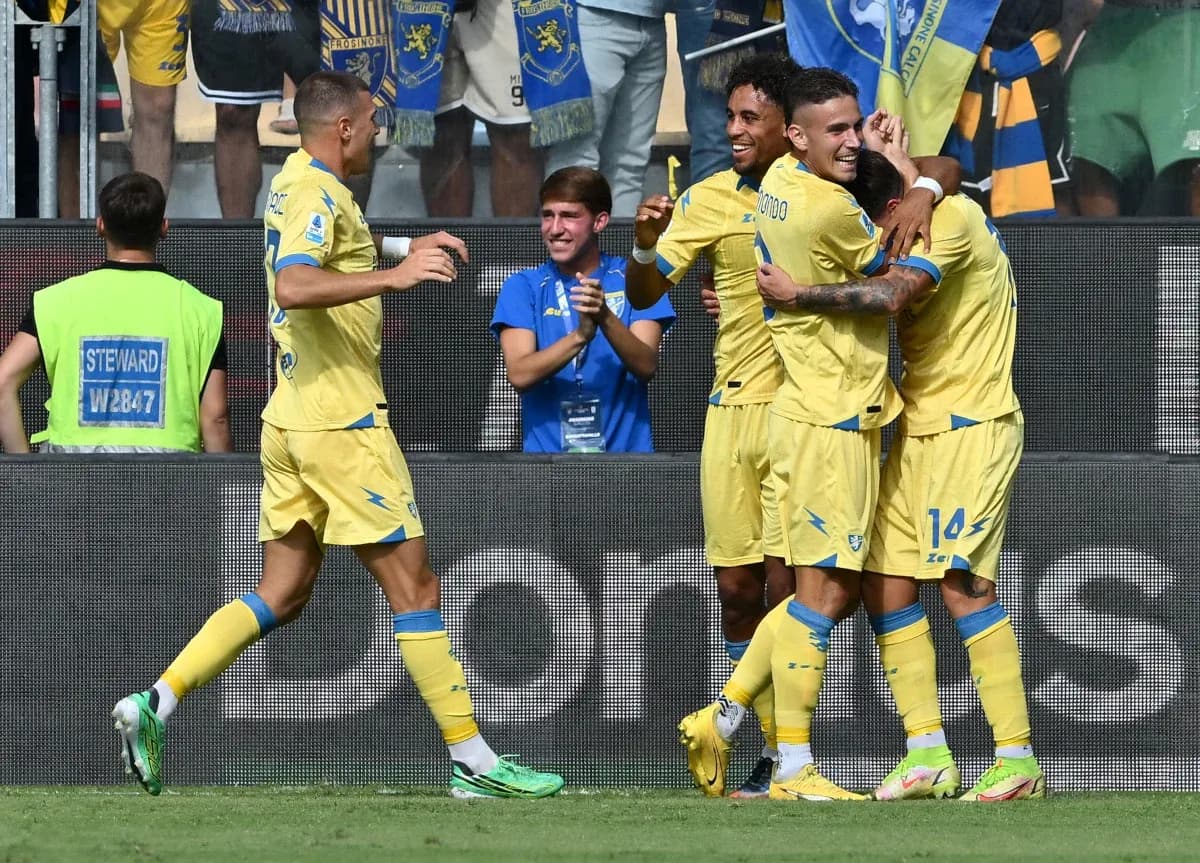
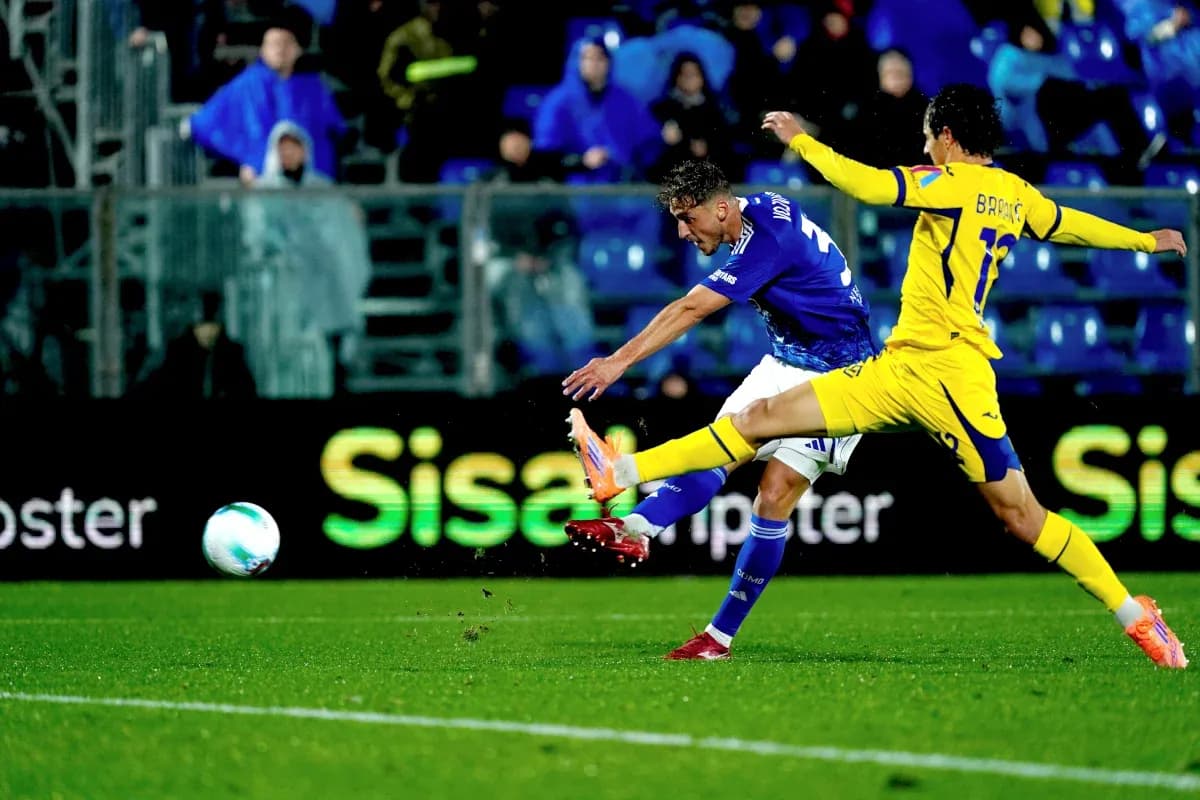
The scoring sequence pivoted on this renewed control. At 71', Como finally translated their possession into a breakthrough: A. Douvikas finished a move assisted by centre-back M. O. Kempf, underlining how high Como were able to position their back line and how aggressively they stepped into midfield to create overloads. From that point, Verona chased the game, but despite matching Como for total shots (11-11), they could not convert pressure into a goal, and the match closed 0-1.
Before the tactical narrative, the disciplinary log is short but important, and card totals must be exact:
- 61' Maxence Caqueret (Como) — Persistent fouling
- 89' Martin Frese (Hellas Verona) — Foul
That yields: Hellas Verona: 1 yellow, Como: 1 yellow, Total: 2. No reds were shown.
Verona’s substitutions were reactive and aimed at adding energy and verticality without dismantling the 3-5-1-1 shape. At 63', S. Lovric (IN) came on for A. Bernede (OUT), a like-for-like central midfield change that sought more forward passing from the interior. At 80', Isaac (IN) replaced J. Akpa Akpro (OUT), tilting Verona slightly more attacking between the lines, and at 81' I. Vermesan (IN) came on for R. Belghali (OUT), providing fresh legs on the flank. These changes nudged Verona’s block higher and increased their final-third occupation but did not fundamentally alter the structural problem: Como’s superior passing security and rest-defense limited the quality of Verona’s transitions.
Fabregas’s in-game management was more proactive and pre-planned. The early introduction of A. Moreno at 36' for A. Valle signaled a desire for more offensive thrust from left-back. The triple change at 46' was decisive tactically: M. Caqueret’s entry for M. Perrone improved Como’s tempo and line-breaking from deep; I. Smolcic for M. Vojvoda rebalanced the back line, and M. Baturina for J. Rodriguez added a more central, combination-focused profile between the lines. Later, at 81', I. Van der Brempt (IN) replaced A. Diao (OUT), shoring up the right side to protect the 0-1 lead and maintain defensive width against Verona’s late push.
Structurally, Verona’s 3-5-1-1 under Paolo Sammarco was designed to congest the central corridor and protect the half-spaces. With three centre-backs (V. Nelsson, A. Edmundsson, N. Valentini) and a five-man midfield line, Verona forced Como into wide circulation and tried to spring K. Bowie and T. Suslov in transition. The numbers back this up: only 36% possession but 11 shots, with 8 from inside the box, indicating that when Verona did reach the final third, they generated relatively dangerous positions. However, the execution lagged — just 3 shots on goal and an xG of 0.97 suggest half-chances rather than clear one-on-ones.
Como’s 4-2-3-1, by contrast, was built on control. With 64% of the ball and 506 total passes, 442 accurate (87%), their Overall Form in possession was superior: they circulated patiently, moved Verona laterally, and used the advanced positions of full-backs and centre-backs to create overloads. The fact that they produced 10 shots inside the box out of 11 total underlines the quality of their positional play. Their Defensive Index was also strong: only 11 shots conceded and 0.97 xG against, while maintaining a high line and proactive pressing after turnovers.
In goal, both keepers were steady rather than spectacular. L. Montipo for Verona recorded 3 saves; J. Butez for Como matched him with 3 saves. The goals-prevented metric is identical on both sides (0.73), indicating that neither goalkeeper dramatically outperformed the quality of shots faced. This further emphasizes that the match was decided more by structural and possession superiority than by goalkeeping heroics.
Statistically, Como’s dominance of the ball (64% vs 36%) and passing volume (506 vs 277 total passes) framed the contest. Verona’s 277 passes, 202 accurate (73%), reflect a team forced into longer, riskier progression and more direct play toward Bowie and Suslov. Both sides ended with 11 total shots and 3 on target, and the xG figures — Hellas Verona 0.97, Como 0.9 — are remarkably close. The difference lay in efficiency: Como converted one of their high-quality box entries through Douvikas, while Verona failed to turn similar volume into a goal.
Discipline was balanced but telling in tone rather than quantity. Como’s single yellow, to Maxence Caqueret for “Persistent fouling” at 61', reflects a tactical midfielder repeatedly breaking up counters to protect structure. Verona’s late yellow to Martin Frese for “Foul” at 89' captured their frustration as they chased the equaliser. With both teams committing a similar number of fouls (17 for Verona, 14 for Como), the card symmetry (1 and 1) matches the data and underscores that this was a controlled, tactically driven contest rather than a chaotic one.
In synthesis, Como’s superior Overall Form in possession and their strong Defensive Index — compact without the ball, brave with it — justified the 0-1 away win. Verona’s compact 3-5-1-1 made the game close on xG and shots, but their inability to raise passing accuracy or destabilize Como’s rest-defense left them one precise move short.