Como Edges Parma 1-0: Tactical Insights from Lake Como
The afternoon on Lake Como ended with a narrow but telling verdict. At Stadio Giuseppe Sinigaglia, Cesc Fabregas’ Como edged Parma 1–0 in a match that distilled the seasonal identities of both sides into ninety concentrated minutes.
Following this result, the league table snapshots feel almost like character studies. Como, sitting 5th with 68 points and a goal difference of +33 (61 scored, 28 conceded in total), look every inch a Europa League-bound side: controlled, balanced, and increasingly ruthless at home. Across 37 matches in total this campaign, they have averaged 1.6 goals for and 0.8 against, with that profile sharpening at home to 1.8 scored and 0.8 conceded. Parma, by contrast, remain 13th on 42 points, their total goal difference a bruising -19 (27 for, 46 against). On their travels, they have won 6 of 19 but averaged only 0.6 goals scored and 1.1 conceded, a team perpetually walking the line between resilience and fragility.
I. The Big Picture – Fabregas’ structure vs Cuesta’s resistance
Fabregas stayed loyal to Como’s season-long blueprint, rolling out the familiar 4-2-3-1 that has started 33 league games. J. Butez anchored a back four of I. Van der Brempt, Jacobo Ramón Naveros, M. O. Kempf and A. Moreno. Ahead of them, the double pivot of M. Perrone and L. Da Cunha provided the platform for a creative line of three – M. Caqueret, M. Baturina and A. Diao – behind lone striker A. Douvikas.
Across the season, this shape has delivered control: Como’s home record (10 wins, 6 draws, 3 defeats in 19) is built on territorial dominance and clean sheets. They have kept 10 clean sheets at home and 19 in total, a defensive reliability that was again on show as Parma were kept scoreless.
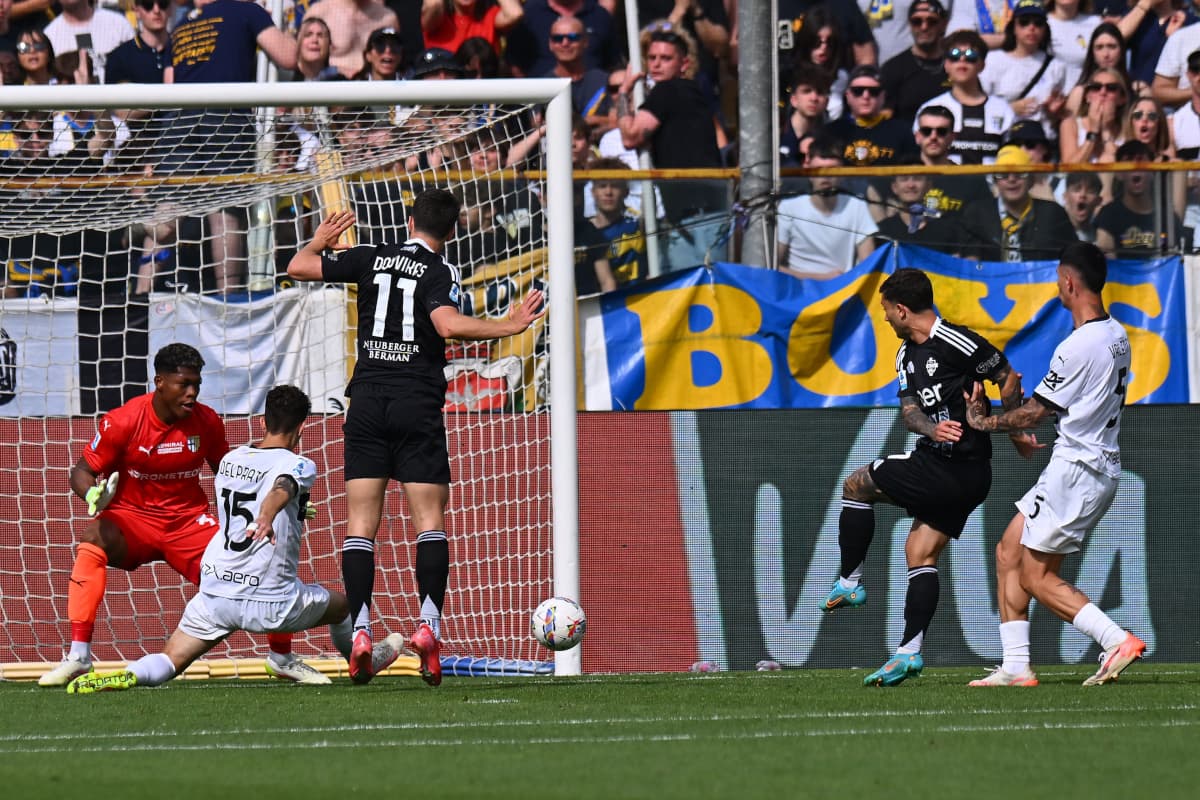
Carlos Cuesta answered with a 3-5-2, one of several systems Parma have rotated through this year but still their most-used formation. Z. Suzuki stood behind a back three of A. Circati, M. Troilo and L. Valenti. The wing-backs, E. Delprato and F. Carboni, flanked a central trio of M. Keita, H. Nicolussi Caviglia and C. Ordonez, with G. Strefezza buzzing around the shoulders of target man Mateo Pellegrino.
The structure spoke of caution and compactness, understandable for a side whose total scoring output sits at just 27 goals in 37 matches and who have failed to score 16 times overall, including 9 on their travels. The plan was clear: compress the central lane, frustrate Como’s technicians, and hope Pellegrino and Strefezza could steal something in transition.
II. Tactical Voids – Missing links and disciplinary shadows
Both benches were shaped by absences that subtly bent the tactical narrative. Como were without J. Addai (Achilles tendon injury), N. Paz (knee injury) and A. Valle (injury). The loss of Paz in particular removed a major creative and scoring axis: 12 goals and 6 assists in total, plus 51 key passes and a willingness to drive at defenders (125 dribbles attempted, 69 successful). His penalty record – 0 scored, 2 missed – underlines that even his brilliance comes with volatility, but his absence forced Fabregas to lean more heavily on Baturina and Caqueret between the lines.
Parma’s voids were even more structural. A. Bernabe (muscle injury) and B. Cremaschi, M. Frigan, J. Ondrejka and G. Oristanio (all knee or leg injuries) stripped depth and variety from their attacking and creative pool. The suspension of S. Britschgi after a red card further reduced defensive rotation. It left Cuesta with a thinner set of tools to change the game once Como took control.
Disciplinary trends also hovered over the contest. Como’s yellow card profile shows a clear late-game spike: 20.25% of their yellows arrive between 61–75 minutes, and another 20.25% between 76–90, with all of their red cards (three in total) coming in that 76–90 window. Parma, meanwhile, share a similar pattern of late aggression, with 21.88% of their yellows in 46–60 and another 21.88% in 76–90, plus a scattering of reds in multiple phases. This was always likely to be a match that grew more ragged as fatigue and tension set in.
III. Key Matchups – Hunter vs Shield, Engine Room wars
The headline duel was the “Hunter vs Shield”: A. Douvikas, Como’s total top scorer with 13 league goals, against a Parma defence that has conceded 46 in total and 21 away. Douvikas’ profile is that of a complete forward: 46 total shots, 28 on target, a penalty scored and 1 won, plus 23 key passes and 40 fouls drawn. He thrives on intelligent movement and quick combinations, and with Como averaging 1.8 home goals, the structure around him is well tuned to feed his runs.
Parma’s shield was built around the trio of Circati, Troilo and Valenti, with Troilo a particularly important piece. Across his season, Troilo has blocked 18 shots and added 25 tackles and 16 interceptions, a defender who reads danger early and steps out aggressively. But his disciplinary record – 7 yellows, 1 yellow-red and 1 straight red – hints at the risk in that front-foot style, especially against a striker as adept at drawing contact as Douvikas.
In the “Engine Room” battle, Como’s midfield triangle held a clear edge. Perrone and Caqueret combined security and progression: Perrone with 2111 completed passes at 91% accuracy and 56 tackles, Caqueret with 890 passes at 87% and 24 key passes. Ahead of them, Baturina operated as the creative hinge, while A. Diao stretched Parma’s right side. On the bench, Jesùs Rodríguez – 8 assists and 35 key passes in total – waited as a high-impact option to tilt the game further if needed.
Parma’s central trio of Keita, Nicolussi Caviglia and Ordonez had to absorb pressure and break Como’s rhythm. But with Parma averaging only 0.7 goals in total per match, and failing to score in 9 away fixtures, their midfield’s primary duty was damage limitation rather than orchestration.
On the flanks, Van der Brempt and Moreno were crucial in pinning back Delprato and Carboni. Como’s ability to create wide overloads and then funnel play into Douvikas was a recurring pattern, gradually eroding Parma’s compact block.
IV. Statistical Prognosis – xG tilt and defensive solidity
Even without explicit xG values, the statistical currents point in one direction. A side that, in total, scores 1.6 and concedes 0.8 per match, with 19 clean sheets and 4 penalties taken, all scored, is structurally built to win tight games like this. Their penalty record, with 4 of 4 converted and none missed, adds a clinical edge in high-leverage moments that Parma simply lack.
Parma’s total averages – 0.7 goals for, 1.2 against – and their -19 goal difference suggest that, over 90 minutes, the underlying chance quality was always likely to lean towards Como. Their 12 clean sheets in total show they can defend in spells, particularly away, but their chronic scoring issues mean that once Como’s shield, led by Jacobo Ramón and Kempf, settled into rhythm, the visitors’ threat would naturally fade.
Following this result, the narrative is consistent with the numbers: Como’s mature, possession-based 4-2-3-1, even without Paz, generated enough territory and pressure to justify a 1–0, while their defensive structure once again suffocated an opponent with limited attacking tools. Parma’s 3-5-2 offered resistance but little incision, and over the arc of the season, this match feels less like an upset and more like statistical gravity asserting itself on the banks of Lake Como.