Cristiano Ronaldo's Last World Cup: A Bittersweet Farewell
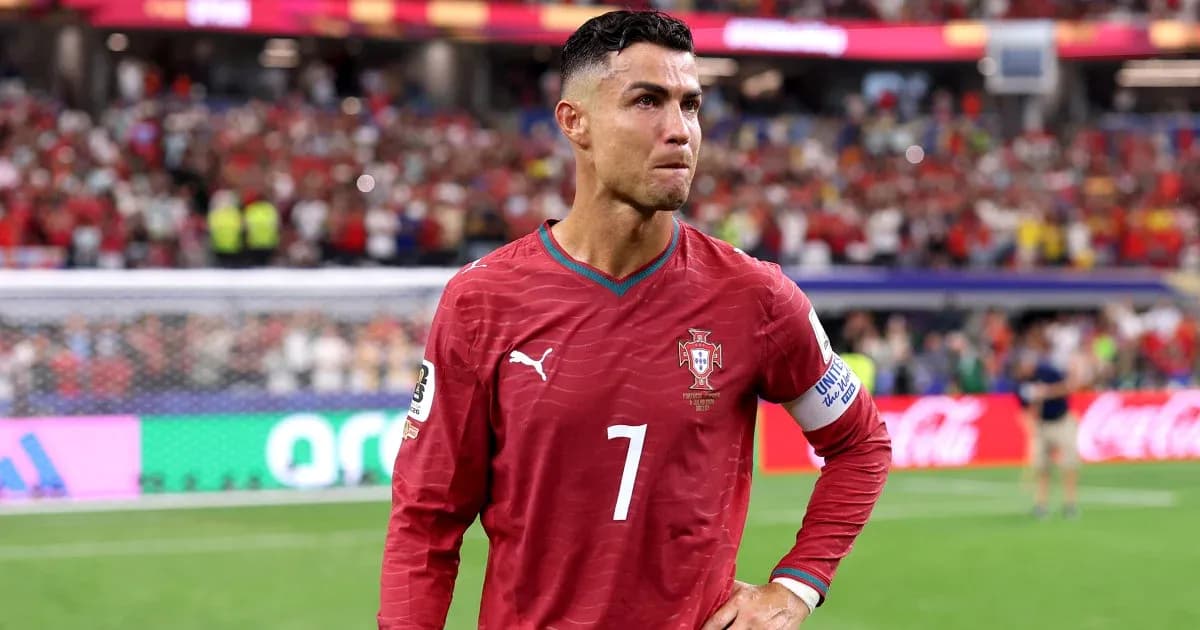
Cristiano Ronaldo walked off the World Cup stage for the last time with tears in his eyes and his head held high.
Portugal’s captain, 39 years old and carrying two decades of expectation on his shoulders, saw his sixth and final World Cup end in the cruellest way on Monday: a 1-0 defeat to Spain in the round of 16, sealed by Mikel Merino’s stoppage-time winner. One more knockout blow. One more World Cup without the trophy he chased for a generation.
On the pitch, the emotion poured out. Off it, the tone was different.
Ronaldo had already prepared himself for this moment. He repeated what he had said on the eve of the match: his legacy with Portugal is intact, whatever the result.
“Well, it’s normal, sad, to leave the World Cup like this,” he said through an interpreter. “But, as I said yesterday at the press conference, I gave it my all, I gave my best. And I leave with a clear conscience.”
That line mattered. Clear conscience. No regrets. Not from a player who has dragged his country into the modern elite almost by force of will.
“This is football, this is the life of a footballer,” he continued. “Sometimes you win, sometimes you lose. And it has to move on. It was my last World Cup, yes, but the rest ... I have time to think, be with my family, not make decisions in the heat of the moment and move on with life.”
No World Cup title. Not even a final. For a career built on numbers that barely seem real, that gap on his CV will always stand out.
Portugal’s deepest run with Ronaldo on the World Cup stage came at the very beginning, in 2006, when a young, electric winger helped push Luiz Felipe Scolari’s side to the semifinals and a fourth-place finish. The years that followed brought more goals, more pressure, more scrutiny, but never that final step.
And yet, look at the body of work.
Ronaldo leaves the tournament as one of its defining figures: 11 goals in 27 World Cup matches, a constant presence across six editions. Only one other man has walked that same six-tournament road: Argentina’s Lionel Messi, 39, who will play again on Tuesday. For an entire era, their names have framed every major international tournament, their rivalry stretching from club football to the sport’s grandest stage.
If the World Cup never quite bent to his will, the European Championships often did. Ronaldo was even more prolific there, scoring 14 times in 30 games and driving Portugal to the Euro 2016 crown in France, the country’s first major trophy.
“Before Cristiano, Portugal hadn’t won any titles,” he said, matter-of-factly, when asked to reflect. That is not arrogance; it is history.
“So, I’m happy. The truth is that the biggest title I won with the national team was in 2016, which for me has the same significance as the World Cup, honestly.”
For him, Paris in 2016 stands alongside any World Cup final he never played. The night he watched much of the game from the touchline, injured, shouting instructions like a man possessed, and then lifted the trophy as captain. That, in his mind, closed the circle.
“Therefore, I repeat, I leave with a clear conscience, having done my best, and that’s it. Tomorrow will be a new day, and life goes on.”
Life, for now, still includes club football. Ronaldo remains under contract with Al-Nassr in the Saudi Pro League for one more season, the club he has represented for the past four campaigns. This coming year may be his last as a professional, though he has not confirmed that.
So the World Cup chapter closes without the fairytale ending he wanted. No golden trophy, no final bow under a shower of confetti. Just a narrow defeat, a late goal from Merino, and a long, lonely walk down the tunnel.
Yet the imprint he leaves on Portugal is unmistakable: a team that had never won a major title before him, a nation that came to every tournament believing it could.
The World Cup moves on without Cristiano Ronaldo. The question now is how long the game itself will, before he decides he has written his final line.