Crystal Palace vs West Ham: Tactical Stalemate Ends in 0-0 Draw
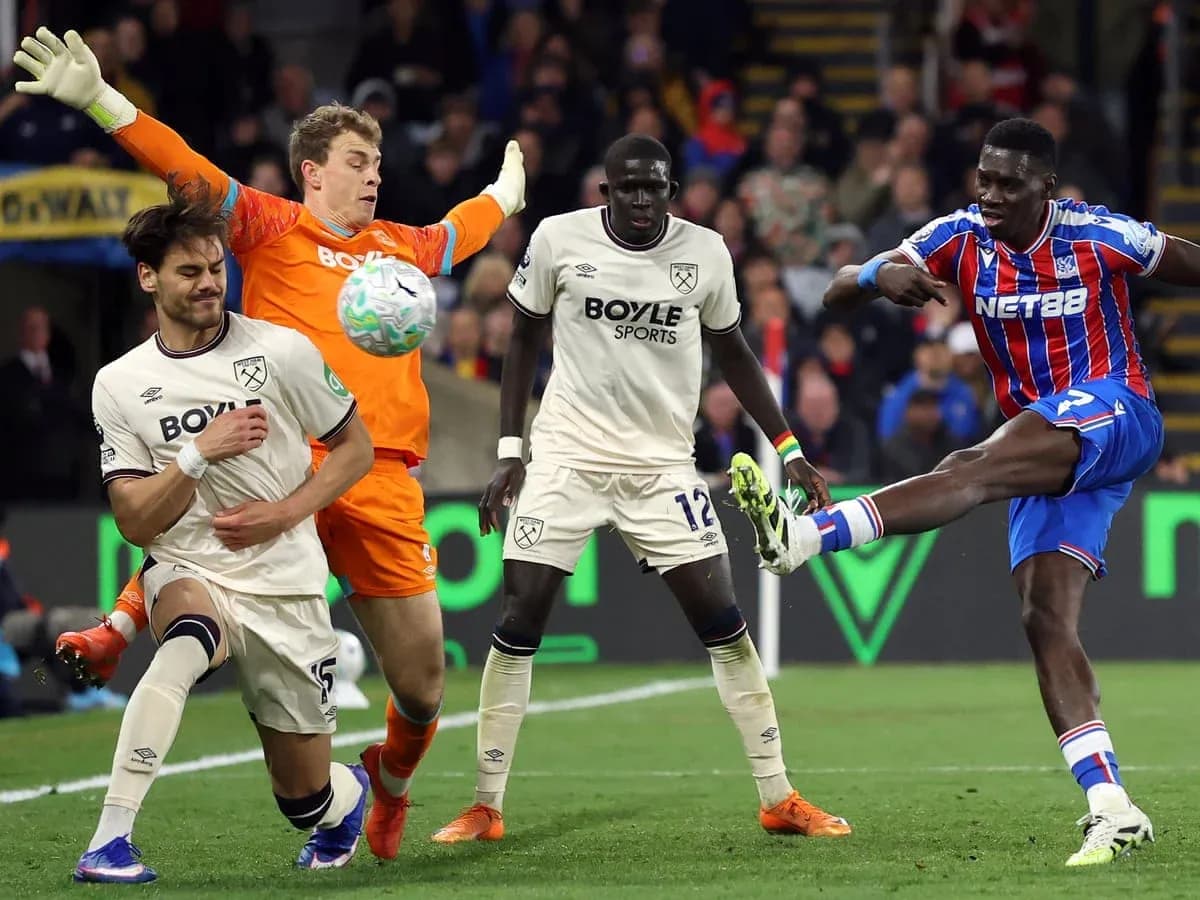
A tense, tactical stalemate at Selhurst Park saw Crystal Palace and West Ham cancel each other out in a 0–0 draw that owed more to structure and discipline than attacking flair, with both sides creating just enough to threaten but never quite enough to break through.
The Story of the Match
Crystal Palace started on the front foot, using their back three and high wing-backs to pin West Ham deep and control early territory. The hosts worked the ball neatly through Jefferson Lerma and Will Hughes, trying to find pockets for Brennan Johnson and Yéremy Pino between the lines, but the final ball repeatedly fell short. The most notable incident of the opening spell was disciplinary rather than attacking: B. Johnson went into the book on 21 minutes for tripping, a sign of how fiercely contested the midfield duels were.
The momentum swung around the hour mark. A tactical shift from Oliver Glasner came on 59 minutes with a triple substitution: Y. Pino, Jørgen Strand Larsen and Hughes all departed, replaced by I. Sarr, J. Mateta and D. Kamada. Palace looked to inject pace and more penalty-box presence, pushing for a breakthrough against a West Ham side that had largely been content to absorb pressure and counter.
West Ham’s own response came later. Nuno Espirito Santo initially kept faith with his starting 4-4-1-1, but as Palace’s energy dipped, the visitors began to carry more threat in transition. On 75 minutes Pablo made way for C. Wilson, adding a more direct focal point. Then, on 84 minutes, T. Castellanos was replaced by M. Kante, freshening up the attacking line. West Ham’s sharper counters produced the clearer chances late on, forcing Dean Henderson into three saves across the match, compared to just one stop required from Mads Hermansen.
A scrappy finale underlined the frustration. In stoppage time M. Diouf was booked for roughing, before D. Munoz saw yellow for unsportsmanlike conduct as tempers frayed. Neither side could find the decisive touch, and the whistle confirmed a goalless draw that felt fair on balance: Palace had more of the ball, West Ham the better sights of goal, and both lacked the ruthlessness to claim all three points.
The Numbers Behind the Game
- xG (Expected Goals): Crystal Palace 0.68 vs 0.61 West Ham (full-match totals)
- Possession: Crystal Palace 54% vs 46% West Ham (full-match totals)
- Shots on Target: Crystal Palace 1 vs 4 West Ham (full-match totals)
- Saves: Crystal Palace 3 vs 1 West Ham (full-match totals)
Palace’s slight edge in xG and possession reflects their territorial control, but West Ham’s four shots on target to Palace’s one underline how the visitors carved the more dangerous moments despite having less of the ball.
The Aftermath: Impact on the Table
For Crystal Palace, the draw means they move to 44 points from 33 matches, with their goals for and against totals staying at 35 scored and 36 conceded, leaving their goal difference unchanged at -1. They remain a solid mid-table presence, edging closer to mathematical safety but missing a chance to climb further into the comfort zone.
West Ham, meanwhile, stay at 34 points from 34 games. Their goals for and against columns also remain at 40 scored and 57 conceded, keeping their goal difference at -17. The point is useful in the battle near the bottom, but with relegation still a live threat, the lack of a cutting edge in a match where they produced the better chances will sting.
Personnel and Tactical Shapes
Palace lined up in Oliver Glasner’s now-familiar 3-4-2-1, designed to build from the back and overload wide areas. Maxence Lacroix anchored the back three, with Chris Richards and Jaydee Canvot stepping out to engage West Ham’s forwards. The wing-backs, Daniel Muñoz and Tyrick Mitchell, were key outlets, pushing high to create a front five in possession. Ahead of them, Johnson and Yéremy Pino floated behind Jørgen Strand Larsen, looking to attack the half-spaces.
A tactical shift after the hour mark saw Glasner chase more direct threat: I. Sarr’s pace on the flank, J. Mateta’s physicality up top, and D. Kamada’s guile in midfield were all introduced together, signalling a push for the win. Later, B. Johnson was withdrawn for J. Devenny on 78 minutes, adding fresh legs but not quite the decisive quality in the final third.
West Ham’s 4-4-1-1 under Nuno Espirito Santo was compact and counter-focused. Axel Disasi and Konstantinos Mavropanos formed a strong central pairing, shielded by Tomáš Souček and Mateus Fernandes. Out wide, Jarrod Bowen and Crysencio Summerville were tasked with springing forward quickly when possession was turned over, supporting Pablo Felipe between the lines and Valentín Castellanos leading the line.
As the game wore on, Nuno adjusted his front line rather than his structure. C. Wilson’s introduction for Pablo on 75 minutes brought a more traditional striker profile, while M. Kante replacing T. Castellanos on 84 minutes added fresh running but maintained the same basic shape. The back four and double pivot remained intact, prioritising defensive stability and a point on the road.
Starting XIs
- Crystal Palace: Dean Henderson; Chris Richards, Maxence Lacroix, Jaydee Canvot; Daniel Muñoz, Will Hughes, Jefferson Lerma, Tyrick Mitchell; Brennan Johnson, Yéremy Pino; Jørgen Strand Larsen
- West Ham: Mads Hermansen; Kyle Walker-Peters, Konstantinos Mavropanos, Axel Disasi, El Hadji Malick Diouf; Jarrod Bowen, Tomáš Souček, Mateus Fernandes, Crysencio Summerville; Pablo Felipe; Valentín Castellanos
Editorial Analysis
This was a match that underlined both teams’ limitations as much as their strengths. Palace’s structure and build-up were largely sound, reflected in their higher possession share (54%) and marginally better xG (0.68), but the lack of incision in the final third was stark, with just one shot on target across the full match. Glasner’s aggressive triple change on 59 minutes showed recognition of the problem, yet even with Sarr and Mateta on the pitch, Palace struggled to turn territory into clear chances.
West Ham, by contrast, executed their away blueprint reasonably well. They ceded the ball but fashioned the more telling opportunities, forcing Henderson into three saves and registering four shots on target (from nine total shots). Their xG of 0.61 suggests they were not wasteful of big chances so much as reliant on half-chances and quick breaks, but there was a sense that with a bit more composure in the final pass, this could have been a valuable away win.
Discipline remained mostly under control, though three yellow cards — B. Johnson early on, and late cautions for M. Diouf and D. Munoz — hinted at rising frustration as the game drifted towards a stalemate. For Palace, the point consolidates a mid-table campaign but does little to answer questions about creativity. For West Ham, it is another small step away from danger, yet their continued reliance on narrow margins and defensive resilience leaves little room for error in the run-in.
In the end, the numbers (xG 0.68 vs 0.61, shots on target 1 vs 4, saves 3 vs 1) tell the story of a balanced contest: Palace the controllers, West Ham the counter-punchers, and neither quite sharp enough to land the decisive blow.