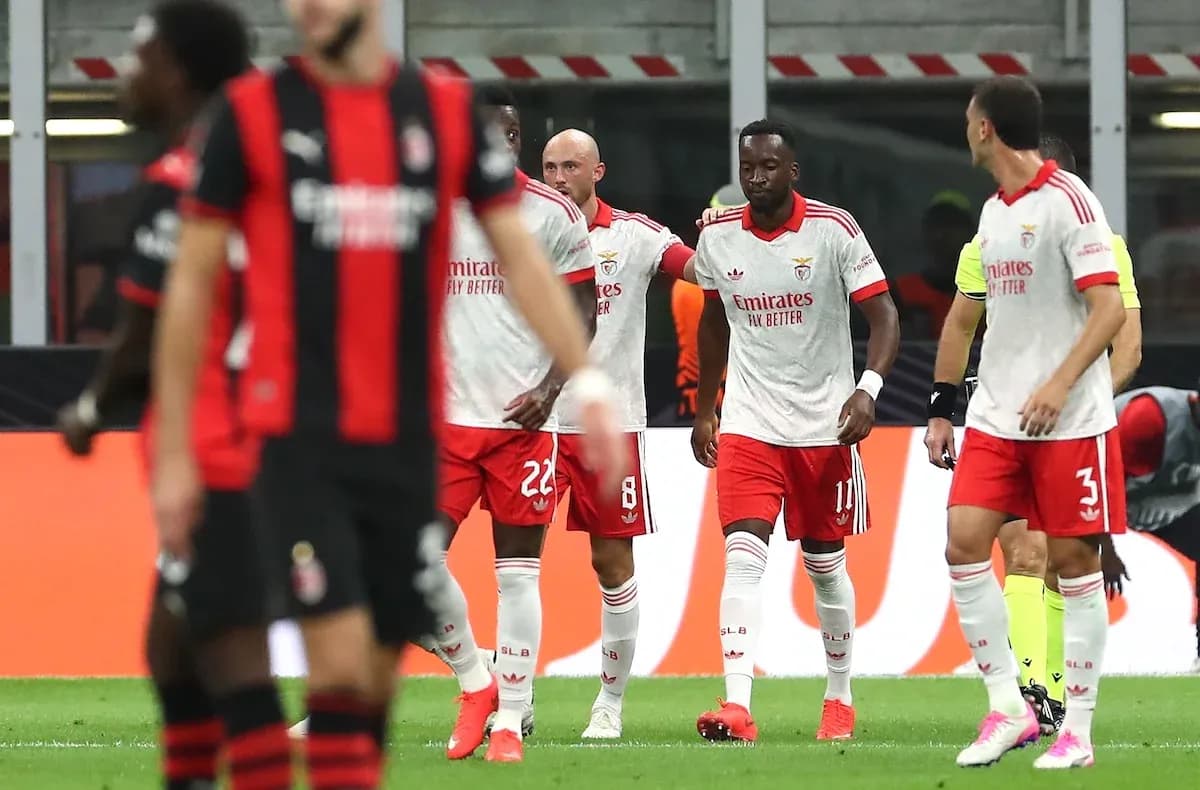
CSKA Sofia vs Maccabi Tel Aviv: UEFA Europa League 3rd Qualifying Round Preview
Under the floodlights of National Stadium Vasil Levski in Sofia on 13 August 2026, CSKA Sofia return home with a three-goal cushion and a chance to finish the job against Maccabi Tel Aviv in the UEFA Europa League 3rd Qualifying Round. For the Bulgarians, it is an opportunity to confirm their impressive early European run and edge closer to the group stage; for the Israelis, it is about pride, reaction, and the faint hope of an unlikely comeback after a bruising first leg.
Season Context
With no full standings table available, CSKA Sofia’s European campaign so far can be measured by their flawless record: 5 matches played in this UEFA Europa League run, 4 wins and 1 draw, with 9 goals scored and only 3 conceded. That consistency has put them in a commanding position in this tie and turned Sofia into a potential springboard towards the main competition.
Maccabi Tel Aviv arrive with a shorter but more volatile European path: 3 matches played, 2 wins and 1 defeat, with 6 goals scored and 3 conceded. They have shown both their attacking ceiling in a 0-5 away win and their fragility in the 0-3 defeat to CSKA Sofia, leaving them walking a tightrope between ambition and damage control in Sofia.
Form & Momentum
CSKA Sofia’s recent form reads WWDWW, a sequence that underlines both resilience and cutting edge (4 wins and 1 draw from 5 matches). Across those 5 games they have averaged 1.8 goals scored per match and only 0.6 conceded, a balance that justifies calling them solid at the back and efficient in attack. Three clean sheets in these 5 fixtures further highlight how difficult they have been to break down.
Maccabi Tel Aviv come in with a form line of WWL, reflecting a strong start followed by a sobering reality check. Over 3 matches they have averaged 2.0 goals scored and 1.0 conceded, numbers that paint them as dangerous going forward but not fully secure defensively. The heavy 0-3 loss to CSKA Sofia shows how quickly that attacking confidence can be punctured when the defensive structure is exposed.
Head-to-Head Patterns
The history between these sides in this competition is short but already significant. On 6 August 2026, at Batumi Arena, CSKA Sofia stunned Maccabi Tel Aviv with a 0-3 away win in the UEFA Europa League, season 2026 (3rd Qualifying Round, August 2026), seizing control of the tie with a ruthless performance. That is the only competitive, non-friendly meeting in the data, but it sets a clear early pattern: CSKA Sofia have already shown they can impose themselves on neutral ground, let alone at home. With no other past clashes listed, the narrative is simple — the Bulgarians hold both the psychological and numerical edge after that emphatic first-leg statement.
Tactical Preview
CSKA Sofia’s European run has been built on adaptability and balance. They have already used a variety of systems — from 4-3-1-2 and 4-3-3 to 3-5-2 and 4-1-4-1 — across 5 matches, suggesting a coach willing to tailor the approach to the opponent while keeping a core identity. The numbers back that flexibility: 9 goals scored and only 3 conceded in those 5 fixtures, plus 3 clean sheets, indicate a team that can press high or sit compact without losing control. Expect a structure with three central midfielders such as Bruno Jordão and M. Ebong providing energy and control, while attackers like I. Pittas, S. Godoy or J. Zwarts offer depth and physical presence in transition. With a 3-goal aggregate lead, CSKA Sofia can afford to play a controlled, mid-block game, choosing moments to counter rather than chasing the match.
Maccabi Tel Aviv have alternated between 3-5-2, 4-3-3 and 4-2-3-1 across their 3 European matches, reflecting a search for the right balance between aggression and stability. Their 6 goals scored and 3 conceded show that when they get their press and vertical passing right — as in their 0-5 away win — they can overwhelm opponents. Players like Dor Peretz and D. Glazer in midfield give them legs and bite, while forwards such as E. Sokler and Y. Malede provide movement across the front line. But the 0-3 defeat at Batumi Arena exposed vulnerabilities in defensive transitions and marking in their back line, particularly when stretched. Chasing a three-goal deficit in Sofia almost forces them into a more attacking shape, which could open spaces for CSKA Sofia’s counters if their rest defence is not carefully managed.
The tactical battle therefore hinges on tempo and risk. CSKA Sofia, with their strong defensive record (0.6 goals conceded per match over 5 games), can slow the game and force Maccabi Tel Aviv into low-percentage attacks. Maccabi Tel Aviv must raise the intensity, press higher, and commit numbers forward, banking on their 2.0 goals-per-game average to find an early breakthrough — but every additional body they send upfield increases the risk of CSKA Sofia exploiting the channels behind.
Statistical Snapshot
- Competition: UEFA Europa League, season 2026 — 13 August 2026.
- Venue: National Stadium Vasil Levski, Sofia.
- Prediction: Win or draw — Double chance: CSKA Sofia or draw.
- Win Probabilities: Home 45% / Draw 45% / Away 10%.
- Model: CSKA Sofia 59.3 — Maccabi Tel Aviv 40.7.
Betting Verdict
The prediction model leans clearly towards the hosts avoiding defeat, with CSKA Sofia or draw advised and win probabilities of 45% for a home win and 45% for a draw against just 10% for an away victory. The comparison model also favours CSKA Sofia overall (59.3 versus 40.7), reflecting their unbeaten run and superior defensive record (3 goals conceded in 5 matches) as well as the authoritative 0-3 win in the first leg. Bookmaker odds for a CSKA Sofia win generally range from around 1.98 to 2.14, implying an approximate probability band of about 47–51%, while the draw sits roughly between 3.10 and 3.25 (around 31–32%) and an away win between about 3.40 and 4.05 (roughly 25–29%). Combining the form, the aggregate scoreline, and the tactical dynamics, the most sensible angle is to follow the model and back CSKA Sofia on the double chance, with the draw a live outcome given their incentive to manage the game rather than chase goals.