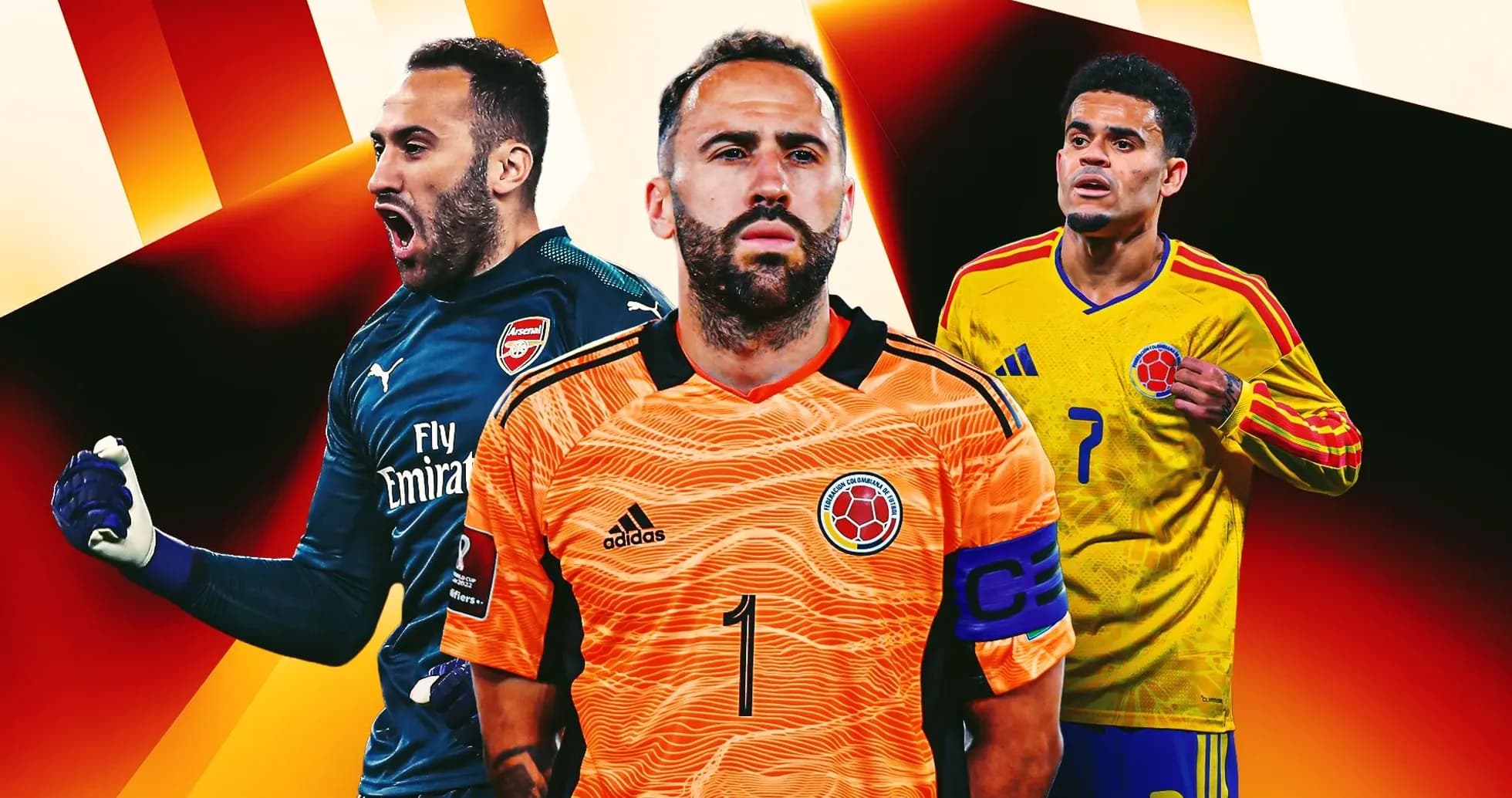
David Ospina: From Relegation to World Cup Dreams
David Ospina was never supposed to last this long.
He is 37 now, edging towards 38 by the time the next World Cup dust settles. Goalkeepers do not usually reinvent themselves on that stage. Fewer still manage to stretch their careers a decade beyond it.
Ospina did both. Quietly. Stubbornly. On his own, winding path.
From relegation scrap to the world stage
Wind back to 2013-14. Nice were staring down the barrel in Ligue 1, a club of stature flirting with the drop. Their attack misfired badly: 30 goals in 38 games. Yet they survived because the man in goal refused to let them fall.
Thirteen clean sheets. Week after week, Ospina held the line while the team in front of him sputtered. It was not glamorous. It was not loud. It was just enough.
That resilience carried straight into the World Cup. Scouts had already taken notice in France, but Brazil turned curiosity into conviction. Four goals conceded in 450 minutes. Calm in chaos. Suddenly, the phone rang from London.
Arsenal wanted him. He went.
“Having belonged to a team like Arsenal was a dream come true. Living that experience was something magnificent in my career,” he said.
Arsenal, in between eras
He walked into North London at a strange moment in the club’s history. Arsène Wenger’s long reign was losing its edge. The football still flowed, but the finances no longer matched the ambitions. The Premier League title felt just out of reach, every single year.
It was an awkward time to be a goalkeeper as well. The narrative now is that one day the position simply changed, that shot-stoppers woke up and were ordered to become playmakers. The reality was messier, a gradual evolution that gathered pace just as Ospina arrived in England.
“I’ve had the opportunity to witness all the transitions across different generations. Today, our position has taken on a much more significant role, largely because we are now expected to be far more involved with our feet - something that wasn't nearly as necessary in the past,” he said.
Does he enjoy that shift? Enjoyment barely comes into it. For a veteran, it is survival.
“Possessing technical proficiency is crucial, as it allows us to initiate attacking sequences right from the back. The goalkeeper has truly become an integral part of the starting eleven - no longer merely the player who prevents goals, but also the one capable of orchestrating a transition quickly and precisely,” he said.
At Arsenal, though, his story never fully ignited. Injuries cut into his rhythm. Then Petr Cech walked in from Chelsea and, with him, the hierarchy changed. For a Colombian keeper trying to cement his place, the margin for error disappeared.
Still, those years mattered. Wenger became a reference point, a manager whose ideas shaped Ospina’s view of the game. And in the dressing room, another figure stood out: the captain, Mikel Arteta.
“I had the opportunity to have him as a teammate when I first arrived at Arsenal. Even back then, he demonstrated his leadership and showed what he could contribute to the game over the course of his career,” Ospina said.
Arteta’s move into management surprised nobody inside that dressing room. His impact now, though, sits at the heart of a bigger question: can he finally drag Arsenal over the line in the Premier League?
“They have a massive opportunity to win the Premier League, led by an excellent manager and featuring young players who are performing exceptionally well. So, let's hope they can achieve that milestone. It would make me very happy to see Arsenal win the Premier League title,” Ospina said.
Watching from home, thinking bigger
These days, Ospina is a world away from the Emirates. He is back where it all began, in goal for Atlético Nacional, the club that shaped his childhood. The noise of North London title races has been replaced by something more familiar, more grounded.
From there, he watches Arsenal every week. And he watches Colombia.
This feels like the last act of a golden generation. James Rodríguez now plays his club football for Minnesota United in MLS, far from the Bernabéu lights that once defined him. Yet he remains a pillar. Around him, a new cast has emerged.
Luis Díaz is in the form of his life, reborn under Vincent Kompany at Bayern Munich. Lucho Suárez has hit the ground running for Sporting CP in Portugal. Across Europe, Colombians occupy serious roles at serious clubs.
“We have players at major clubs in Europe, such as Lucho Suarez and Luis Diaz, who are incredibly important figures. We also count on a player like James Rodriguez, with his experience and quality, as well as Davinson Sanchez, who has been playing in top-tier leagues for quite some time now,” Ospina said.
The core is strong. The depth is new.
Behind them, a younger wave is pushing through. Richard Ríos, Juan Cabal, Daniel Muñoz, and perhaps Jhon Durán, if he can mend fences with the national setup, all carry the potential to shape tournaments rather than simply appear in them. For once, Colombia can look at almost every position and see genuine competition.
“We have players with a great deal of experience, as well as young players who are eager to do things right. There are others among us, those with a bit more experience, who can make very positive contributions to the national team,” Ospina said.
Colombia will not arrive at the World Cup as outright favourites. They will, however, arrive as a problem. They should fight for the group. With a favourable draw and a surge of confidence, a semi-final run is realistic. This team runs on energy and mood as much as tactics. Few understand that better than the man in goal.
One last shot at history
Ospina is still battling for the No. 1 shirt, still central enough that brands want him front and centre. Modelo have made him one of the faces of their World Cup campaign.
“Modelo brings people together, allowing them to experience unique moments anywhere in the world - even right from their own homes- and to share those moments with friends and family,” he said.
The 2026 tournament looks like his last great chance with Colombia. His international résumé is full of strong runs, deep pushes, and semi-finals that stopped just short of immortality. They read like near-misses, not failures, but the gap is obvious to him.
This World Cup offers something different: a squad with balance, a blend of scars and fresh legs, and a veteran goalkeeper who has seen enough to know how quickly a tournament can tilt.
“The expectations are very high,” he said. “Both for what we ourselves aim to achieve, and for what we hope to accomplish for our country.”
For David Ospina, approaching 40, the question is no longer whether he belongs at this level. It is whether this generation, his generation, can finally turn all those “almosts” into the one moment Colombia have waited a lifetime to see.