Dynamo Kyiv vs PAOK: Tactical Analysis of the 3-2 Europa League Defeat
Dynamo Kyiv’s 3-2 home defeat to PAOK at Valeriy Lobanovskyi in the UEFA Europa League 2nd Qualifying Round was a tactical duel defined by contrasting structures: Dynamo’s ball-dominant 4-3-3 against PAOK’s vertically ruthless 4-2-3-1. The Ukrainians controlled territory and possession (58% to 42%), but PAOK’s superior shot volume (14 to 10) and more incisive occupation of the box (11 shots inside the area to Dynamo’s 7) turned their more modest share of the ball into a decisive attacking edge.
I. EXECUTIVE SUMMARY OF THE GAME MODEL
Dynamo, under Igor Kostyuk, built through a classic back four with a three-man midfield aiming to progress via short passing and overloads between the lines. Their 524 total passes, with 456 accurate, underline a patient, circulation-based approach. PAOK, coached by Alessio Lisci, accepted longer defensive phases, using the double pivot to screen and then spring the advanced line of three behind a lone striker. With 380 passes (305 accurate), they were less concerned with volume and more with progression speed and exploiting transition moments.
II. SCORING SEQUENCE & DISCIPLINE WITHIN THE TACTICAL FLOW
The game opened ideally for Dynamo’s positional play. At 4', V. Brazhko finished a move assisted by E. Guerrero, reflecting the 4-3-3’s capacity to push a midfielder into the box from deeper zones. Yet the early lead masked structural vulnerabilities: PAOK’s 4-2-3-1 quickly found spaces around Dynamo’s full-backs and between the lines.
At 13', G. Konstantelias, assisted by A. Zivkovic, equalised for PAOK, a typical 4-2-3-1 action with the No. 10 attacking the half-space. The visitors then tilted the tactical balance at 38', when C. Zafeiris struck to make it 2-1, punishing Dynamo’s difficulties in protecting the central lane once the first pressing line was broken.
Discipline-wise, the match was relatively controlled but not without flashpoints. The card count finished: Dynamo Kyiv 1, PAOK 3, Total: 4. All card events carried no explicit additionalInfo reasons in the data, so they stand as simple yellow-card interventions in the flow.
The only Dynamo caution came at 46' to Matvii Ponomarenko (Dynamo Kyiv), a moment that underlined growing frustration as they chased the game after the break. PAOK’s defensive compactness and counter-threat were backed by three bookings: Pantelis Hatzidiakos (PAOK) at 57', Giannis Konstantelias (PAOK) at 63', and Alexander Jeremejeff (PAOK) at 88'. Chronologically, these cards punctuated phases where PAOK were forced into more aggressive interventions to disrupt Dynamo’s possession and protect their lead.
The second half’s key tactical blow arrived at 51', when B. Santamaria, assisted by Taison, made it 3-1 to PAOK. This goal encapsulated PAOK’s plan: breaking Dynamo’s structure through direct verticality from midfield. Dynamo’s response came at 78', with J. Lonwijk scoring from an A. Yarmolenko assist to narrow it to 3-2, but the comeback fell short despite late territorial pressure.
III. TACTICAL BREAKDOWN & PERSONNEL DYNAMICS
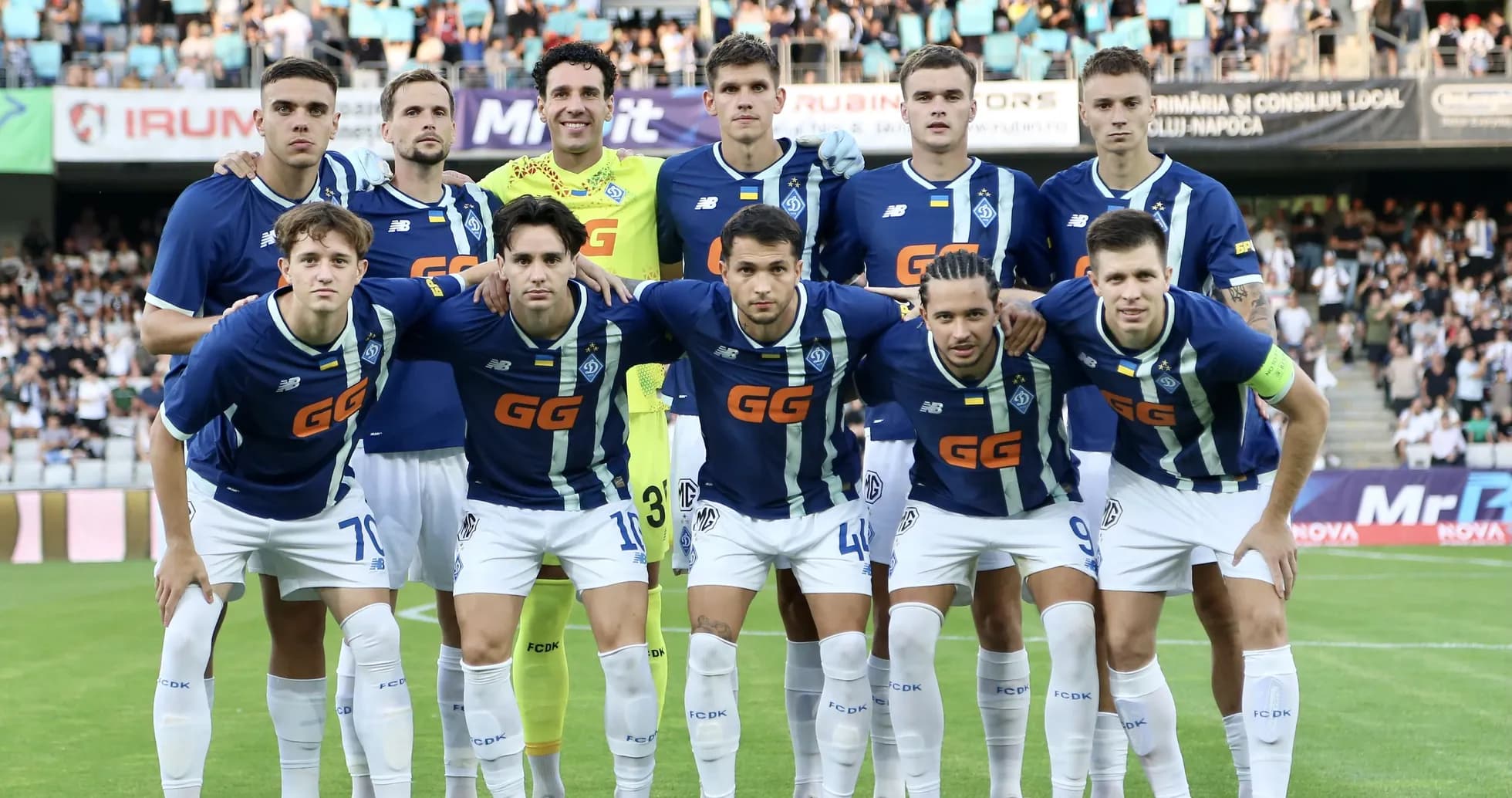
Dynamo’s 4-3-3 was built around a possession spine. The back four of T. Kedziora, K. Bilovar, T. Mykhavko and V. Dubinchak sought to stretch PAOK horizontally, with the three-man midfield of O. Pikhalyonok, V. Brazhko and M. Shaparenko tasked with both ball progression and counter-pressing. High passing accuracy (456 accurate from 524 total) indicates that the first two thirds functioned well structurally: Dynamo could reach advanced zones and circulate under pressure.
However, their 10 total shots, with 7 inside the box, point to a recurring issue: converting territorial control into truly dangerous final-third sequences. Only 5 shots on goal suggest that PAOK’s block effectively forced Dynamo into suboptimal shooting angles or delayed releases, allowing defenders to recover. The single blocked shot statistic further indicates that many Dynamo attempts were either off target or allowed PAOK’s goalkeeper and defensive line clear sight of the ball.
In goal, R. Neshcheret (Dynamo Kyiv) made 4 saves. This number, alongside PAOK’s 7 shots on goal, highlights how often Dynamo’s defensive block was pierced. The back four, often stretched by PAOK’s wide players and late runs from midfield, struggled to compress space in front of the box, giving the visitors repeated opportunities to test Neshcheret.
PAOK’s 4-2-3-1, by contrast, was less about volume and more about punch. With 14 total shots, 11 of them from inside the box, Lisci’s side repeatedly accessed high-value zones. The double pivot of B. Santamaria and C. Zafeiris balanced screening duties with aggressive forward running, as evidenced by both contributing directly to goals. Ahead of them, A. Zivkovic, G. Konstantelias and T. Ali supported A. Mythou, attacking the channels between Dynamo’s centre-backs and full-backs.
J. Pavlenka (PAOK) registered 3 saves. Given Dynamo’s 5 shots on goal, this suggests that PAOK’s defensive line and structure were effective at limiting truly clean looks at goal, with some efforts either off target or blocked before reaching the keeper. PAOK’s compactness is further reflected in their foul count (13) and three yellow cards: they were willing to break up Dynamo’s rhythm with tactical fouls when needed.
The substitution patterns underline the tactical chess match. PAOK’s early change at 14'—Taison (IN) for T. Ali (OUT)—added verticality and direct ball-carrying from midfield, paying off with an assist for the 3-1 goal. Later, A. Jeremejeff (IN) for A. Mythou (OUT) at 77' and defensive rotations such as A. Elustondo (IN) for P. Hatzidiakos (OUT) at 83' signalled a shift toward game management, reinforcing central and wide defensive zones to protect the lead.
Dynamo’s changes were more reactive and attack-oriented. At 55', J. Lonwijk (IN) for O. Pikhalyonok (OUT) and B. Redushko (IN) for N. Voloshyn (OUT) sought extra dynamism between the lines. The double substitution at 68'—A. Yarmolenko (IN) for E. Guerrero (OUT) and V. Buyalskyy (IN) for M. Shaparenko (OUT)—loaded the pitch with creative profiles. The payoff was clear at 78', when Yarmolenko’s quality in the right half-space produced the assist for Lonwijk’s goal. V. Rubchynskyi (IN) for V. Brazhko (OUT) at 85' further tilted the structure towards offensive risk, but without altering the final outcome.
IV. THE STATISTICAL VERDICT
The raw numbers frame the tactical story. Dynamo led possession 58% to 42% and completed more passes (524 to 380), with higher accuracy (456 to 305). They also conceded fewer fouls (10 to 13), underlining their preference for control over disruption. Yet PAOK out-shot them 14 to 10, with a clear edge inside the box (11 to 7) and more shots on goal (7 to 5). Blocked shots (2 for PAOK, 1 for Dynamo) and the corner count (2-1 to Dynamo) reinforce the picture of PAOK defending deeper but more compactly, while Dynamo probed more but created fewer truly clear-cut openings.
Both sides finished without red cards, but PAOK’s three yellows to Dynamo’s one reflect the cost of their more aggressive, transition-heavy defensive style. In sum, Dynamo’s overall form in this match was that of a possession-dominant side lacking penalty-area efficiency, while PAOK’s defensive index and attacking verticality were decisive in turning fewer passes into more—and better—chances, justifying their 3-2 away win in Kyiv.