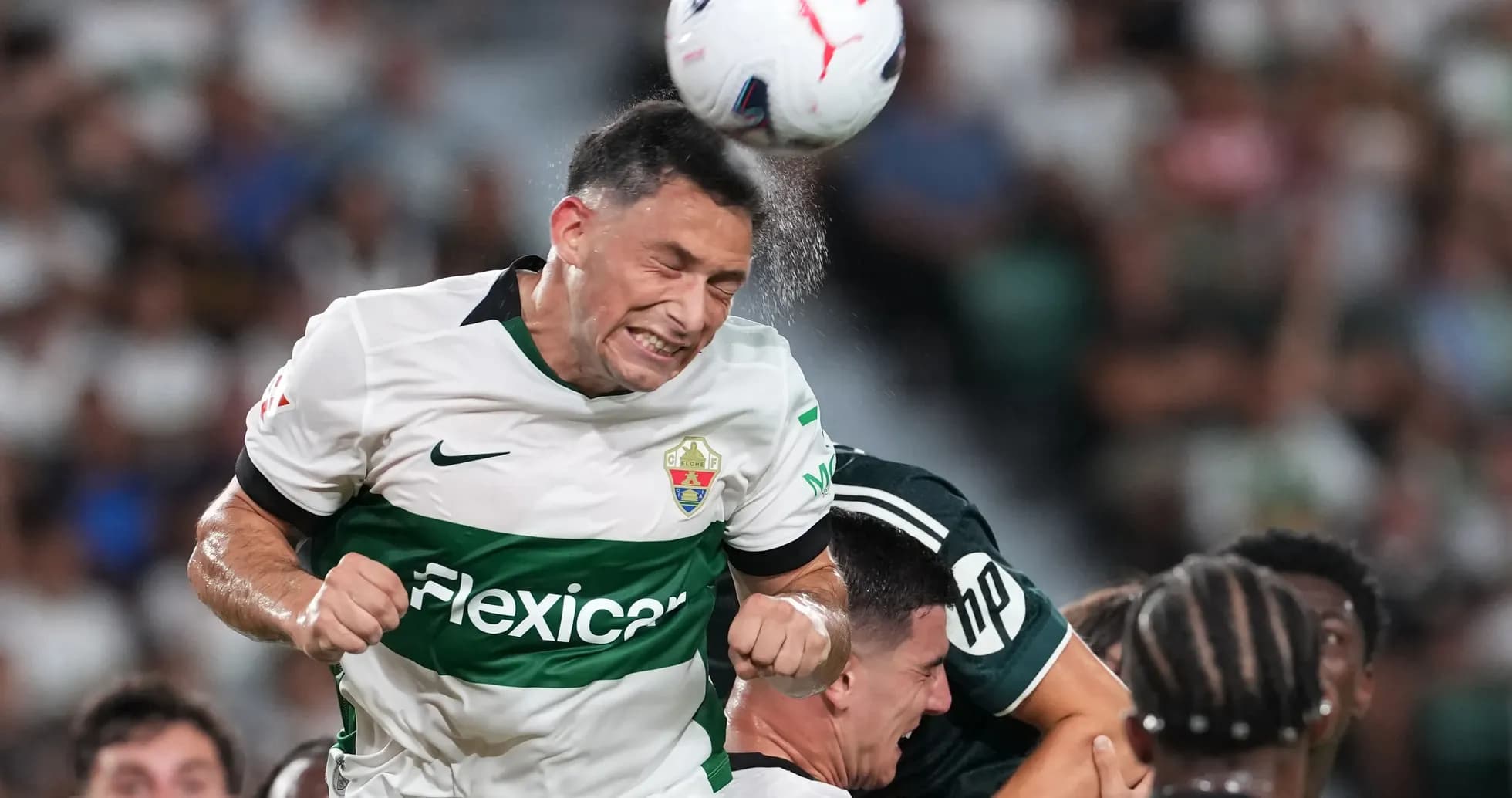
Elche vs Real Madrid: A Clash of La Liga Realities
Under the lights at Estadio Manuel Martínez Valero, this Regular Season - 6 clash brought together two clubs living very different La Liga realities. Elche arrived bottom of the table in 20th, with just 2 points and a goal difference of -8 after 6 matches, while Real Madrid travelled in as title contenders, sitting 2nd with 15 points and a goal difference of +11. The final 3–2 scoreline in favour of Madrid reflects the gap in quality, but also hints at an Elche side whose attacking identity is beginning to sharpen even as their defensive fragility persists.
I. The Big Picture – Structures and Seasonal DNA
Elche set up in a 4-5-1 under Martin Anselmi, a notable shift from their earlier-season preference for back-five systems. Across the campaign, they had previously used 5-4-1 in 3 matches, 3-5-2 once, and 4-4-1-1 once; this 4-5-1 was only their second outing in that shape. The intent was clear: compress central spaces, add numbers in midfield, and then release wide runners late – a plan that fits a team whose total goals are heavily back-loaded, with 50.00% of their strikes coming between 76-90 minutes and another 30.00% between 61-75.
Real Madrid, by contrast, are already fully imprinted with Jose Mourinho’s 4-2-3-1. They have used that formation in all 6 league fixtures, and the structure is built to showcase the front four. Overall this season, Madrid have scored 17 goals in total, with an average of 2.8 goals per game. At home they have been devastating, averaging 4.0 goals, while on their travels they still carry a strong 1.7 goals per game.
Defensively, the contrast is even starker. Elche have conceded 16 goals in total, an average of 2.7 per match, and at home that balloons to 3.7 goals conceded per game. Madrid’s defensive record is far more stable: 6 goals conceded in total, exactly 1.0 per game, with 0.7 at home and 1.3 away.
II. Tactical Voids – Absences and Discipline
Both squads came into this fixture with key absentees that shaped the tactical landscape. Elche were without Y. Santiago, ruled out with a knee injury. For a side already lacking depth and clean sheets – they have yet to record a single one this season, home or away – losing another option reduces Anselmi’s flexibility to switch between back four and back five mid-game.
Real Madrid’s missing list was heavier in quality. Eder Militao (hamstring injury) and F. Mendy (hip injury) stripped Mourinho of two first-choice defenders, while Rodrygo (knee injury) removed a high-tempo wide option. The response was to lean on Ibrahima Konaté and D. Huijsen as the central defensive pairing, protected by the double pivot of F. Valverde and A. Tchouameni, with M. Cucurella and T. Alexander-Arnold as full-backs.
Konaté’s profile is central to understanding Madrid’s risk-reward balance. He has already collected 3 yellow cards this season, with 7 fouls committed and 4 successful blocks, signalling an aggressive front-foot defender who will step in rather than drop off. That aggression is a weapon, but also a disciplinary risk against a side like Elche that tends to grow into games and draw more pressure late on.
On the disciplinary front more broadly, the season data shows Elche’s yellow cards clustering in the second half and stoppage time – 26.67% between 61-75 minutes and another 26.67% between 91-105 – a sign of a team often chasing games and forced into desperate interventions. Madrid’s yellows are more evenly spread but spike between 61-75 minutes at 30.00%, exactly when they often try to kill matches with a higher press or aggressive counter-press.
III. Key Matchups – Hunter vs Shield, Engine Room Battles
The headline duel was always going to be Kylian Mbappé against Elche’s porous back line. Mbappé arrived as one of La Liga’s most lethal forwards: 7 goals and 2 assists in 6 appearances, with 31 shots and 22 on target, and an outstanding 8.22 average rating. He is not just a finisher but a volume shooter and creator, with 11 key passes and an 87% passing accuracy. Crucially, his penalty record this season is imperfect – 1 scored and 1 missed – so while Madrid’s attack is relentless, they are not flawless from the spot.
He was supported by Vinícius Junior on the left, who leads the league’s assist-makers with 3 so far, plus 1 goal and 13 key passes in 6 appearances. Vinícius has also drawn 22 fouls already, an indicator of how often he isolates defenders and forces them into decisions. Against an Elche defence that concedes early and often – 21.43% of their goals against between 0-15 minutes, 28.57% between 31-45 – the Mbappé–Vinícius tandem was always likely to test both the concentration and the composure of Buba Sangare, F. Redondo Solari, V. Chust and R. Revivo.
For Elche, the “Hunter” role is more collective. Fer Niño has 3 goals in 6 appearances, with 7 of his 8 shots on target, a ruthlessly efficient profile for a relegation-battling side. Lucas Cepeda, though still without a goal, has provided 2 assists from the bench and maintains a 90% passing accuracy, hinting at a late-game creative spark. Given Elche’s tendency to score late – that 50.00% surge in the final 15 minutes – the plan is clearly to keep the game alive long enough for Niño and Cepeda to exploit tired legs and stretched lines.
The “Engine Room” confrontation set G. Villar, M. Aguado and M. Neto against Valverde and Tchouameni, with Y. Diomande and Arda Güler floating between lines for Madrid. Güler’s season numbers are quietly elite: 2 assists, 1 goal, 27 key passes and a 91% pass accuracy in just 299 minutes. He is the lock-picker, tasked with finding Mbappé and Vinícius between Elche’s compact banks of four and five.
IV. Statistical Prognosis – Where the Game Was Won
From a statistical lens, the match always tilted towards Madrid’s attacking firepower and structural stability. Heading into this game, they had scored in 5 of 6 league matches and failed to score only once, while Elche had failed to score just once but were conceding heavily, especially at home. Elche’s home record – 3 defeats from 3, with 4 goals scored and 11 conceded – painted a picture of a side that can threaten but cannot contain.
The critical intersection lay in timing. Madrid’s scoring peaks at the start and end of halves – 20.00% of their goals between 16-30 minutes, another 20.00% between 31-45, and a powerful 33.33% between 76-90. Elche’s defensive weak spots are almost a mirror image: 28.57% of their goals conceded between 31-45 and 21.43% in the final quarter-hour. That overlap made an early Madrid surge and a late, frantic phase almost inevitable – exactly the kind of script that leads to a high-scoring away win like 3–2.
Defensively, Madrid’s average of 1.3 goals conceded per away game suggested Elche would likely find a way through once, perhaps twice, especially with their strong late-game scoring profile. But with Elche’s total goals conceded at 16 and no clean sheets at all, the underlying numbers always pointed towards Madrid outscoring them rather than being shut down.
In the end, the 3–2 scoreline fits the underlying trends: Elche spirited and dangerous in phases, especially late, but structurally too open; Madrid ruthless in transition and in the final third, riding the brilliance of Mbappé, the creativity of Vinícius and Güler, and the control of Valverde and Tchouameni. For Elche, the task ahead is to turn their late surges into points and somehow stem the early leaks. For Madrid, this kind of chaotic away win is the hallmark of a side that can chase a title even when not fully secure at the back.