England's Defensive Woes: A Close Look at Stones and Konsa
England’s attack lit up Dallas. Their defence flickered.
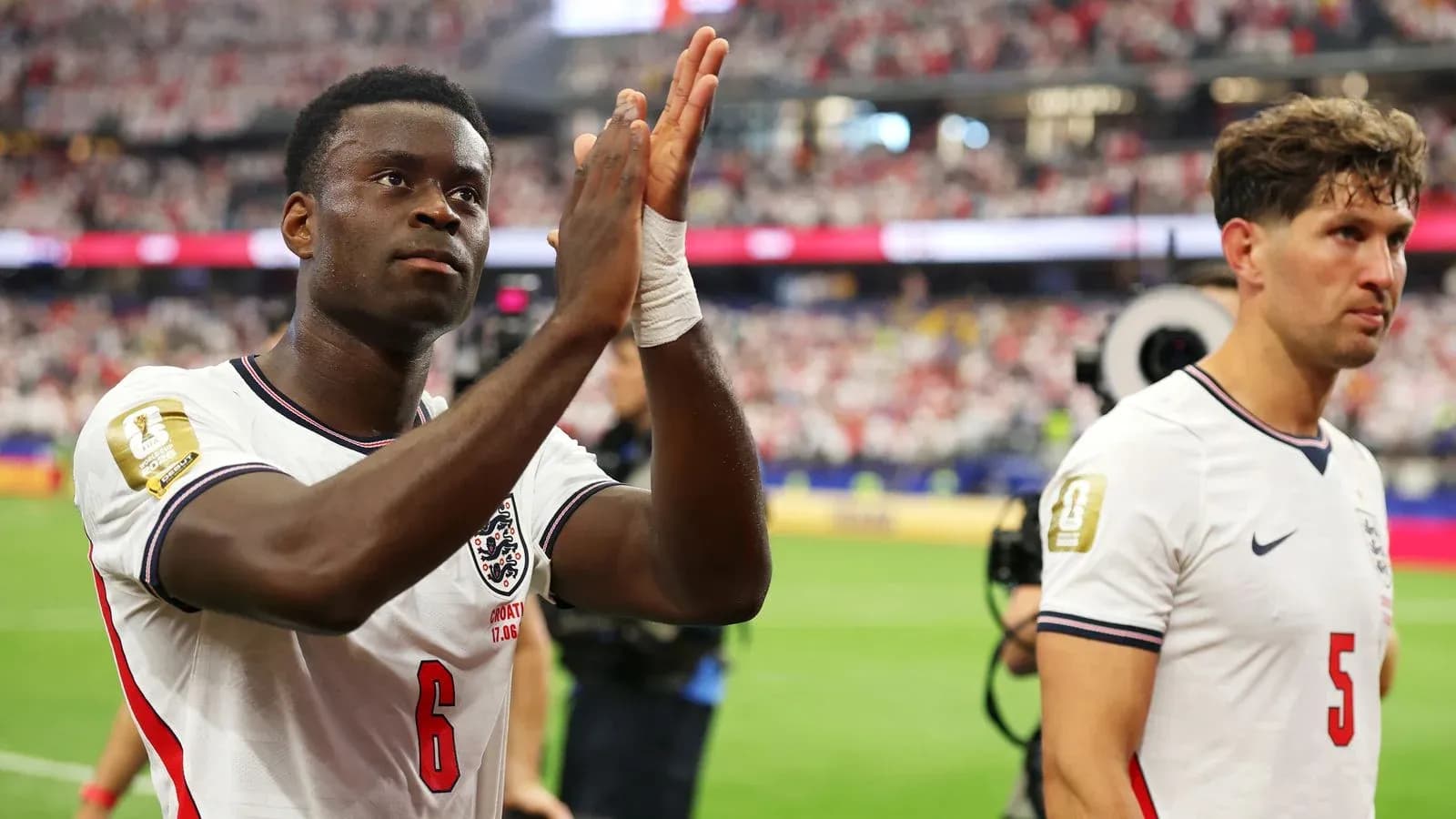
As Jude Bellingham, Harry Kane and company tore into Croatia after the break, the other end of the pitch told a far more unsettling story. Ezri Konsa and John Stones, paired together in the middle, walked out as Thomas Tuchel’s first-choice World Cup centre-backs. They walked off with their credentials under heavy scrutiny.
A partnership under the microscope
The debate had already started before kick-off. Marc Guehi, the form defender of England’s season, sat on the bench. Konsa and Stones got the nod. It felt like a gamble. Croatia’s two goals made it look like a warning.
Stones went to ground too early for the first, opening the door. Konsa then misread a simple chipped pass in the build-up to the second. Two moments, both punished. Two errors that fed directly into the half-time question from Gary Neville on ITV: “Is Konsa and Stones a partnership that can win us the World Cup?”
Neville’s answer came with a sting. Declan Rice and Elliot Anderson, he argued, would have to be “outstanding” to cover for a back line that looked anything but secure in that first 45 minutes.
The problems weren’t confined to isolated mistakes. Croatia’s high press rattled England’s build-up. Stones and Konsa each coughed up possession in dangerous areas as the press bit and composure slipped. By full-time the passing accuracy numbers looked tidy enough, but the eye test – and the defensive stats – told a different tale.
Stones made just one tackle in 87 minutes, and it didn’t come off. One clearance. Four duels won out of seven. Konsa fared worse: three duels won out of eight, just one success in five aerial contests, no tackles, no interceptions. For a World Cup opener, for a defence expected to withstand the later storms of a tournament, it was flimsy.
Jamie Carragher didn’t sugar-coat it on Sky Sports News the next morning. “We probably lack something defensively to go all the way,” he said, pouring cold water on the optimism generated by that “full gas” second half in attack.
The Guehi question
The obvious solution sits right in front of Tuchel. Restore Guehi.
If England do that against Ghana in their second Group L match, the tone around this team could shift quickly. The numbers from Guehi’s brief but blistering Premier League stint with Manchester City point to a defender built for tournament football: aggressive, alert, and comfortable with the ball when the heat rises.
Since arriving from Crystal Palace in January, Guehi has climbed into the top bracket of Premier League centre-backs. He ranked 10th for possession won in the defensive third, fourth for interceptions, sixth for forward passes and fifth for passes completed in that period. That blend of anticipation and distribution is precisely what Tuchel’s system demands.
His rise has come at a cost to one man in particular. Stones.
Once a nailed-on starter for City and for England, Stones found himself squeezed out by Guehi at club level. Across 2026 he played just five times for City, starting only five Premier League games in the past year. City lost four of those. Pep Guardiola trusted Guehi instead, even with Stones declaring himself fit and available during the run-in.
So the question now hangs over Tuchel: if Guardiola preferred Guehi, should England’s manager do the same?
Stones out of position – and out of rhythm
Tuchel clearly still believes in Stones. He values his experience, his leadership, his composure on the ball. Those qualities earned him a World Cup ticket despite his limited minutes for City. But the way he was used against Croatia invites criticism.
To accommodate Konsa on his favoured right side, Stones started on the left of the centre-back pairing. It’s a detail that might look minor on a team sheet. On the pitch, it matters.
Stones has barely operated as a left centre-back for City in recent seasons. Across the last three campaigns he has logged just 371 minutes on that side, compared with 1,151 minutes on the right. Modern defending is built on habits, angles, and muscle memory. Flip a player’s side, and those instincts can falter.
Guehi, by contrast, has grown up on the left. At Palace he often played on the left of a back three. At City he has shown he can switch sides, but his natural rhythm comes from that left channel, opening his body to play forward and stepping into midfield when needed.
Even Guehi has admitted the switch can unsettle a defender. “When you have been playing on one side for a long time and you switch to the other side it can throw you off a little bit,” he told Sky Sports in December. Against Croatia, Stones looked like the living proof.
Tuchel had already tested the Konsa-Stones combination in the final warm-up against Costa Rica. It never felt entirely convincing. The more natural solution, and the one he used against New Zealand in the first warm-up, is clear: Guehi on the left, Stones on the right. Balance restored. Passing lanes cleaner. Body shapes familiar again.
Konsa, James and the ruthless call
That leaves the awkward part. What happens to Konsa?
Tuchel has leaned on him heavily. Only Jordan Pickford and Harry Kane have played more minutes for England under his watch. At centre-back, Guehi has actually started more often alongside Konsa than alongside Stones. Konsa is not a fringe figure. He is a Tuchel regular.
Dropping him after one World Cup game, which England won, would be brutal. It would also send a jarring message through the camp. Yet tournaments are unforgiving. One bad decision can echo all the way to the knockout rounds.
There is a compromise. Play all three.
Tuchel tried that setup against Wales in October: Konsa at right-back, Stones and Guehi in the middle. The shape suited Konsa’s profile. Tuchel has consistently favoured physically robust, defensively-minded full-backs over the more adventurous options. Trent Alexander-Arnold knows that reality too well.
If Konsa moves to right-back and Guehi comes in at centre-back, the obvious casualty is Reece James. That would be a hard sell after James impressed when he drifted into midfield late on against Croatia, adding control and bite.
James appears to be Tuchel’s preferred right-back. He has started there five times under this manager, more than anyone else. His ability to step inside and join the midfield offers a different route through the press, one England may need as the stakes rise.
But James brings another consideration: his body. Injuries have stalked his career. Before this World Cup, he had not started back-to-back games for Chelsea since March. Tuchel has already pushed him through consecutive starts against Costa Rica and Croatia. Managing his minutes is not just a theory. It’s a necessity.
So when do you rest him? The logical answer might be the final group game against a weaker Panama side. Yet England’s qualification and final position in Group L are not settled. Tuchel may not have the luxury of rotation by then. Ghana, with their power and pace, present a more immediate test.
That’s the puzzle. Do you shield James now and trust Konsa as a defensive full-back? Or do you keep your best right-back on the pitch and accept that one of your three leading centre-backs sits out?
Tuchel’s World Cup tightrope
England’s performance against Croatia laid out the stakes in stark contrast. At one end, a front line capable of blowing teams away. At the other, a defensive unit that creaked under pressure and invited doubt.
Tuchel’s job across this World Cup is to walk the tightrope between those two identities. He cannot afford to blunt England’s attacking edge. But he also cannot go deep into this tournament with a back line that looks vulnerable every time it’s pressed high or forced to defend its box.
The tools are there: Guehi’s emergence, Stones’ experience, Konsa’s versatility, James’ dynamism. The combinations are many. The margin for error is not.
Against Ghana, we will find out which way Tuchel jumps – and whether England’s World Cup story is built on fireworks alone, or on a foundation strong enough to carry them all the way.