The Evolution of Substitutions in World Cup Football
When the 2026 FIFA World Cup kicks off across North America, the headlines will focus on the swollen cast: more teams, more games, a new format. But hidden inside the spectacle is another quiet revolution – one that has reshaped tactics, conditioning, and now, even time-wasting.
It’s the story of substitutions. And it has taken almost a century to get here.
From No Changes to No Mercy
In the early days, there was no such thing as “fresh legs.” Between 1930 and 1954, a World Cup lineup was a 90‑minute sentence. The 11 who started were the 11 who finished, no matter what. If a player pulled a muscle, twisted an ankle, or worse, his team simply carried on a man down. Matches became endurance tests, not just of skill but of survival.
A crack in that rigidity finally appeared at Switzerland 1954. For the first time, a substitution was permitted in case of injury. It was a cautious, tightly controlled concession, reserved for specific situations and far from the tactical chess move it would later become.
By England 1966, the door had nudged open but not swung wide. The rule still leaned heavily on medical justification. Coaches could not yet freely manipulate their lineups to outfox opponents; they were still largely at the mercy of the starting XI.
Then came Mexico 1970, and with it, a turning point. Tactical substitutions were formally recognized. Managers could now change players not just because they were hurt, but because a game demanded a different pace, a different profile, a different idea. Strategy stepped off the chalkboard and onto the touchline.
The first substitution in World Cup history arrived in that very tournament. In the opening match between hosts Mexico and the Soviet Union, Anatoli Puzach made way for Viktor Serebryanikov. One change, one name on a fourth official’s board – and the sport crossed a line it would never retreat from.
Building the Modern Bench
Once that barrier fell, the evolution gathered pace. By USA 1994, teams were allowed two substitutions, plus a third exclusively for an injured goalkeeper. It was still modest by today’s standards, but it hinted at a growing recognition: the modern game was too intense, too fast, to be played on fumes.
France 1998 brought a cleaner, bolder framework. The rulebook locked in a maximum of three substitutions per match, regardless of position. No more special clauses for goalkeepers. Three changes, full stop. That structure defined an era.
For years, including at Russia 2018, those three substitutions framed the tactical narrative. Coaches hoarded them, gambled with them, sometimes wasted them. Then came another tweak that subtly altered extra time: if a match went beyond 90 minutes, each team earned an additional substitution. A fourth roll of the dice when legs were heavy and minds tired.
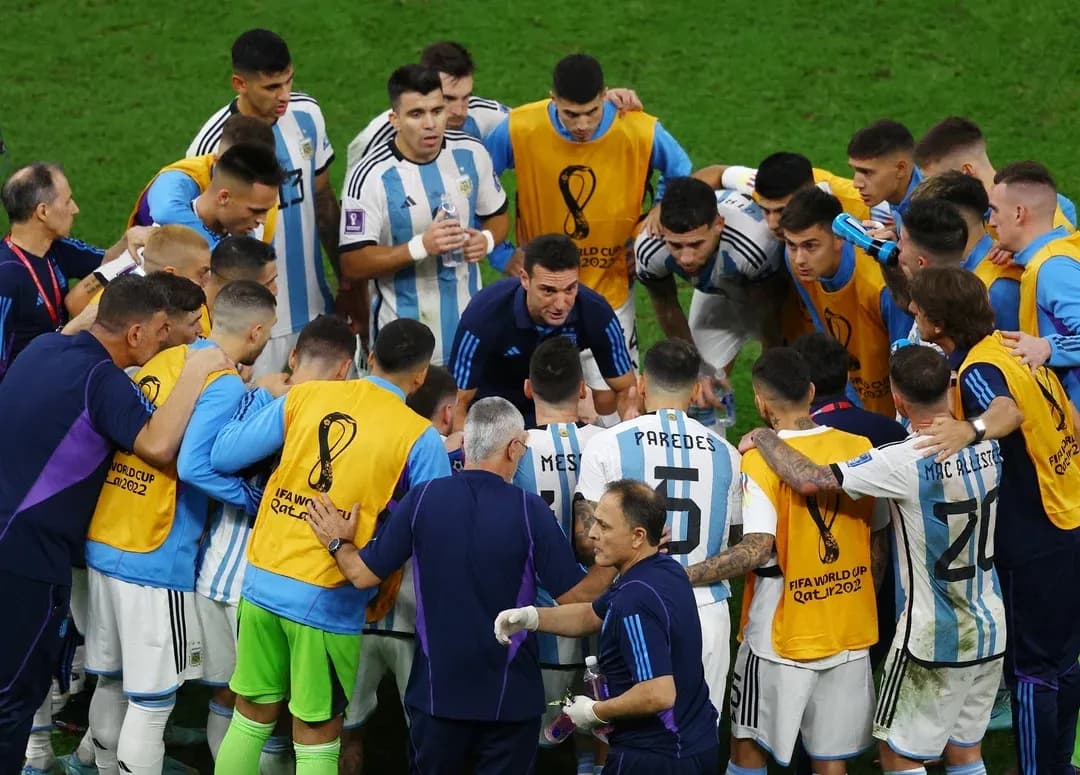
The real upheaval, though, landed in Qatar. The World Cup in 2022 embraced five substitutions per match, a response born from congested calendars and the physical strain on elite players. What began as a measure to protect bodies quickly became a strategic goldmine. Managers could reshape games in waves, swapping half a team if needed, changing tempo, pressing intensity, even entire systems on the fly.
2026: Five Subs, Faster Games, Less Time-Wasting
The 2026 tournament will keep that five‑substitution model, but it won’t stop there. The next frontier is tempo – and specifically, how long it takes for a player to leave the pitch.
One of the most significant new measures targets a familiar frustration: the slow, theatrical walk to the touchline when a team is leading and the clock is their best friend. Under the updated rule, when a player is substituted, he will have a maximum of 10 seconds to leave the field.
Miss that window, and the punishment is sharp. The player must still go off, but his team cannot immediately bring on the replacement. For one full minute, they will play with one fewer player. In tight knockout games, that is not an inconvenience; it is a risk.
This is not just about optics or irritation. It’s about protecting the rhythm of the sport in a tournament that will already stretch players and fans with its expanded format. The message is clear: get off quickly, or your team suffers.
From an era with no substitutions at all to a World Cup where the bench is a tactical arsenal and even the act of leaving the pitch is timed, football’s rules have chased the reality of the modern game.
In 2026, managers won’t just be judged on who they bring on. They’ll be judged on when, how often – and now, how cleanly their players get off the stage.