Ferencvarosi TC vs Twente: Tactical Insights from 2-2 Draw
Ferencvarosi TC and Twente produced a tactically volatile 2-2 draw at Groupama Aréna in the UEFA Europa League 2nd Qualifying Round, a match defined less by statistical control and more by structural shifts and game-state management. Ferencvaros led 1-0 at half-time and extended to 2-0 despite going down to ten men, only for Twente’s bench and attacking reconfiguration to drag the tie back level late on. With most numerical metrics unavailable, the tactical picture is drawn from lineups, events, and substitutions, which together reveal a contest that swung on a red card, aggressive second-half changes, and contrasting uses of the 4-3-3.
Both sides started in a 4-3-3, but with different intentions. Balazs Borbely’s Ferencvaros used a fluid, midfield-heavy interpretation: nominal “wingers” like C. O’Dowda and K. Zachariassen were listed as midfielders, hinting at an emphasis on compactness and second-ball control around central areas rather than pure wide isolation. The front line with L. Joseph as the central forward looked geared toward vertical runs and counter-attacking channels rather than sustained positional attacks.
Twente’s 4-3-3 under John van den Brom was more orthodox: a clear back four, a three-man midfield platform of R. Zerrouki, K. Hlynsson and T. van den Belt, and a front trio with W. Weghorst as a classic reference point, supported by D. Rots and S. Orjasaeter. On paper, Twente’s structure offered more natural width and crossing potential, while Ferencvaros’ selection suggested a desire to crowd the middle and attack quickly once possession was regained.
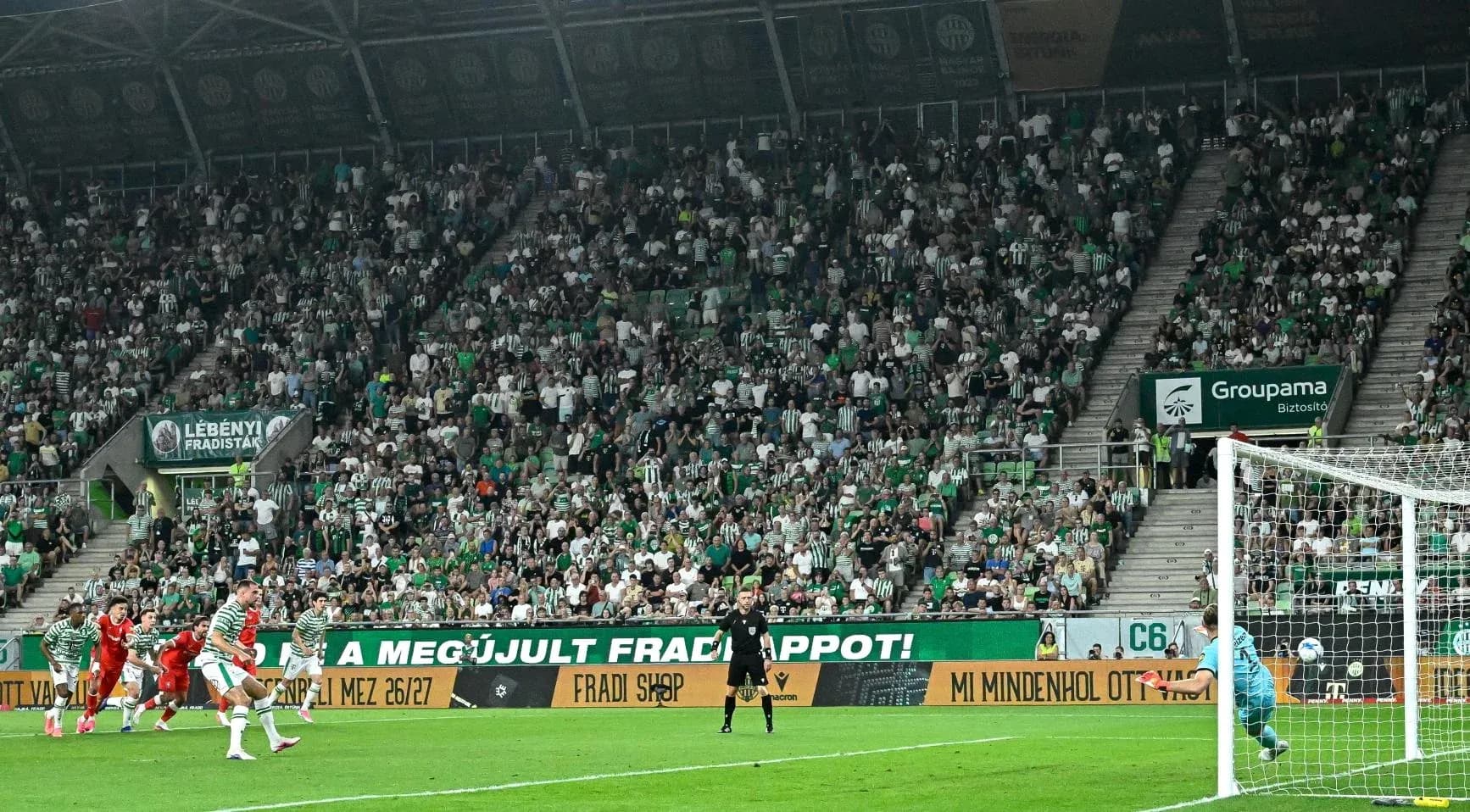
The first major tactical inflection came with the 22' opener: T. Raemaekers converted from the penalty spot to give Ferencvaros a 1-0 lead. For a centre-back to be on penalty duty underlines his status and composure, but more importantly, the early advantage allowed Ferencvaros to lean into a compact, mid-to-low block. With both teams in 4-3-3, the home side could now afford to keep their wide midfielders narrower, protect central lanes into Weghorst, and threaten in transition through Joseph’s running and the late surges of Zachariassen.
The 36' red card to P. Rommens for “Serious foul” radically altered the home side’s tactical demands. Reduced to ten men, Ferencvaros had to compress space even more, likely collapsing into a 4-4-1 out of possession, with one of the advanced midfielders dropping into a flat line alongside G. Kanichowsky and M. Corbu. The sending-off forced Borbely’s team to sacrifice some pressing height and ball circulation in exchange for deeper protection of the back four, with Raemaekers and M. Gomez central to absorbing pressure.
Remarkably, Ferencvaros did not retreat into pure survival mode. At 50', L. Joseph struck for 2-0, a crucial moment that speaks to their transition threat and the discipline of their defensive shape even with ten men. The home side’s ability to spring forward from a reduced base suggests that Joseph was left high as an outlet, with support arriving from Zachariassen and possibly overlapping or underlapping runs from A. Osvath and Cadu. Going 2-0 up with a man down framed the rest of the match: Ferencvaros were now in a protect-and-counter scenario, while Twente were forced into riskier, more aggressive structures.
The 56' double yellow cards for Cadu (Ferencvaros) and T. van den Belt (Twente), both for “Unsportsmanlike conduct”, highlighted how emotionally charged the midfield duels had become. For Ferencvaros, Cadu’s booking further constrained the aggression of their wide defensive work; any mistimed challenge risked a second dismissal. For Twente, van den Belt’s card preceded a deeper tactical shift: he was withdrawn at 63', with Y. Taha (IN) coming on, a move that likely injected more verticality and directness into the visitors’ midfield.
Van den Brom’s bench became the decisive tactical lever. At half-time, he had already made two assertive changes: S. Lammers (IN) for K. Hlynsson and D. Weidmann (IN) for A. Adelgaard, both at 46'. These moves indicate a pivot toward a more attack-minded configuration, sacrificing some stability on the left side of the back four and in midfield control to add another forward profile and a fresh central presence. Later, at 72', he doubled down: M. Pjaca (IN) for D. Rots and L. Vennegoor of Hesselink (IN) for S. Orjasaeter. By this stage, Twente’s nominal 4-3-3 was morphing into a multi-striker, high-occupation front line, with Weghorst and Vennegoor of Hesselink both present as aerial and penalty-box targets, and Lammers and Pjaca able to operate in the half-spaces or wide.
Ferencvaros’ response from the bench was more conservative and game-state driven. At 73', Dele (IN) replaced C. O’Dowda, likely to refresh legs on the flank and maintain counter-punching potential. At 78', N. Zohore (IN) came on for L. Joseph, suggesting a like-for-like change at centre-forward to preserve the pressing and outlet function up front despite fatigue. The 88' substitution of J. Levi (IN) for the booked Cadu at 88' further underlined Borbely’s priority: protecting the flanks and avoiding another dismissal while trying to see out the lead.
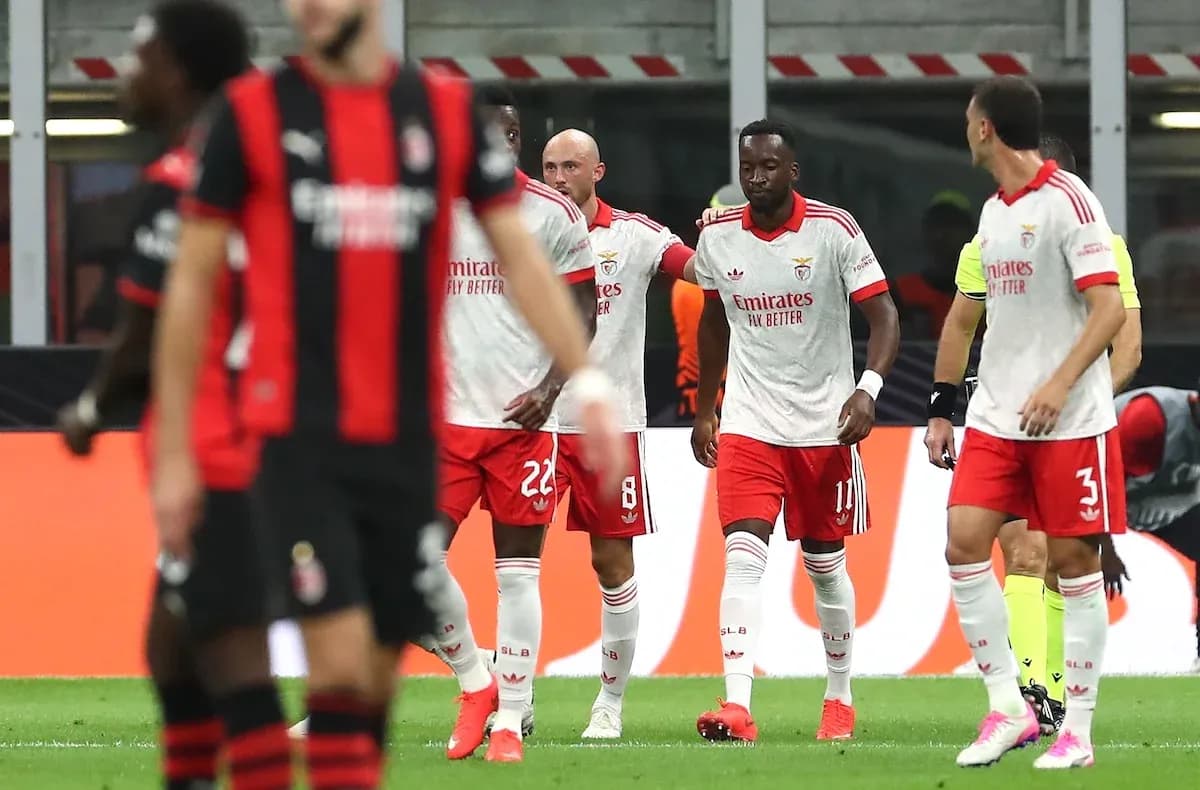
The late goals expose how the tactical balance ultimately tilted under sustained pressure. At 82', W. Weghorst pulled one back for Twente, making it 2-1. With multiple forwards now occupying the box and Ferencvaros down a man, the visitors were able to overload central channels and exploit second balls around the area. Just four minutes later, at 86', L. Vennegoor of Hesselink levelled at 2-2, validating van den Brom’s aggressive use of his bench and his decision to stack the front line with aerial threats and penalty-area presence.
Discipline also shaped the closing phases. Twente finished with three yellow cards in total — van den Belt at 56', S. Lemkin at 61' for “Unsportsmanlike conduct”, and Y. Taha at 88' for “Foul” — versus Ferencvaros’ one yellow (Cadu) and one red (Rommens). The card profile reflects Twente’s increasingly combative push to break down a deep, undermanned block, and Ferencvaros’ struggle to maintain defensive intensity without crossing disciplinary lines.
With no reliable possession, passing, or chance-creation figures available, the statistical verdict rests on game state and discipline. Ferencvaros led 1-0 at half-time and 2-0 by 50', despite the 36' red card, which strongly implies that their compact structure and transitions were effective for long stretches. Twente’s comeback, driven by a sequence of proactive substitutions and a clear shift toward a multi-striker approach, underlines their superior squad depth and capacity to change the rhythm of the match from the bench.
Card totals are clear and decisive: Ferencvarosi TC: 1 yellow, 1 red; Twente: 3 yellow, 0 red; total cards: 5.
In tactical terms, the red card forced Ferencvaros into a reactive, low-block game that they almost executed perfectly, while Twente’s three yellows are the cost of relentlessly increasing pressure. The 2-2 final score, with Ferencvaros surrendering a two-goal cushion, ultimately reflects how difficult it is to preserve structural integrity and concentration with ten men against a side willing and able to flood the final third.