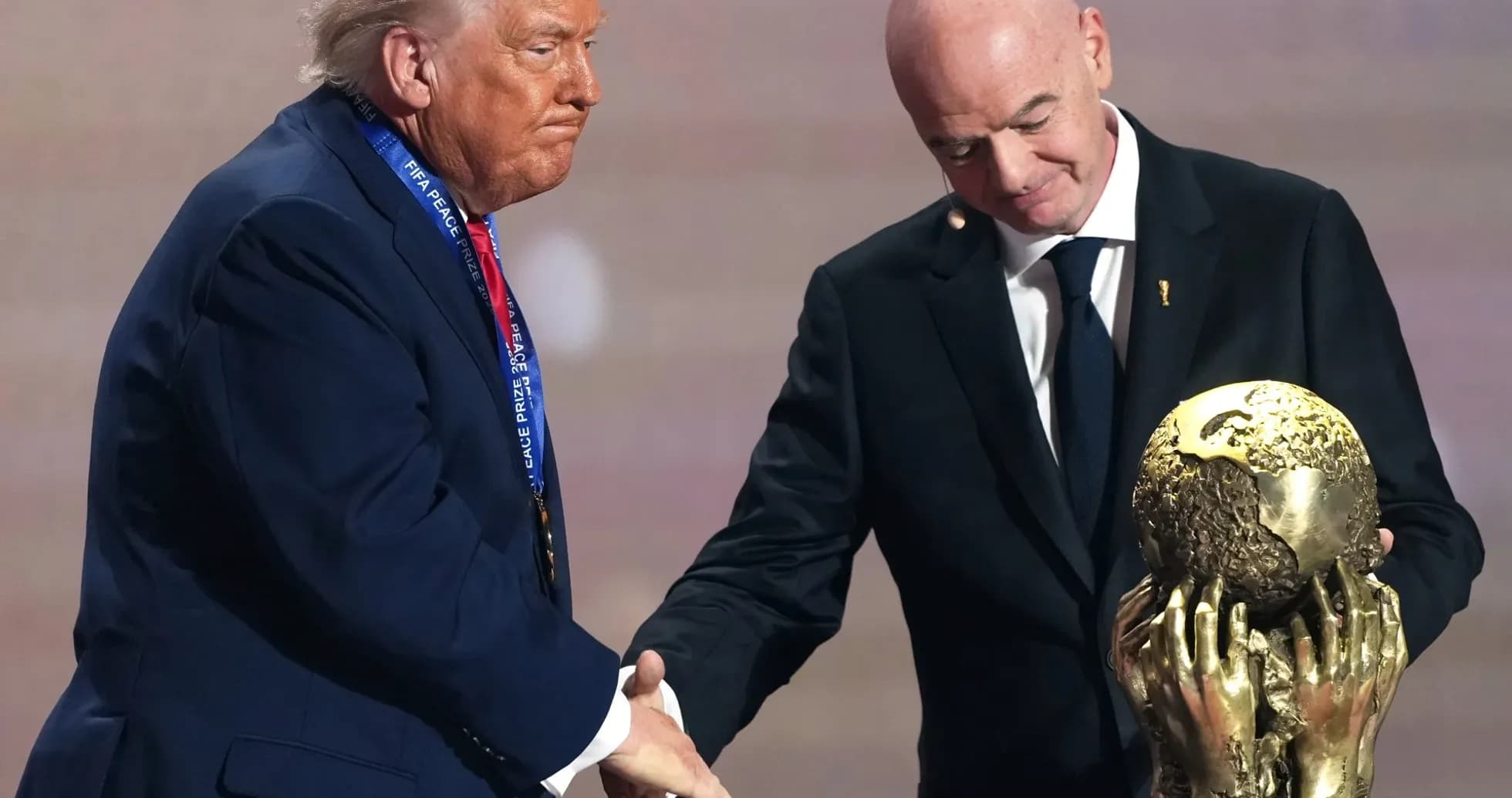
FIFA's Controversial Peace Prize: A Political Storm Ahead of the World Cup
With six weeks to go until the World Cup, FIFA is facing a storm that has nothing to do with tactics, team selections or VAR.
This time, the fight is over what football should be – and where the sport ends and politics begins.
Klaveness: “Abolish the prize”
Norwegian Football Association (NFF) president Lise Klaveness has gone straight to the heart of the issue, calling on FIFA to scrap its new peace prize altogether.
Her message is blunt: this is not FIFA’s job.
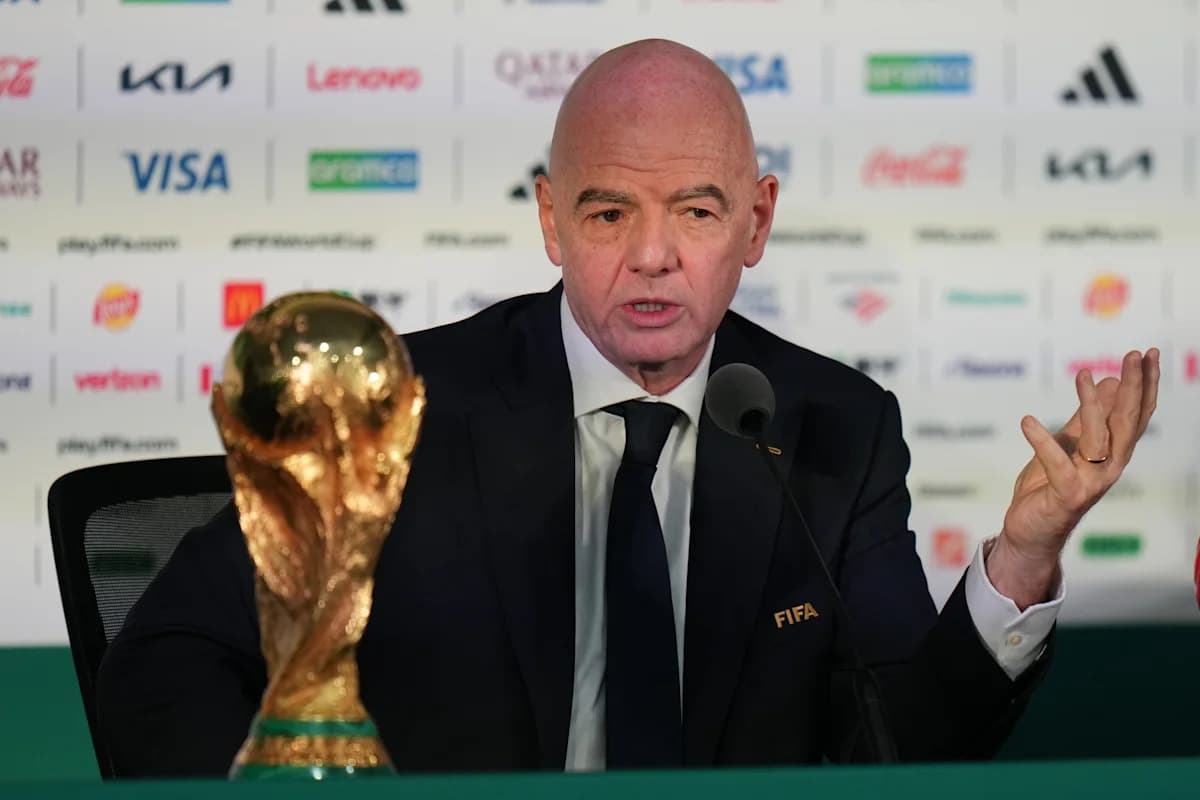
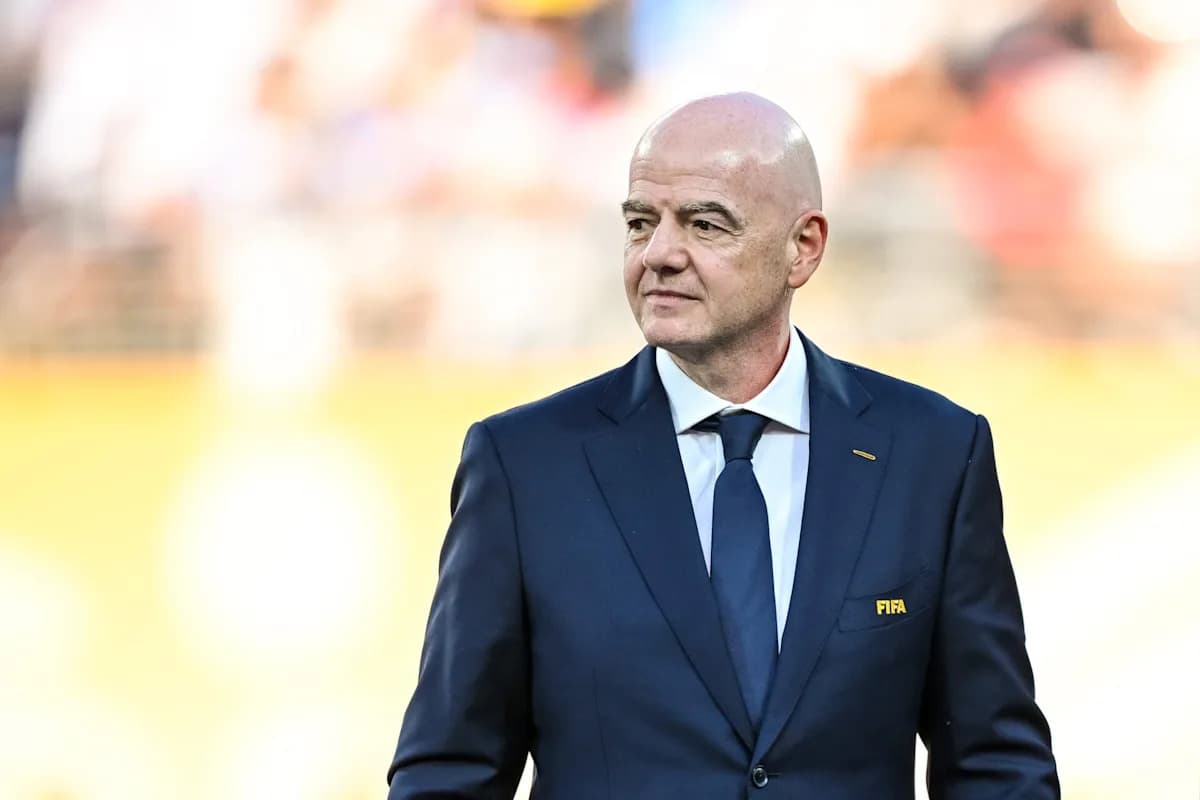
Led by Gianni Infantino, world football’s governing body has been heavily criticised since it chose United States President Donald Trump as the inaugural winner of its peace award at the World Cup draw in December. With the US co-hosting this year’s tournament alongside Canada and Mexico, the optics were always going to be combustible. The decision lit the fuse.
The prize itself has been widely read as a consolation gesture for a president who has repeatedly argued he deserves the Nobel Peace Prize. For many inside the game, FIFA’s move crossed a line.
“We [the NFF] want to see it [the FIFA peace prize] abolished. We don’t think it’s part of FIFA’s mandate to give such a prize; we think we have a Nobel Institute that does that job independently already,” Klaveness told an online news briefing.
She did not stop there. Klaveness warned that football’s institutions must keep a clear distance from state leaders, or risk being dragged into political theatre they cannot control.
“We think it’s important for football federations, confederations and also FIFA to try to avoid situations where this arm’s-length distance to state leaders is challenged, and these prizes will typically be very political if you don’t have really good instruments and experience to make them independent, with juries and criteria, et cetera.
“That is full-time work; it’s so sensitive. I think from a resource angle, from a mandate angle, but most importantly from a governance angle, I think it should be avoided also in the future,” she said.
A 45-year-old lawyer with a growing reputation as one of football’s sharpest governance voices, Klaveness is not merely offering an opinion. She is moving to formalise it.
She confirmed that the NFF board will write to support calls for an investigation into the prize, backing nonprofit organisation FairSquare, which has alleged that Infantino and FIFA may have breached their own rules on political impartiality.
“There should be checks and balances on these issues, and this complaint from FairSquare should be treated with a transparent timeline, and the reasoning and the conclusion should be transparent,” Klaveness said.
FIFA did not respond to a request for comment.
Irvine: “A mockery” of FIFA’s own human rights policy
While Klaveness presses on governance, players are speaking from the perspective of football’s moral authority.
Australian international Jackson Irvine has accused FIFA of undermining its own claim to be a force for good, arguing that the Trump award cuts directly against the organisation’s Human Rights Policy.
He, too, zeroed in on the peace prize.
The context is hard to ignore. A month after the World Cup draw, the US launched a military strike on Venezuela. On February 28, it began joint air attacks with Israel on Iran. Against that backdrop, FIFA’s decision to hand Trump a peace prize landed with a thud.
“As an organisation, you would have to say decisions like the one that we saw awarding this peace prize make a mockery of what they’re trying to do with the human rights charter and trying to use football as a global driving force for good and positive change in the world,” Irvine told Reuters.
His frustration cuts deeper than a single ceremony.
“Decisions like that feel like they just set us back in the perceived market of what football currently is, especially at the top level, where it’s becoming so disconnected from society and the grassroots of what the game actually is and means in our communities and in the world.”
FIFA’s human rights promises under the spotlight
FIFA has not been silent on human rights in recent years. On paper, its commitments look substantial.
The organisation published its first Human Rights Policy in 2017. For the 2026 World Cup, its Human Rights Framework sets out requirements for host cities: promote inclusion, protect freedom of expression, prohibit discrimination. The tournament, scheduled from June 11 to July 19, is framed as a showcase of those values.
Rights groups are not convinced that the words match the reality.
They argue that FIFA must push the US far harder on the risks of human rights abuses involving athletes, fans and workers. Their concerns focus on a hardline immigration crackdown and deportation drive pursued by the Trump administration, warning that the people who make the World Cup possible could be the ones most exposed.
So the tension grows.
On one side, glossy policy documents and a new peace prize. On the other, mounting accusations that the same prize – and the choice of its first recipient – has dragged football into the very political arena FIFA claims it wants to rise above.
With the World Cup looming and the world’s eyes about to turn to the pitch, the question is no longer whether football is political.
It is who gets to decide what that politics looks like – and whether FIFA is still trusted to referee its own game.