Fiorentina vs Napoli: Tactical Draw in Serie A Clash
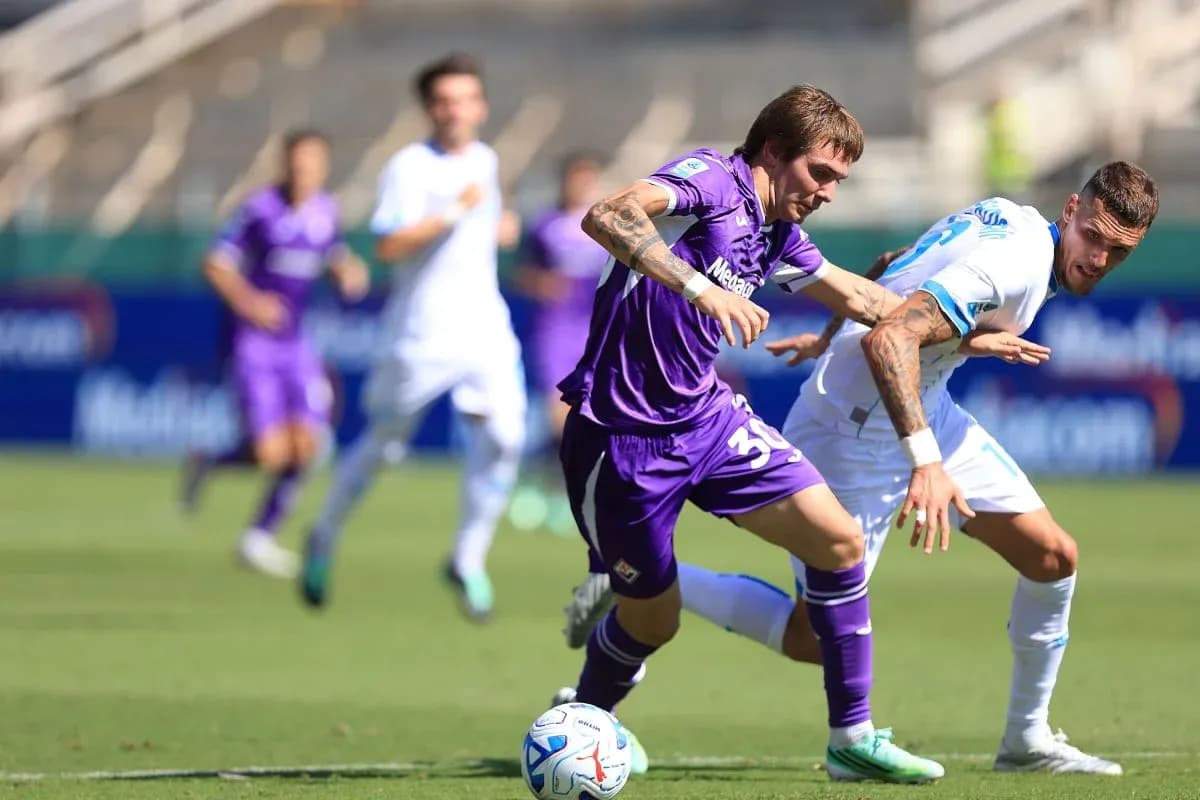
Under a clear Tuscan sky at Stadio Artemio Franchi, Fiorentina and Napoli walked out knowing this was more than just “Regular Season - 5.” It was a collision between a side fighting to escape the lower reaches of the Serie A table and another trying to reassert itself among the league’s elite. Ninety minutes later, a 1-1 draw told a story of tactical compromise, emerging talents, and a Napoli side that let control slip away.
Pre-Match Context
Heading into this game, the numbers painted Fiorentina as a fragile host. Seventeenth in Serie A with 4 points from 5 matches, their overall goal difference stood at -6, the product of 6 goals scored and 12 conceded. At home they had been particularly vulnerable: 3 games, 0 wins, 1 draw, 2 defeats, with only 2 goals for and 6 against. Napoli, by contrast, arrived in Florence in 9th place with 7 points, their overall goal difference a modest but positive 1 (7 scored, 6 conceded). On their travels they had shown balance and resilience: 3 away matches, 1 win, 1 draw, 1 defeat, with 5 goals scored and 4 conceded.
Tactical Setups
Paolo Vanoli responded to that context with a bold, youthful 4-3-3. D. de Gea anchored the side, a steady veteran presence behind a back four of Viery, L. Ranieri, R. Dragusin and A. Jimenez. In midfield, C. Ndour, N. Fagioli and A. Atta formed a narrow triangle tasked with both shielding and springing transitions. Ahead of them, the front three of F. Mastantuono, M. Pellegrino and A. Njie offered pace, directness and, in Mastantuono’s case, genuine star potential.
Napoli, under Massimiliano Allegri, set up in a 4-2-3-1 that looked, on paper, built to dominate the central lanes. V. Milinkovic-Savic started in goal, protected by G. Di Lorenzo, A. Rrahmani, R. Marin and M. Olivera. The double pivot of B. Gilmour and S. Lobotka promised control and circulation, while the line of three behind R. Hojlund – M. Politano, K. De Bruyne and N. Lang – hinted at a side that could overload any zone in the final third.
Absences and Their Impact
The absences framed much of the tactical story. Fiorentina were without F. Parisi and R. Sottil, both ruled out with knee and back injuries respectively. Without Parisi’s thrust from full-back and Sottil’s wide threat, Vanoli leaned into the back four on the pitch and trusted Mastantuono and Njie to stretch Napoli from higher starting positions rather than from deep overlaps.
Napoli’s list of missing players was longer and more structurally significant. A. Buongiorno’s knee injury removed a left-sided defensive leader; L. Spinazzola and Alisson Santos, both sidelined with muscle problems, stripped Allegri of natural width and rotation options down the flanks. In midfield, the absence of S. McTominay due to heart problems deprived Napoli of a physically dominant runner who could have complemented Gilmour and Lobotka. A. Meret’s injury meant Milinkovic-Savic continued in goal, while the loss of Giovane and L. Marianucci trimmed depth further. The bench still carried quality – F. Anguissa, David Neres, L. Lucca – but Allegri’s margin for in-game structural change was thinner than it appeared.
First Half Analysis
From the first whistle, the shapes told their own story. Fiorentina’s 4-3-3 compressed into a compact 4-5-1 without the ball, Mastantuono and Njie dropping alongside the midfield three to deny easy progression into De Bruyne’s feet. Napoli, meanwhile, used Lobotka as the metronome, Gilmour stepping slightly higher to connect with De Bruyne, who drifted between the lines, often into the right half-space near Politano.
The Hunter vs Shield duel was embodied by Franco Mastantuono against Napoli’s defensive unit. Heading into this game, Mastantuono had already scored 3 goals in Serie A, from 5 appearances and 382 minutes, with 17 shots and 8 on target. His 10 key passes and 23 attempted dribbles underlined a player who thrives in chaos between the lines. Against a Napoli side that had conceded 6 goals overall – just 4 of those on their travels – the question was whether his ingenuity could puncture one of the league’s more balanced defences.
Early on, the Shield held. Rrahmani and Marin tracked Pellegrino’s movements, while Gilmour screened passes into Mastantuono’s feet. But as the first half wore on, Fiorentina began to find their rhythm. Fagioli’s passing range and Ndour’s willingness to step beyond the first line opened pockets for Mastantuono to receive on the half-turn. His duels total this season – 64 overall, with 22 won – reflects a player unafraid to engage, and here he repeatedly tested Olivera and Marin in those marginal one-v-one moments.
Napoli’s own Hunter was R. Hojlund, supported by the creative storm around him. De Bruyne’s positioning was crucial: he floated between Fagioli and Atta, forcing Dragusin and Ranieri to constantly adjust their line. With Fiorentina conceding an overall average of 2.4 goals per game, including 2.0 at home, Napoli targeted the channels between full-back and centre-back, particularly down Fiorentina’s right where Viery and Jimenez had to cope with Lang’s movement and Olivera’s overlaps.
In the engine room, the duel between Fagioli and the Gilmour–Lobotka axis was subtle but decisive. Fagioli, tasked with linking De Gea’s build-up to Mastantuono’s creativity, had to operate under constant pressure. Gilmour’s reading of passing lanes and Lobotka’s capacity to recycle possession meant Napoli could repeatedly reset attacks, pinning Fiorentina back for long stretches. Yet the home side’s midfield three, while less polished, were more vertical: Ndour and Atta looked forward early, seeking Mastantuono and Njie on the run rather than engaging in long passing sequences.
Discipline played its part in the game’s rhythm. Fiorentina’s season profile shows a pronounced yellow-card spike between 61 and 75 minutes, where 33.33% of their cautions arrive, with another 22.22% in the 16-30 and 76-90 minute windows. That tendency toward late and mid-half bookings forced Vanoli to manage aggression carefully as Napoli increased the tempo after the interval. Napoli’s own cautions are clustered just before and after half-time – 50.00% between 31 and 45 minutes, 25.00% between 46 and 60, and another 25.00% in the final quarter of an hour – a pattern that matched a game in which their pressing spikes came around those periods.
The first half ended with Napoli ahead, reflecting their away profile: on their travels they average 1.7 goals for and 1.3 against, a side comfortable trading punches but usually edging the margins. Fiorentina, by contrast, came into this with just 0.7 home goals per game and a worrying 2.0 conceded, so going in 0-1 down felt like the script repeating itself.
Second Half Developments
But the second half belonged more to Vanoli’s adjustments and his young core. As Napoli’s double pivot tired, the distances between Lobotka, Gilmour and the back four grew. Mastantuono began to receive higher, closer to Pellegrino, turning Napoli’s defensive line rather than merely linking play. Njie’s diagonal runs from the right dragged Olivera inside, opening the flank for late surges from Jimenez.
Fiorentina’s season-long inability to keep clean sheets – 0 in total, with failures to score in 2 matches – has often meant that once they go behind, they crumble. Here, however, the narrative bent differently. The equaliser, arriving after the interval, was the product of sustained pressure and a braver defensive line. Dragusin stepped out aggressively to win first balls, Ranieri covered behind, and De Gea’s calm distribution allowed Fiorentina to play through Napoli’s first press rather than simply clearing their lines.
On the Napoli side, Allegri’s options to change the game were hampered by his absentee list. F. Anguissa offered power and verticality from the bench, David Neres and L. Lucca provided alternative profiles in attack, but the structural spine – especially without Buongiorno and McTominay – was already stretched. As Fiorentina’s confidence grew, Napoli’s earlier control dissolved into sporadic counters rather than sustained territorial dominance.
Statistical Overview
From a statistical prognosis standpoint, the draw fits awkwardly between the numbers. Napoli’s overall scoring rate of 1.4 goals per match and concession rate of 1.2 suggest a side that usually edges close contests; Fiorentina’s 1.2 scored and 2.4 conceded overall profile them as underdogs in most fixtures. A 1-1 final scoreline at Franchi therefore feels like an overperformance from the hosts defensively and a mild underperformance from Napoli in attack.
Yet the more important story is qualitative. Fiorentina, still 17th and with that -6 goal difference weighing on them, discovered that their 4-3-3 can be more than a damage-limitation tool at home. With Mastantuono emerging as a genuine Hunter capable of troubling even organised defences, and with De Gea, Dragusin and Ranieri providing a sturdier Shield than early-season numbers suggested, this felt like a point that could recalibrate their campaign.
For Napoli, the draw is a reminder that control without ruthlessness is fragile. Their away structure remains sound – 5 goals scored and 4 conceded on their travels underline that – but Allegri will know that with De Bruyne orchestrating and Hojlund leading the line, games like this should be killed off, not shared.
In Florence, though, on this afternoon, the balance of power felt more even. One point each, and two very different seasons subtly nudged onto new trajectories.