Frosinone's 2–0 Victory Over Como: A Tactical Analysis
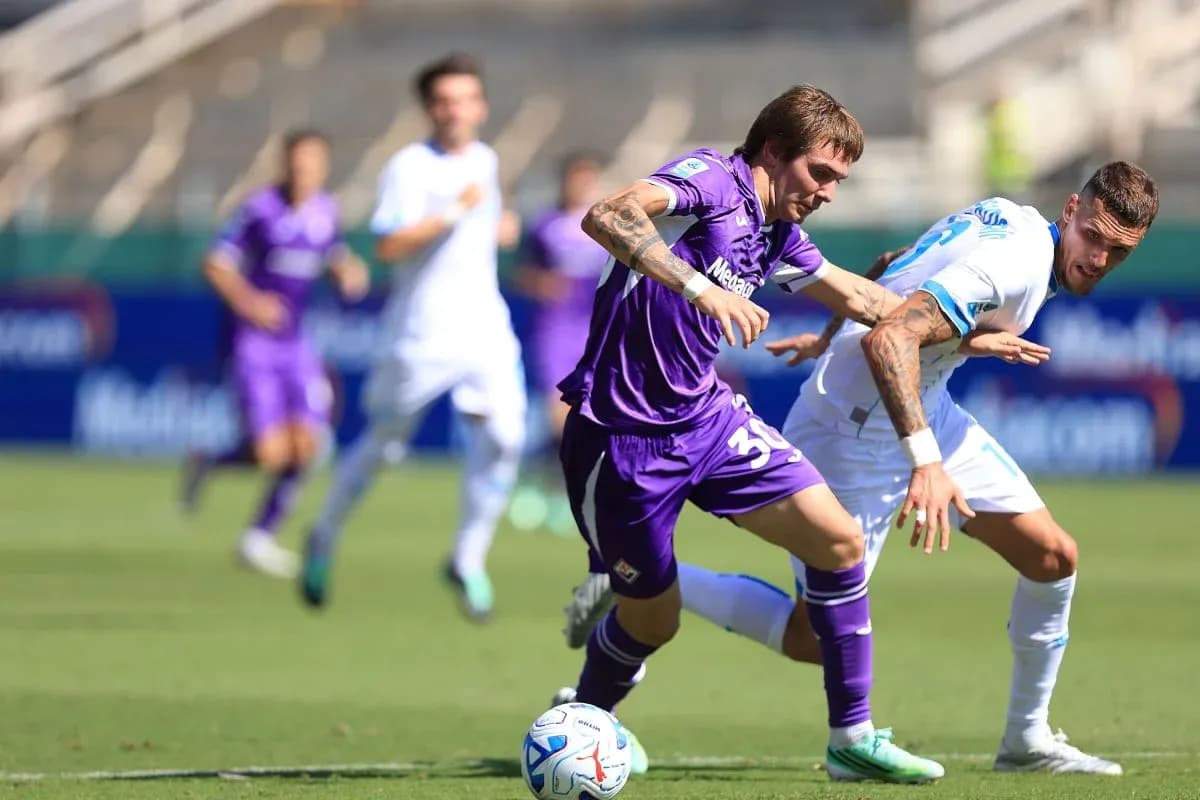
Stadio Benito Stirpe felt like a statement ground on this September afternoon, as Frosinone’s 2–0 win over Como did more than bank three points in Serie A’s Regular Season - 5. It crystallised the early-season identities of both sides: Massimiliano Alvini’s team as a bold, vertical unit with sharp edges in both boxes, and Cesc Fabregas’ Como as a technically ambitious side still searching for defensive balance against high-intensity opponents.
Heading into this game, the table already hinted at a meeting of equals. Frosinone sat 6th with 10 points and a goal difference of 5, scoring 9 and conceding 4 overall. Como, 8th with the same 10 points and a goal difference of 3, had also scored 9 but conceded 6. Both were overperforming traditional expectations, but the way they arrived at this fixture could not have been more different.
Frosinone’s seasonal DNA was that of an assertive, front-foot side. Overall they had 3 wins, 1 draw and 1 defeat from 5 matches, with an overall scoring average of 1.8 goals per game and only 0.8 conceded. At home they were slightly more measured in attack but still potent: 5 goals scored and 3 conceded in 3 matches, averaging 1.7 for and 1.0 against. The clean sheet count – 2 overall, split evenly between home and away – underlined that this was not just chaos-ball; there was structure behind the aggression.
Alvini doubled down on that identity with his selection. The now-familiar 4-2-3-1, used in all 5 league games, took the field again. L. Palmisani anchored the side in goal, behind a young but combative back four of A. Oyono, G. Calvani, I. Monterisi and G. Bracaglia. In front of them, the double pivot of G. Calo and P. Masini provided the platform for a creative trio of F. Ghedjemis, R. Schmid and G. Kvernadze, all funnelling service into lone striker A. Raimondo.
The absences list told its own tactical story. F. Grillitsch, ruled out with a thigh injury, deprived Frosinone of an experienced controller who might otherwise have rotated into the pivot. In his absence, Calo’s metronome passing and Masini’s energy became non-negotiable. The risk was clear: without a pure holding specialist, the back four would be exposed if the press was broken. But Alvini trusted his structure – and his centre-backs.
That trust was repaid. Bracaglia, already one of the league’s standout enforcers with 7 successful blocks and 5 interceptions this season, again played on the front foot. His disciplinary profile is a double-edged sword – 3 yellow cards in 5 appearances mark him as a defender who lives on the limit – but his anticipation and aggression are central to how high Frosinone can hold their line. Alongside him, Calvani’s 11 tackles and 6 blocks this campaign speak of a defender who relishes duels; his 30 duels won from 45 underline why Alvini is comfortable leaving space in behind.
Higher up, the attacking spine is increasingly defined by two names: Raimondo and Kvernadze. Raimondo arrived at this match as one of Serie A’s early leading scorers, with 4 goals from 10 shots, 6 of them on target. He is not just a penalty-box poacher; his 49 duels and 3 tackles show a centre-forward willing to initiate the press and contest long balls. Kvernadze, meanwhile, is the creative and transitional engine. With 3 goals, 1 assist, 30 attempted dribbles (16 successful) and 12 key passes, he is both ball-carrier and chance-creator, the player most likely to turn a regain into a shot within seconds.
Behind them, Schmid’s role as the quiet conductor is underlined by his numbers: 130 passes at 70% accuracy, 3 assists and 4 key passes. He links the pivots to the attacking line, drifting between the lines to give Frosinone a stable central reference. His 2 yellow cards and 8 fouls committed, however, also place him at the heart of Frosinone’s tactical foul game – something that meshes with a card profile showing a notable spike in yellows between 46-60 minutes (25.00%). This is a team that is not afraid to break rhythm after half-time to protect momentum.
On their travels, Como arrived with a different kind of confidence. Away from home they had 2 wins, 1 draw and 1 defeat, scoring 7 and conceding 5, for an away scoring average of 1.8 and 1.3 conceded. That output matched Frosinone’s overall scoring rate, but with less defensive security. They had yet to keep a clean sheet this season, and had failed to score only once overall – a 2–0 away defeat that eerily foreshadowed what would unfold at the Stirpe.
Fabregas mirrored Alvini’s 4-2-3-1, trusting J. Butez in goal and a back four of Y. Couto, J. Ramon, T. Chalobah and A. Valle. The double pivot of L. Milla and L. Da Cunha was tasked with both resisting Frosinone’s press and feeding a talented line of three – A. Diao, N. Paz and M. Baturina – behind striker A. Douvikas.
On paper, this created a fascinating “Hunter vs Shield” matchup: Frosinone’s home attack, averaging 1.7 goals, against Como’s away defence conceding 1.3. The early-season evidence suggested Frosinone would create enough to score, while Como would likely need to win a shootout rather than grind a 1–0. That dynamic was compounded by Como’s card distribution: with 25.00% of their yellow cards arriving in each of the 31-45, 46-60, 76-90 and 91-105 minute windows, they are prone to disruptive fouls across all phases rather than one clear danger zone.
In the engine room, the duel between Schmid and Kvernadze on one side and Milla and Da Cunha on the other was always going to decide territory. Milla’s tidy passing and Da Cunha’s ability to step forward into the half-spaces offered Como a route through Frosinone’s first line, but the visitors’ lack of overall clean sheets hinted that their midfield protection of the back four was still a work in progress. Against a side whose biggest away win this season was 0–3 and whose overall goal difference stood at +5, any slackness between the lines was likely to be punished.
Out wide and between the lines, another key battle emerged: Kvernadze and Ghedjemis attacking the channels around Couto and Valle, versus Diao and Baturina trying to isolate Oyono and Bracaglia. Diao’s profile – 2 goals, 1 assist, 22 attempted dribbles with 11 successful, and 7 tackles – marked him as Como’s two-way threat on the flank, capable of both pinning Frosinone’s full-backs and tracking back. Baturina, with 2 goals, 1 assist and an 89% passing accuracy from 140 passes, is the cerebral connector, the player most likely to find pockets behind Masini and Calo.
Yet the structural contrast was stark. Frosinone came into this game with 2 clean sheets and only 1 match overall where they had failed to score. Como, by contrast, had no clean sheets and a defensive record that, while not disastrous, was clearly looser. When you overlay that with Frosinone’s home resilience – only 3 goals conceded in 3 home matches – the statistical prognosis tilted towards the hosts.
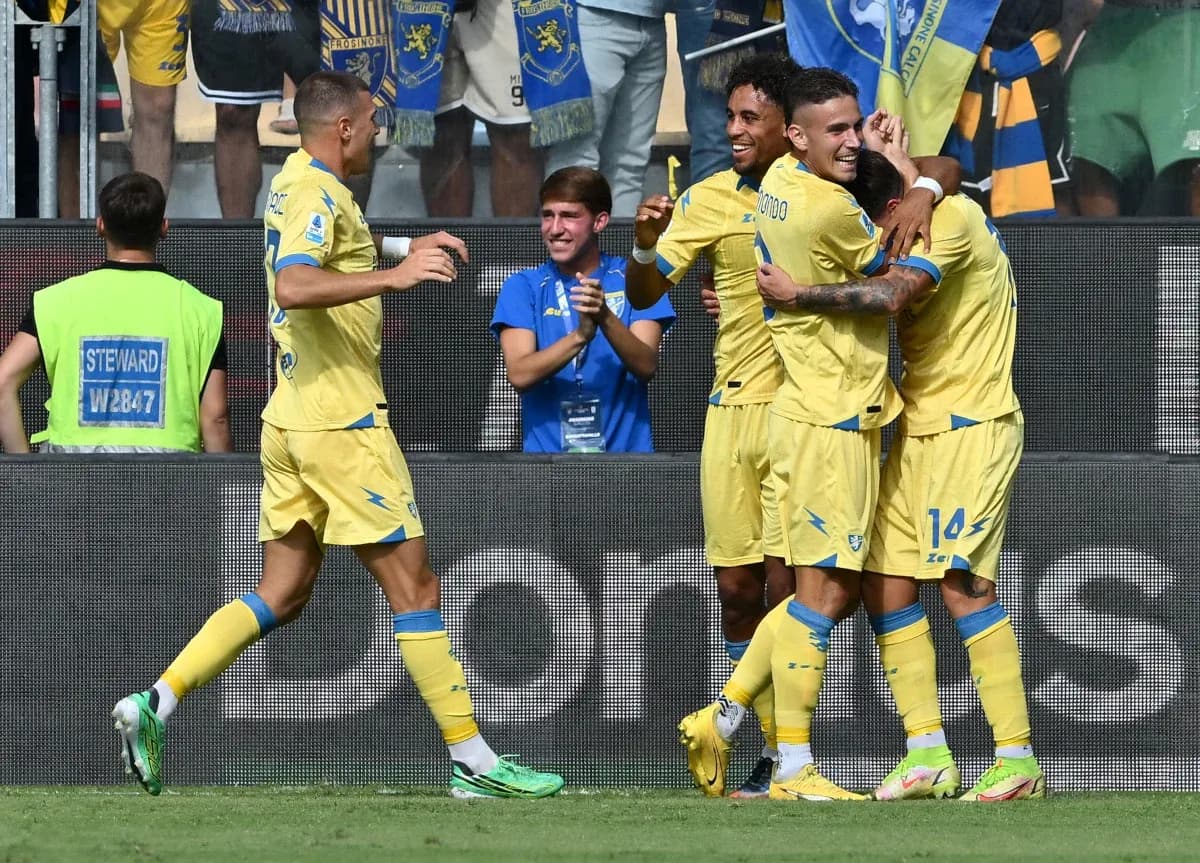
The 2–0 final scoreline, with Frosinone two goals up by half-time, felt like the logical endpoint of that data. Frosinone’s pressing spine – Raimondo’s work rate, Kvernadze’s ball-carrying, Schmid’s distribution and the aggression of Bracaglia and Calvani – overwhelmed Como’s attempt to build calmly from the back. Without the safety net of a settled, clean-sheet capable defence, Como’s attacking talents in Diao and Baturina were forced to chase the game rather than script it.
Following this result, the narrative of both squads is clearer. Frosinone look every inch a legitimate upper-half contender, their 4-2-3-1 now a fully-formed system built around a young but hardened core. Como remain an intriguing, technically rich project under Fabregas, but until their away defence tightens and their midfield screen becomes more robust, fixtures like this – against intense, vertical sides – will continue to expose the gaps between their ideas and their execution.