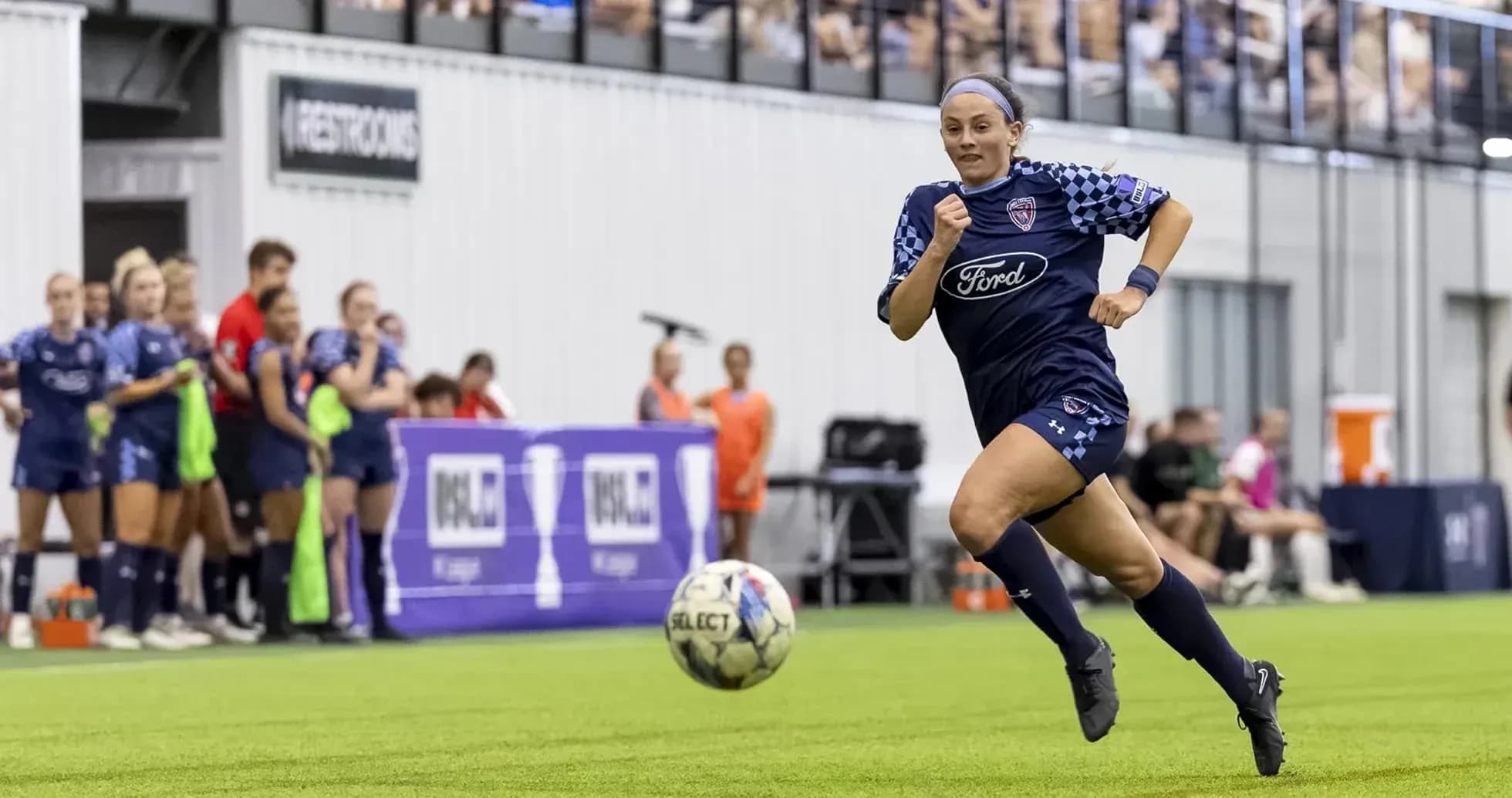
Greenville Triumph Defeats Loudoun United 3–1 in USL League One Clash
On a humid night at Paladin Stadium, Greenville Triumph and Loudoun United met in a Group 6 clash that felt more like a knockout tie than a routine group fixture. By the final whistle, the scoreboard read 3–1 to Greenville, a result that reshaped the early narrative of the USL League One Cup campaign for both sides.
Heading into this game, Greenville’s season profile was oddly split. Overall they had scored 3 goals and conceded 4 across 2 matches, leaving them with a goal difference of -1, but that blunt arithmetic hid a more dramatic home‑away contrast. At home they had been explosive, scoring 3.0 goals per game and conceding 1.0, while on their travels they had yet to score and were shipping 3.0 goals per game. Loudoun, for their part, arrived with the same overall goal difference of -1, having scored 4 and conceded 5 in 3 outings, but with a slightly more balanced attack: 1.5 goals per game at home and 1.0 away.
Following this result, Greenville’s identity as a home‑driven side hardened. Their biggest win in the competition remains a 3–1 at home, and this match fit that template perfectly: assertive, front‑foot, and willing to trade some defensive risk for attacking reward. Loudoun’s season pattern also stayed consistent. Their heaviest defeat away had been 3–1, and once again they left an away ground having scored but conceded three.
I. The Big Picture: Group Stakes and Game Script
This was Group Stage football with knockout tension. Greenville started the night 5th in Group 6 on 3 points from 2 matches, Loudoun 4th with 3 points from 3. Both were chasing stability in a group where every slip is magnified.
The match itself followed the contours of Greenville’s season: an aggressive first half and a willingness to lean on their attacking core. They went into the break 1–0 up, mirroring their home scoring comfort, and then opened the game up in the second half, ultimately running out 3–1 winners.
II. Tactical Voids and Discipline: Edges in the Margins
There were no listed absences in the data, so both managers appeared to have their core squads available. That meant Dave Dixon could lean on his preferred Greenville spine, while Anthony Limbrick had the flexibility to rotate his Loudoun front line from the bench with options like A. Aboukoura, A. Ordonez and C. Torres.
The disciplinary backdrop gave a quiet but important edge to Greenville. Their yellow cards this campaign have clustered heavily in the final quarter of matches: 75.00% of their cautions have come between 76–90 minutes, with a smaller 25.00% spike in the 16–30 window. That pattern suggests a side that starts with controlled aggression, then digs in and perhaps over‑commits late as they protect or chase a result.
Loudoun’s yellow‑card profile is more evenly spread across the second half. Heading into this fixture, 37.50% of their cautions arrived between 46–60 minutes, with further flurries in the 61–75 (12.50%) and 76–90 (25.00%) windows, plus an extra 12.50% in added time (91–105). That points to a team that often has to react to game state after the interval, sometimes by tactical fouling or late challenges as they try to wrestle control back.
In a match that finished 3–1, that discipline pattern mattered. Greenville’s capacity to keep their cards mostly for the late stages meant they could press and counter with relative freedom early on. Loudoun, more prone to second‑half bookings, found themselves needing to chase the game in precisely the period when their discipline historically frays.
III. Key Matchups: Hunter vs Shield and the Engine Room
Without explicit goal‑scorer data, the “Hunter vs Shield” lens becomes about collective profiles rather than individual names. Greenville’s home attack, averaging 3.0 goals per game at Paladin Stadium, met a Loudoun away defence conceding 3.0 goals per match on their travels. That is a perfect storm: a home side that thrives in front of its own crowd against a visiting back line that has yet to solve the structural issues that appear whenever they leave home.
Greenville’s front unit, led by starters W. Akio and A. Liadi, was set up to exploit that. With C. Evans and C. Herrera supporting from deeper roles, Dixon had the tools to flood the half‑spaces and attack Loudoun’s central defenders, J. Erlandson and S. Mazzaferro, and the full‑back pairing of L. Piras and N. Adnan. The 3–1 scoreline underlines that Greenville’s attacking “hunter” unit won this duel decisively.
In the “Engine Room”, the matchup between Greenville’s central core — players like D. Boyce and C. Herrera — and Loudoun’s midfield triangle of B. Akinyode, J. Murphy and J. Panayotou was crucial. Loudoun’s season numbers show a side that rarely fails to score (0 failed‑to‑score matches overall), but they also concede 1.7 goals per game overall and 3.0 away. That typically signals a midfield that can progress the ball but leaves space behind or alongside their holding midfielder.
Greenville’s ability to turn midfield turnovers into direct attacks, especially at home where they average 3.0 goals for and only 1.0 against, suggests that Boyce and Herrera were tasked with snapping into duels and immediately releasing Akio and Liadi. When Loudoun tried to push their full‑backs forward to support T. Ulfarsson and R. Aman, those spaces behind became the battleground Greenville repeatedly exploited.
IV. Statistical Prognosis and Tactical Verdict
From a pure numbers standpoint, this result fits the statistical trajectory almost too neatly. A Greenville side with a total scoring average of 1.5 goals per game and 2.0 conceded, but a home profile of 3.0 for and 1.0 against, delivered another multi‑goal performance at Paladin Stadium. Loudoun, averaging 1.3 goals for and 1.7 against overall, and conceding 3.0 away, again found themselves on the wrong side of a high‑concession away day.
Even without explicit xG figures, the underlying trends point to a match where Greenville likely generated the higher quality of chances, especially in transition. Their lack of clean sheets (0 overall) remains a concern — conceding again here reinforces that they are not yet a lockdown defensive unit — but their attacking ceiling at home is high enough to outgun that flaw against most group opponents.
Following this result, the tactical story is clear. Greenville Triumph are shaping into a home‑heavy contender in Group 6: aggressive, vertical, and capable of overwhelming visiting defences that are even slightly disorganized. Loudoun United remain a dangerous but vulnerable side — one that will almost always offer a goal, but just as reliably leave gaps to be punished, particularly away from home. For both managers, the tape from Paladin Stadium will be a reference point: for Dixon, a blueprint; for Limbrick, a warning.