Guillermo Ochoa Retires: An Iconic Era Ends for Mexico’s Goalkeeper
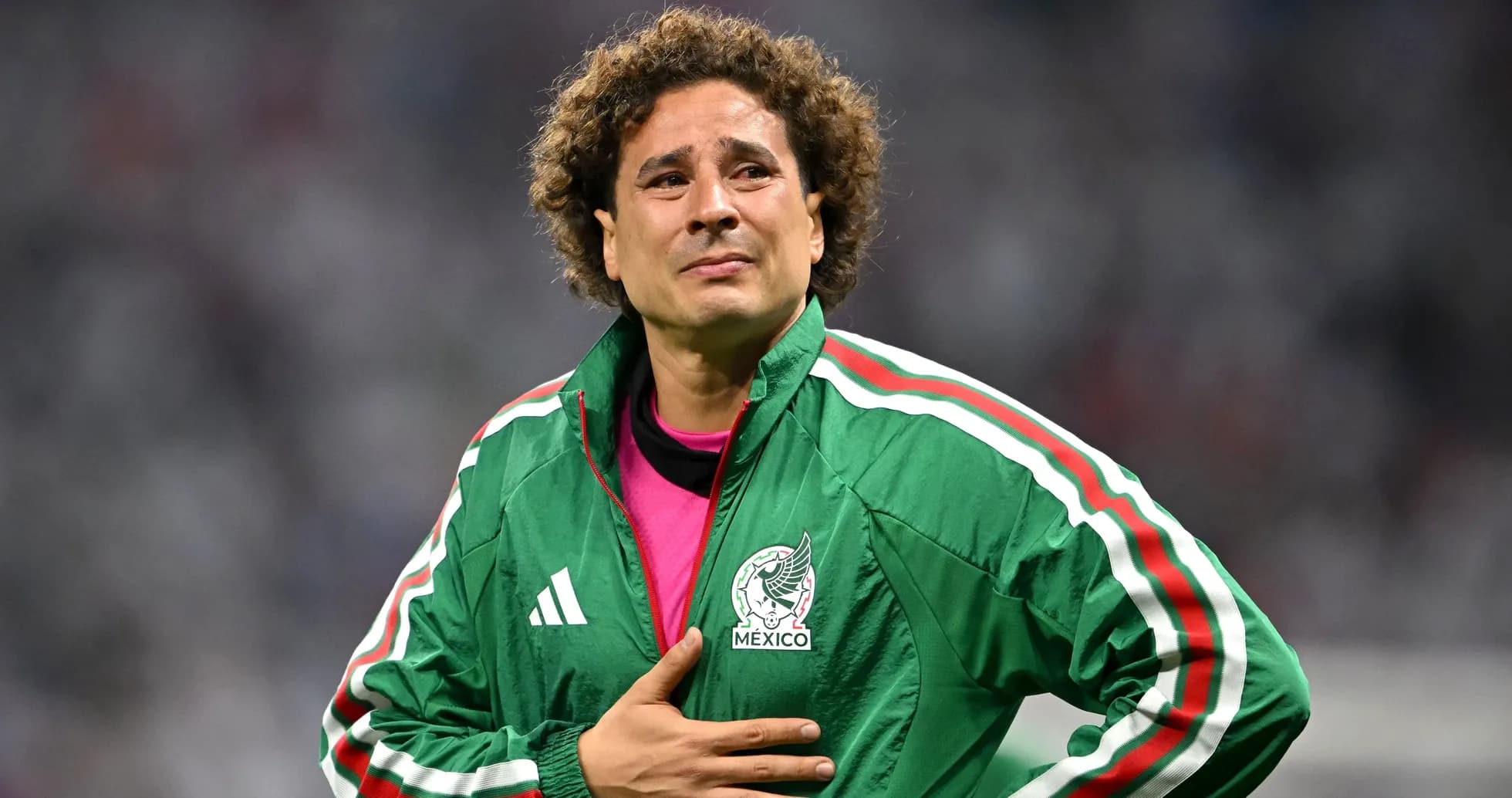
Guillermo Ochoa has finally stepped off the stage he occupied for two decades, announcing on Tuesday that he is retiring from elite football. For years he had hinted that the 2026 World Cup would be his last dance. Many refused to believe it. They waited for the inevitable short-term deal, one more contract, one more tournament. It never came.
Instead, the 39-year-old chose his own moment and his own words. On social media, the most recognisable Mexican goalkeeper of his generation – and one of the most decorated in the nation’s history – drew a clear line under the speculation.
“I gave it my all; I left everything on the field for my clubs and the national team, and today I hang up my gloves,” he wrote. Then came the definition of his craft, as simple as it was ruthless: “Being a goalkeeper means knowing you might wait 90 minutes for a single moment when everything depends on you. And when that moment arrives, you cannot hesitate.”
He rarely did.
A World Cup constant
Ochoa’s career is stitched into the fabric of modern World Cups. His longevity is staggering. Six tournaments with Mexico, a number matched only by Ronaldo and Messi. At first he was the kid in the tracksuit, travelling, learning, waiting. Then he became the man in the spotlight.
From Brazil 2014 through Russia 2018 and Qatar 2022, the No. 1 shirt was his. Mexico’s last line of defence, tournament after tournament, he turned group-stage nights into global showcases with those familiar, elastic saves and that unshakeable stare.
The scale of it hit him as he looked back on the journey – from the youth pitches of Mexico City to some of Europe’s grandest arenas. “I never imagined how far a dream could take me. Today, I can only look back with pride and say: Thank you,” he posted. “I take with me the affection of millions and the peace of mind that comes with knowing I gave everything for Mexico.”
A farewell written in Azteca lights
By 2026, time had finally nudged him out of the starting role. Raul Rangel took over as Mexico’s first choice, while Ochoa moved into the background, a veteran presence in the dressing room, a safety net on the bench.
Yet no one was going to let him slip quietly into retirement.
In Mexico’s final group-stage match against Czechia, Javier Aguirre made sure the goodbye matched the career. With 13 minutes left and the game already framed, the coach turned to his old goalkeeper. Ochoa stepped onto the Estadio Azteca pitch one last time in a World Cup, and the noise crashed down around him.
Every catch, every touch of the ball felt like a tribute. When the final whistle blew, the emotion broke through. Ochoa walked to his goal, kissed both posts – the same frame he had guarded as a teenager – and then dropped to his knees as teammates surrounded him in a long, tight embrace.
The crowd eventually drifted away. The floodlights dimmed. But Ochoa stayed. Long after the stadium had emptied, he walked alone to the centre circle, turned slowly, and took in the place that had framed so much of his life. One last look. One last breath of that air. Then he walked off.
From América prodigy to European pioneer
The numbers behind the nostalgia justify the reverence. Ochoa leaves the game with a trophy cabinet that underpins his legend: a league title with Club América in the 2005 Clausura, the Belgian Cup with Standard Liege, and a career that broke barriers for Mexican goalkeepers.
His story at the top level began in February 2004. A teenage Ochoa made his top-flight debut for Club América and immediately looked different – quick off his line, explosive in his reactions, fearless in traffic. Within a few seasons he had gone from promising understudy to undisputed starter at one of Mexico’s biggest clubs.
Seven seasons with América established him as a star. Then came the bold leap. In 2011 he joined French side Ajaccio, becoming the first Mexico-born goalkeeper to play in Europe. It was more than a transfer; it was a statement that a Mexican keeper could carry the weight of a European club and the scrutiny that came with it.
What followed was a true odyssey. He moved through Ajaccio, Malaga, Granada, Standard Liege, Salernitana, AVS Futebol and AEL Limassol, adapting to different leagues, languages, and expectations. Each stop added another layer to a career that refused to stand still.
In between, he came home. From 2019 to 2022, Ochoa returned to Club América for a high-profile three-year spell, walking back into the Azteca as both hero and leader. Those seasons reaffirmed what many already believed: he was not just a former prodigy, but a fully fledged club legend.
Now, with the gloves finally set aside, Mexican football faces a new reality. For the first time in a generation, a major tournament will arrive without Guillermo Ochoa somewhere in the background, waiting for that one decisive moment.