Jude Bellingham's Confrontation in England vs Argentina World Cup Semi-Final
Jude Bellingham became embroiled in a post-match flashpoint with Argentina’s Valentin Barco as England’s World Cup dream fell apart in Atlanta.
Thomas Tuchel’s side were stunned by a ruthless late turnaround, Enzo Fernandez and Lautaro Martinez striking in the closing stages to overturn Anthony Gordon’s 55th-minute opener and seal a 2-1 Argentina win in the semi-final.
The match had simmered all night. It finally boiled.
Nineteen fouls, no shots on target in a cagey, bad-tempered first half, constant niggles and off-the-ball jostling – it always felt one incident away from spilling over. The final whistle, and Argentina’s wild celebrations, provided the spark.
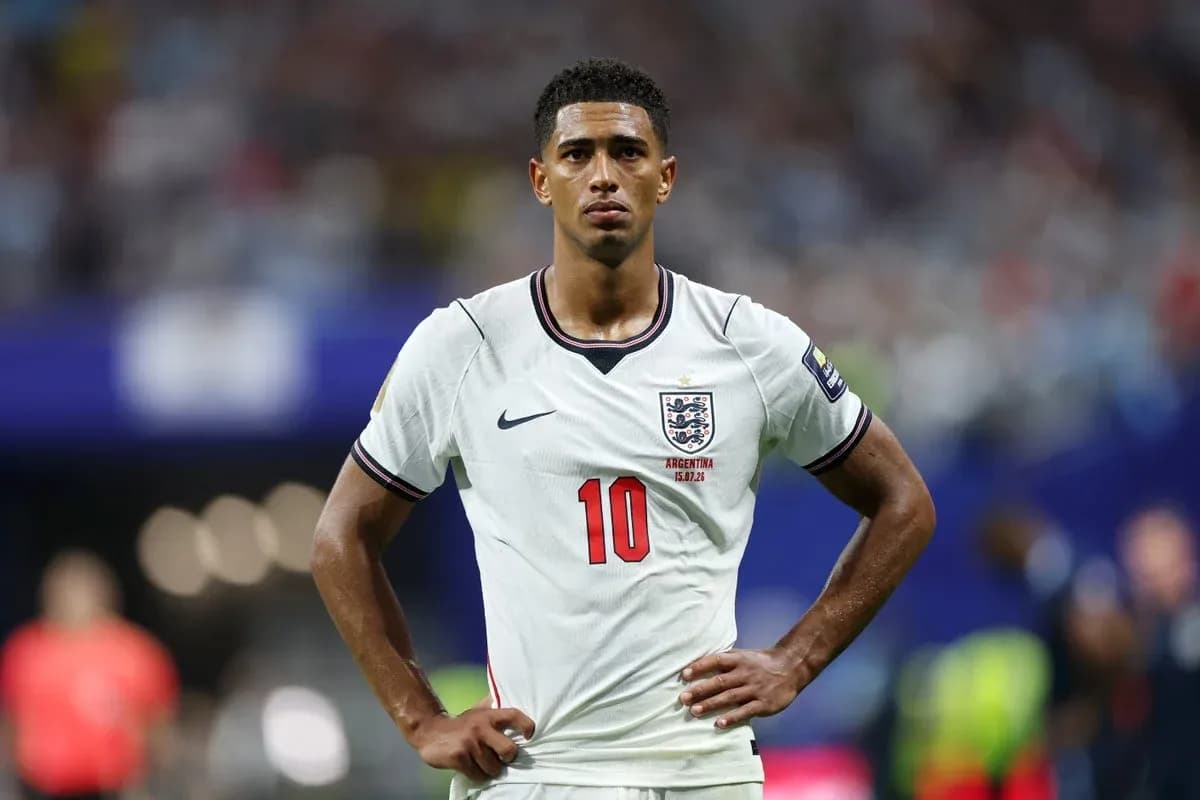
TV cameras first picked out Bellingham standing alone on the pitch, expression fixed, as Argentina’s players cavorted in front of their fans. He then walked over to shake hands with several opponents, trying to observe the usual rituals amid the chaos.
Barco, an unused substitute, sprinted past in the background, joining in the celebrations with his teammates. Moments later, footage shows Bellingham veering towards the defender and clipping him around the back of the head. Barco spun and shoved him in retaliation.
What began as a brief confrontation escalated quickly. Nico Paz stepped in to separate the pair, arms out, but more players from both sides rushed over and the situation lurched towards an ugly melee, bodies piling in as tempers frayed.
Another clip offers a clue as to why Bellingham’s patience snapped.
After Fernandez’s equaliser, Barco can be seen darting towards the England technical area, apparently celebrating in front of Tuchel, his staff and the substitutes’ bench. The gesture, from a player who had not featured, did not go unnoticed. By full-time, with England’s World Cup hopes wrecked and emotions raw, it appeared to be remembered.
Bellingham had earlier tried to brush off Argentina’s attempts to provoke him. Cameras caught him laughing in the face of Leandro Paredes during one exchange, refusing to be drawn into a reaction as the South Americans repeatedly chopped at England’s key men.
Argentina’s approach was clear: disrupt, irritate, dominate the emotional battle as well as the tactical one. The late comeback suggested it worked.
The tension ran deeper than the 90 minutes. It always does when these two meet.
England and Argentina share one of international football’s most combustible rivalries, born of famous World Cup clashes and sharpened by history far beyond the pitch. In Atlanta, that wider context hung heavily over the night.
At full-time, Argentina’s players unfurled a supporters’ banner reading “Las Malvinas are Argentine”, a direct reference to the Falkland Islands, a British overseas territory and a long-standing point of dispute between the nations. The slogan is a familiar feature of Argentinian football culture; this time, it arrived on the World Cup stage, in front of a global audience.
The backdrop is stark. In 1982, Argentina’s then far-right military junta invaded the Islands, triggering a war with Britain that left 907 people dead before British forces prevailed. The sovereignty issue has never gone away and often surfaces in Argentinian chants and imagery around major games.
Aware of the political charge and the sporting rivalry, authorities had already deployed extra security in and around the stadium in Atlanta, anticipating flashpoints in the stands and on the turf. The match itself, fraught and hostile, justified those concerns.
By the time Argentina’s players disappeared down the tunnel, still roaring their victory, England were left with bruises both physical and psychological – and the lingering image of their star midfielder locked in a confrontation that captured the raw, unforgiving edge of this fixture.