Khamis Al-Zahrani's Warning to Al-Ittihad Stars Aouar and En-Nesyri
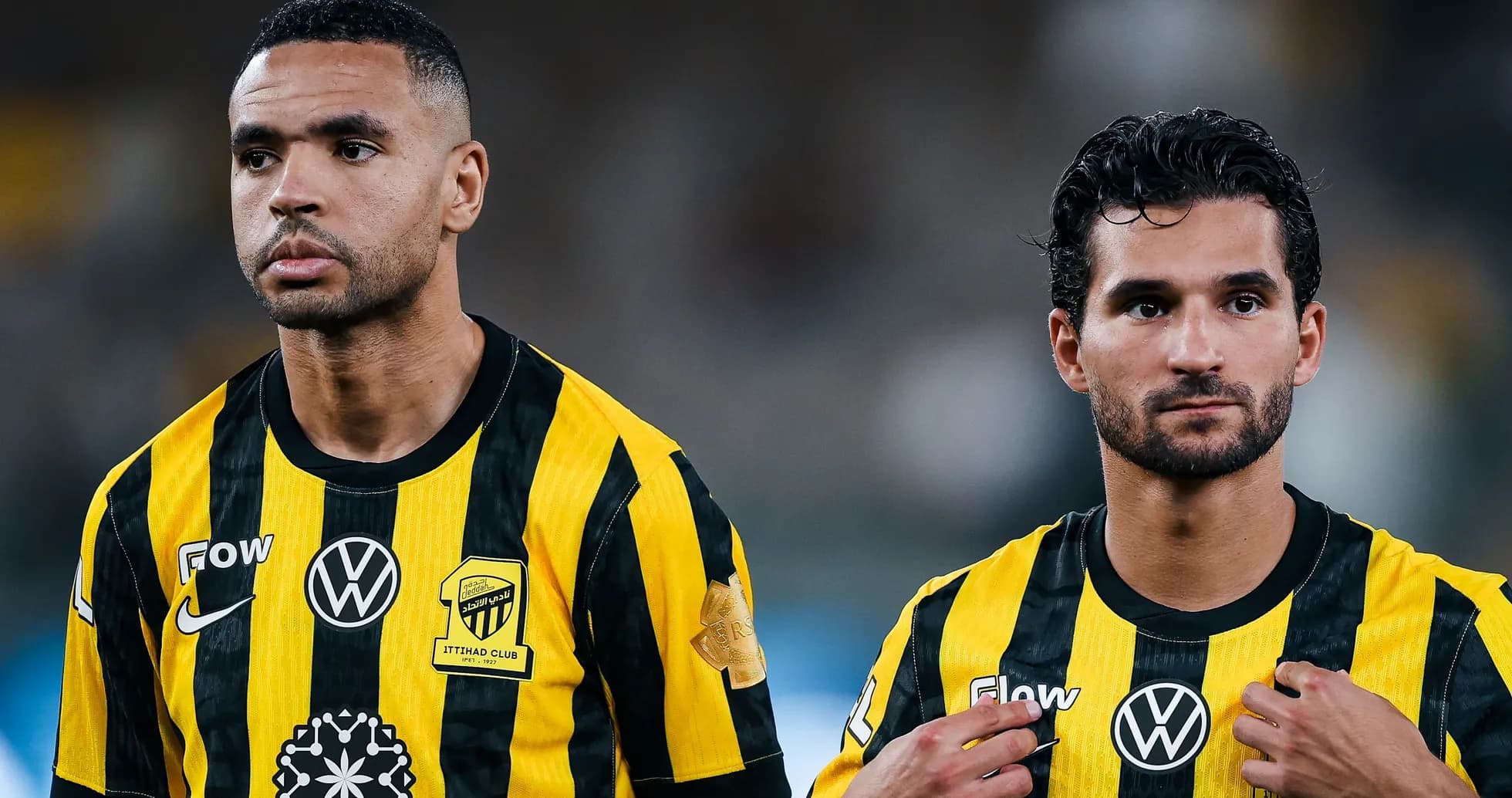
Al-Ittihad legend Khamis Al-Zahrani has fired a stark warning shot at two of the club’s biggest foreign names, urging Houssem Aouar and Youssef En-Nesyri to walk away from Jeddah before the new season begins.
Speaking to Al-Arabiya, the former midfield general painted a tense picture around the Saudi giants as they prepare for what he called “a very big season” under new German coach Jens Wissing. Big ambitions, but in his eyes, a squad badly out of sync with the coach’s demands.
“They can’t perform the roles”
Al-Zahrani did not dance around the issue. For him, the heart of the problem lies in the middle of the pitch and in how Wissing wants his team to play.
“Al-Ittihad needs great depth in midfield,” he said, before delivering the key line. “Neither (Houssem) Aouar nor Fabinho nor (Youssef) En-Nesyri can perform the roles the coach is expected to demand of them, which involve direct play, pressing and quick transition.”
That is a brutal assessment of three high-profile names. Aouar, once tipped as one of Europe’s most elegant playmakers. Fabinho, the former Liverpool anchor. En-Nesyri, a striker whose work rate and aerial power have long been his calling cards. Yet in Al-Zahrani’s view, none of them truly fit the aggressive, vertical football Wissing is expected to implement.
The implication is clear: if they stay, they risk being miscast. Or worse, marginalized.
Contracts, scrutiny, and a race against time
The club, he insisted, cannot afford to drift. “Al-Ittihad needs midfielders, with Fabinho, Aouar and En-Nesyri coming under the coach's scrutiny, so that he can take the appropriate decision on them as soon as possible, especially since Fabinho's contract has already ended,” Al-Zahrani added.
This is not a gentle, long-term rebuild. It is a scramble. Decisions must be made quickly, and they will be ruthless.
“These matters require speed in decision-making, in addition to quality in selection,” he continued, stressing that Wissing has now had enough time to study his squad. “The coach has now got to know the players, put his finger on the wound, and must plug the gaps with distinguished signings.”
The message to the board is unmistakable: you know where the problems are. Fix them. Now.
Two new midfielders on the horizon
Al-Zahrani also lifted the lid slightly on the club’s recruitment plans. The midfield, again, is the epicenter.
“What I know is that Al-Ittihad will bring in midfield players, one of them a replacement for Fabinho, and the other playing in the same way as (Mamadou) Doumbia,” he revealed.
That points to a double injection of energy and dynamism in the middle of the park: one to fill the void left by Fabinho’s exit, another to mirror the profile of Mamadou Doumbia, a player whose style clearly matches Wissing’s preferred blueprint.
Aouar’s future, though, hangs in the balance. “Aouar's situation remains linked to the team's squad and the number of foreign players,” Al-Zahrani said, underlining the harsh arithmetic of foreign-player quotas. Talent alone is no guarantee of a place.
A thorny path for a rookie coach
Beyond individuals, Al-Zahrani sketched a broader, more troubling context. “Al-Ittihad faces a thorny matter, and time is extremely tight,” he concluded, pointing to financial difficulties and the reality of a new coach still finding his feet.
Wissing arrives with fresh ideas but, as Al-Zahrani noted, “does not possess great experience in leading a big team the size of Al-Ittihad club.” That lack of big-club pedigree, combined with budget constraints and a misaligned squad, turns this summer into a high-wire act.
For Aouar and En-Nesyri, the legend’s advice is blunt: leave before the storm truly hits. For Al-Ittihad, the question is sharper still: can a club of this size afford another season of hesitation in a league that no longer waits for anyone?