Ma Ning's World Cup Journey and Impact on Chinese Refereeing
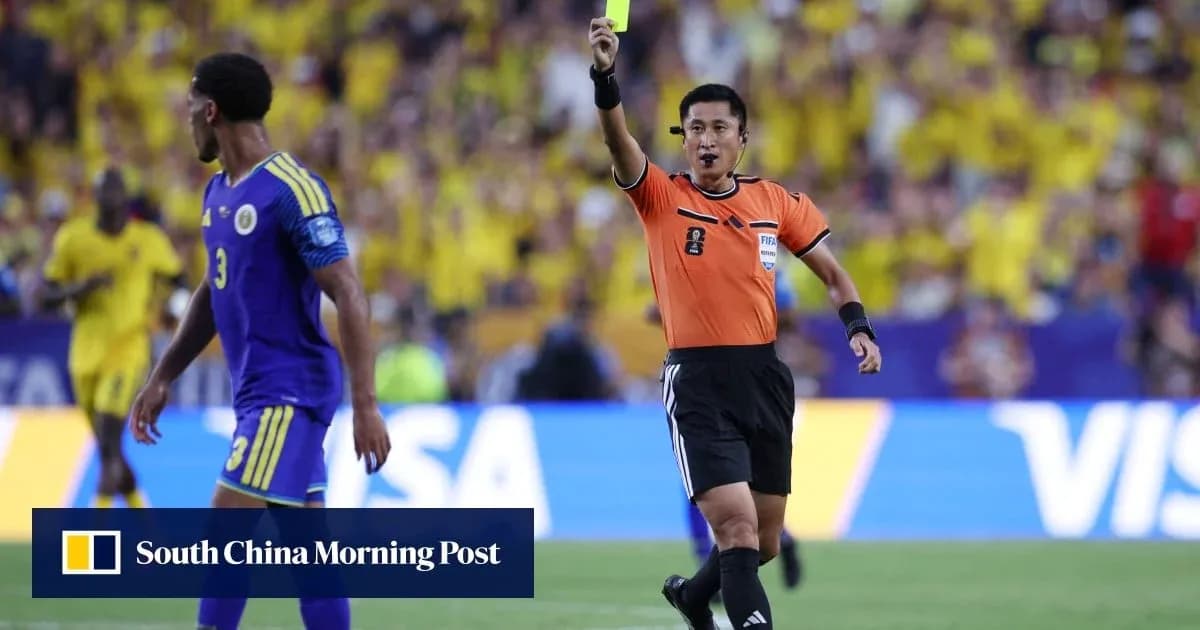
Chinese referee Ma Ning has blown his final whistle at this World Cup, but his parting words have echoed far beyond the pitch.
Ma and assistant referee Zhou Fei returned to China before the semi-finals after FIFA released its trimmed list of officials for the closing stages of the tournament on Sunday. Their omission, coming just days after video assistant referee Fu Ming also left the competition, means China’s on-field presence at this World Cup is over.
No more Chinese officials in the middle. No more on the touchline. None in the VAR room. The curtain has come down on a quietly significant chapter for Chinese refereeing.
From campus pitches to the World Cup
Ma chose to mark the moment himself. On Monday, he posted a farewell video on Chinese social media, speaking directly to the fans who have watched, criticised, defended and, in the end, embraced him.
“From the campus to the World Cup stage, from youthful ignorance to composure and calm, I have spent 20 years proving the meaning of persistence,” he said.
It was not the language of a man simply clocking off from a tournament. It sounded like a career laid out in a single, unbroken line: school fields, domestic leagues, international appointments, and finally the sport’s biggest stage.
“At 47, many people say it is too late,” Ma continued, “but I always believe that as long as there is faith, we can turn the impossible into the possible.”
For a referee, those words carry a particular weight. They live on the margins of the spotlight, judged in real time, rarely celebrated, often targeted. To reach a World Cup at 47, after two decades of grinding through matches that most people forget by the next morning, is its own kind of improbable.
A rare window into a referee’s world
Ma did not stop at his own story. He pulled back the curtain a little on the life behind the whistle, reserving his most personal thanks for the people who rarely appear in any match report.
He spoke of his family, whose backing, he said, gave him the strength to keep moving forward and kept him “resolute and fearless” in chasing his dreams. For someone whose job demands absolute authority under pressure, that admission revealed the vulnerability and support system that underpins those split-second decisions.
Then he turned to the stands – and the comments sections.
He thanked the fans who had once mocked him as the “card master”, a nickname born from his willingness to reach for yellow and red. That tag could have stuck as a permanent stain. Instead, Ma framed it as part of a shared journey, noting how those same supporters had grown to recognise his officiating standard.
“It is your rationality and tolerance that have shown me the most lovely side of Chinese football,” he said. “You are not only watching the games, but also truly understanding the value of refereeing.”
For a referee to say that, and mean it, is telling. It hints at a shift in how Chinese fans view the role: not just as an easy target when things go wrong, but as an integral part of the game’s integrity.
China’s whistle falls silent – for now
With Ma, Zhou and Fu all out of the tournament, China’s direct involvement in this World Cup has ended not with a goal or a missed chance, but with a final decision from FIFA’s appointments committee.
There will be no Chinese officials walking out behind the teams on semi-final or final night. No familiar figure checking the monitor in the VAR booth. Just the knowledge that, for a few weeks, Chinese referees stood at the centre of football’s biggest stage and held their own.
Ma’s farewell did not sound like a goodbye to refereeing. It sounded like a marker laid down. Twenty years in, a World Cup on the CV, and a message aimed squarely at those who will pick up the whistle next.
The question now is simple: who in Chinese football will follow that path from campus fields to the World Cup, and how soon will the game hear another Chinese voice commanding the biggest stage?