Manchester City Dominates Brentford 3-0: A Tactical Analysis
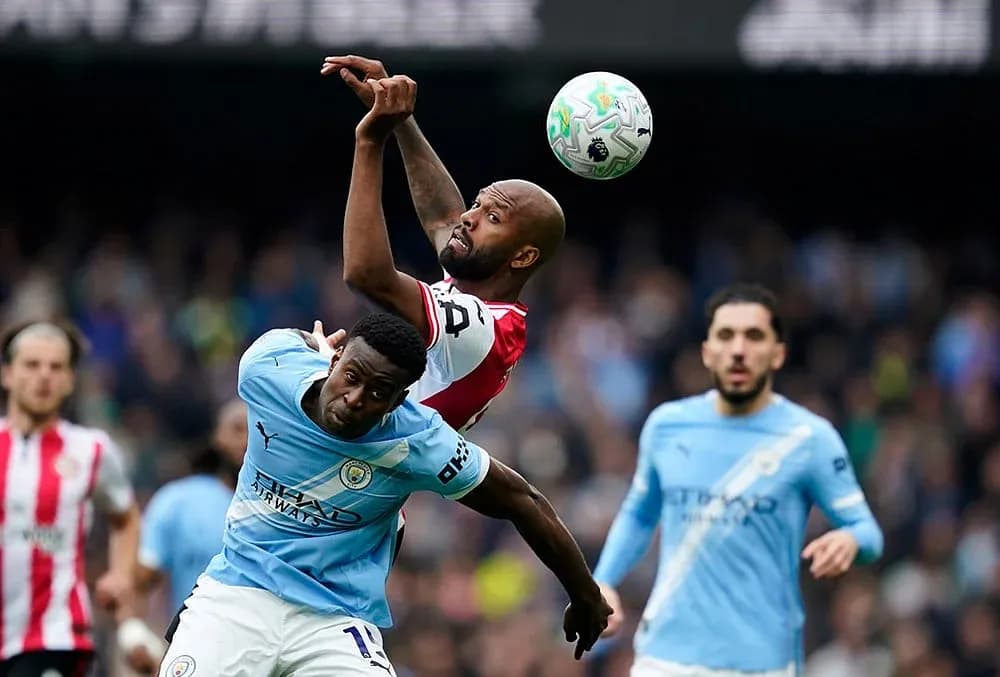
Etihad Stadium under late-season floodlights, a referee’s whistle cutting through the Manchester air, and a 3–0 scoreline that felt less like a surprise and more like a confirmation of hierarchy. Following this result in the Premier League’s Round 36, Manchester City – already heading into this game as the league’s second-placed side on 74 points with a formidable overall goal difference of +40 (72 scored, 32 conceded) – underlined the gulf in squad depth and tactical polish against an ambitious but outgunned Brentford, who came in eighth with a far slimmer overall cushion of +3 (52 for, 49 against).
I. The Big Picture – City’s machine versus Brentford’s edge
This was a clash of two clearly defined seasonal identities. At home, City have been ruthless: 17 league matches at the Etihad before this, 13 wins, 3 draws, just 1 defeat, with 41 goals for and only 12 against. An average of 2.4 goals scored at home and 0.7 conceded has turned the stadium into a laboratory for Pep Guardiola’s positional play.
On their travels, Brentford arrived with a more volatile profile: 18 away games, 6 wins, 2 draws, 10 defeats, with 21 goals scored and 30 conceded. Their away averages – 1.2 goals for and 1.7 against – speak of a side that carries a punch but often leaves its chin exposed.
The lineups reflected both continuity and enforced change. Guardiola, without J. Gvardiol (broken leg) and Rodri (groin injury), had to rewire his structure. Gianluigi Donnarumma anchored the side in goal, with a back line featuring Matheus Nunes, Marc Guéhi, Nathan Aké and Nico O’Reilly. Ahead of them, Tijjani Reijnders and Bernardo Silva were asked to shape the rhythm, while Antoine Semenyo, Rayan Cherki and Jérémy Doku supported Erling Haaland as the central spear.
Keith Andrews, missing F. Carvalho, R. Henry and A. Milambo, leaned into Brentford’s familiar blend of industry and incision. Caoimhin Kelleher started in goal, shielded by Michael Kayode, Kristoffer Ajer, Nathan Collins and Keane Lewis-Potter. In midfield, Yehor Yarmoliuk, Mathias Jensen, Aaron Hickey and Mikkel Damsgaard tried to knit play, with Kevin Schade and Igor Thiago forming a mobile front two.
II. Tactical Voids – Absences and discipline
City’s greatest structural void was Rodri. His absence removed the metronome at the base of midfield, forcing Reijnders to shoulder more responsibility in first-phase build-up and defensive screening. It altered the usual 4-3-3/4-1-4-1 hybrid, nudging City toward a more fluid double pivot at times, with Bernardo Silva dropping deeper to help progression.
Gvardiol’s injury also mattered. Without his left-footed distribution from the back, Aké had to both defend and initiate from that side, while O’Reilly’s inclusion as a nominal defender suggested Guardiola’s intent to tilt the pitch with technical profiles even in the back line.
For Brentford, the absence of R. Henry removed one of their most reliable defensive presences and transitional outlets on the flank, while F. Carvalho’s creativity between the lines was missed against a side that compresses space as ruthlessly as City. A. Milambo’s absence trimmed the depth in midfield rotation, limiting Andrews’ ability to change the game’s central dynamic from the bench.
Disciplinary trends heading into this fixture painted a telling picture. City’s yellow cards are distributed fairly evenly, but with notable spikes between 46–60 minutes and 76–90 minutes, both on 20.31%. Brentford’s caution profile is even more revealing: a late-game surge of 27.69% of their yellows arrives between 76–90 minutes, and they have already seen a red card in the 31–45 minute window this season. That late indiscipline, combined with fatigue, was always likely to be punished by a City side that keeps probing until the final whistle.
III. Key Matchups – Hunter vs Shield, Engine Room vs Enforcer
The headline duel was always going to be Erling Haaland versus Brentford’s defensive spine. Haaland came in as the league’s top scorer with 26 overall goals and 8 assists, backed by 101 total shots and 58 on target. His penalty record this season is human, not robotic – 3 scored, 1 missed – but his threat profile is relentless: 234 duels, 126 won, and a capacity to pin entire back lines.
Across from him, Nathan Collins and Kristoffer Ajer had to confront not just Haaland’s movement, but the angles created by City’s creators. Brentford’s away defensive record – 30 goals conceded in 18 games, an average of 1.7 – suggested that sustained resistance over 90 minutes at the Etihad would be a tall order.
Then there was the counter-punch: Igor Thiago, Brentford’s own elite finisher. With 22 overall goals and 1 assist, 65 shots (43 on target) and 8 penalties scored but 1 missed, Thiago arrived as a genuine Hunter in his own right. His 499 duels, 195 won, and 36 tackles with 6 blocked shots underlined his dual role: target man and first defender. Against City’s back line, his battle with Marc Guéhi and Nathan Aké was about more than goals; it was about preventing City from building cleanly through the centre.
In the Engine Room, the contrast was sharp. Bernardo Silva, City’s cerebral hub, has 2 goals, 4 assists and 2,029 completed passes with a 90% accuracy, plus 48 tackles and 6 successful blocks. He is both conductor and disruptor. Against him, Mathias Jensen and Yehor Yarmoliuk had to compress space and break rhythm, while also sparking transitions for Schade and Thiago.
Kevin Schade added another edge to Brentford’s threat. With 7 goals, 3 assists and 41 shots (22 on target), he offers verticality and dribbling, but his disciplinary record is a double-edged sword: 6 yellows and 1 red overall, plus a penalty record of 2 won but 1 missed. His tendency to live on the line of aggression could either unsettle City’s back line or leave Brentford exposed if he oversteps.
For City, the creative triumvirate of Rayan Cherki, Doku and Bernardo was decisive. Cherki arrived with 11 overall assists and 4 goals, backed by 1,227 passes at 86% accuracy and 59 key passes. Doku, with 5 goals and 5 assists, has attempted 141 dribbles, succeeding with 80, and drawn 59 fouls without a single yellow card. Together, they stretched Brentford’s block horizontally, isolating defenders like Kayode and Lewis-Potter and forcing Brentford’s midfield to shuttle endlessly.
IV. Statistical Prognosis – Why 3–0 felt inevitable
City’s seasonal numbers framed this match as a structural mismatch. Overall, they average 2.1 goals scored per game and 0.9 conceded. Brentford’s overall averages – 1.4 for and 1.4 against – are respectable but lack the same control. On their travels, Brentford’s 1.2 goals scored against 1.7 conceded always hinted at a game where they might land a blow but struggle to absorb City’s sustained pressure.
City’s clean-sheet record – 15 overall, with 8 at home – dovetailed neatly with Donnarumma’s presence and the defensive work of Aké and Guéhi. Brentford, for all their ten clean sheets (5 away), were stepping into the league’s most unforgiving attacking environment.
In xG terms – even without explicit values here – all indicators pointed toward City generating higher-quality chances: more possession, more entries into the final third, and a front line built around Haaland’s volume finishing and Cherki’s and Doku’s chance creation. Brentford’s plan hinged on efficiency: Thiago converting low-volume opportunities, Schade exploiting transitions, and Kelleher producing a standout performance.
Following this result, the 3–0 scoreline simply crystallised the underlying trends. City’s attacking structure, even without Rodri and Gvardiol, overwhelmed a Brentford side whose away defensive numbers and late-game disciplinary frailty were exposed under the Etihad lights. The Hunter in sky blue, backed by a cast of creators, outgunned Brentford’s own spearhead, and the shield around Donnarumma remained largely unbreached – a statistical and tactical outcome that felt written long before the final whistle.