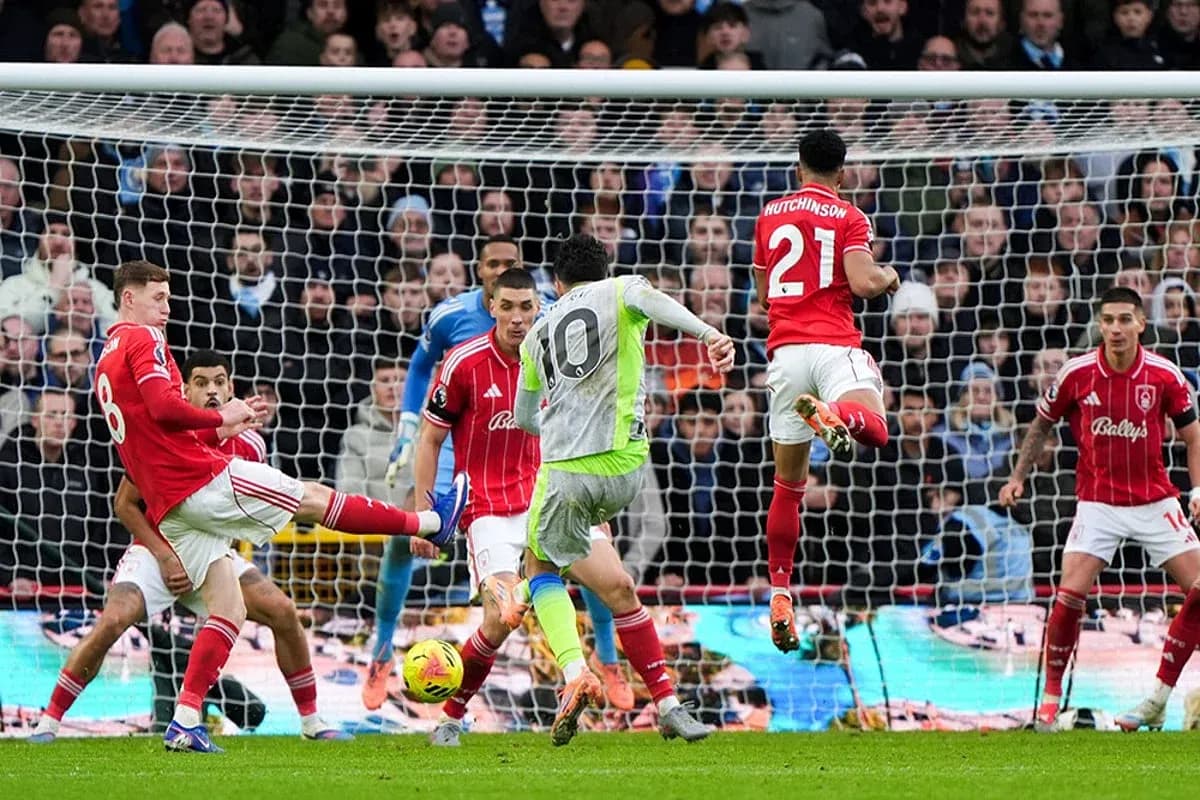
Manchester City Held to 2-2 Draw by Nottingham Forest
Manchester City were held to a 2-2 draw by Nottingham Forest at the Etihad Stadium on Wednesday night, a result that checks the momentum of the side sitting 2nd in the Premier League on 60 points and offers a precious boost to a Forest team starting the evening in 17th with 28 points. In a match where City’s territorial dominance was unquestioned, Forest’s resilience, smart counter-punching and clinical use of their few openings turned what looked like a routine home win into a damaging slip in the title race and a potentially pivotal away point in the relegation fight.
First Half Analysis
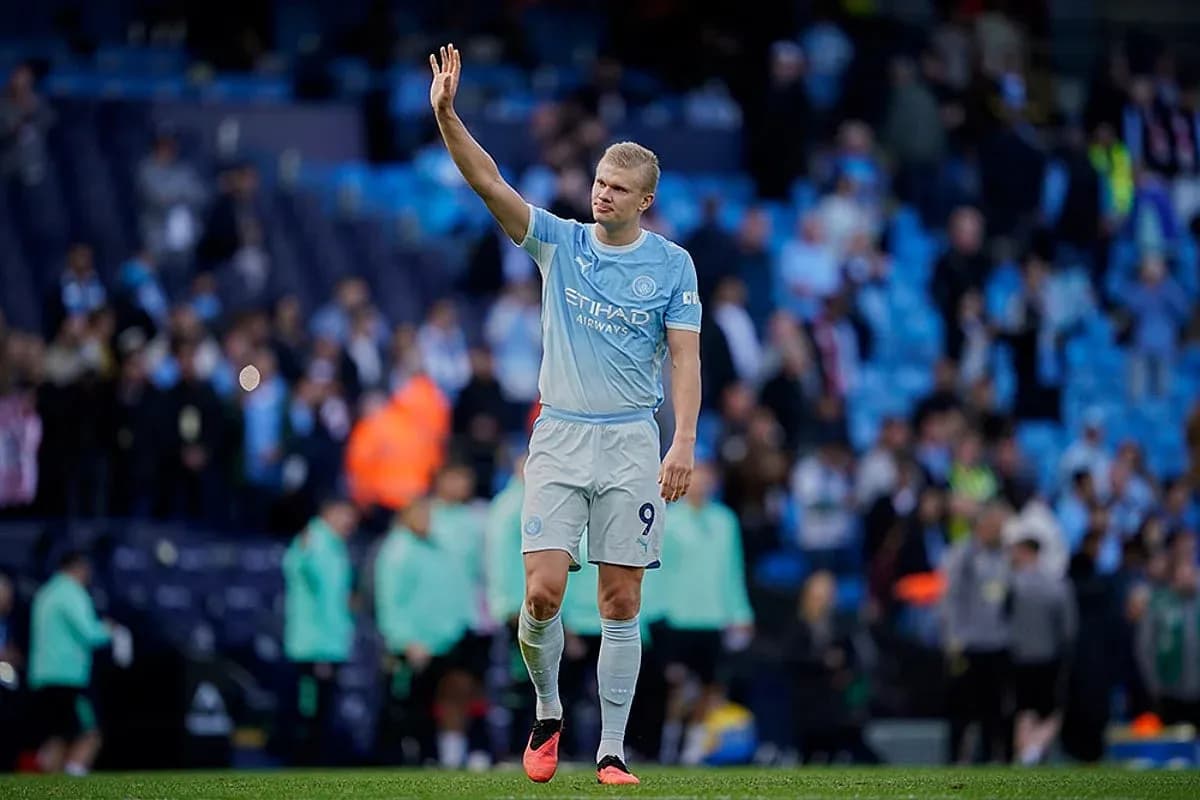
City, lining up in a 4-1-3-2, immediately conceded possession in only one sense: Forest were happy to sit deep in a 5-3-2, but it was clear Pep Guardiola’s side would dictate the ball. With Rodri anchoring and Rayan Cherki floating between the lines, City pinned Forest back, using Erling Haaland and Antoine Semenyo to stretch the back five.
The breakthrough came on 31'. Cherki found a pocket of space and threaded a pass into Semenyo, who finished from open play to make it 1-0. It was a goal that reflected the pattern: City moving Forest from side to side, then slicing through once the defensive line lost its shape.
Forest offered very little going forward before the break, but they did show bite in midfield. Their frustration surfaced in first-half stoppage time when Ibrahim Sangaré was booked for a foul on 45+1', a necessary intervention but one that underlined how much chasing Forest were doing without the ball. City reached half-time 1-0 up and in apparent control.
Second Half & Tactical Shifts
The second half flipped the narrative. Forest emerged braver, pushing Morgan Gibbs-White higher and asking Igor Jesus to run channels rather than simply defend. The reward came on 56': a rare sustained attack saw Jesus link play and feed Gibbs-White, who finished from open play to level at 1-1. It was Forest’s first real incision and it jolted City.
Forest’s aggression brought risk. Murillo was booked for a foul on 60', yet within two minutes City reasserted themselves. On 62', Rodri arrived from deep to meet a cut-back from Rayan Aït-Nouri, steering home from open play for 2-1. The left-back’s underlapping run had finally unpicked Forest’s compact block again.
Tempers rose as Forest protested decisions; Nikola Milenković was cautioned for dissent on 63', encapsulating their sense that the game was slipping away. Nuno Espírito Santo then made an attacking gamble: at 63', Nicolás Domínguez went off and Callum Hudson-Odoi came on, shifting Forest towards a more front-footed shape from midfield.
The change was decisive. On 76', Hudson-Odoi broke down the flank and picked out Elliot Anderson, who arrived from midfield to score from open play and level at 2-2. Anderson’s timing and Hudson-Odoi’s impact from the bench underlined Forest’s improved second-half ambition.
City responded with their own changes on 77', chasing a winner. Phil Foden made way for Jérémy Doku, adding direct dribbling from wide, while Aït-Nouri was replaced by Abdukodir Khusanov, a more defensive switch that slightly blunted City’s left-side thrust. Forest continued to tweak their front line: Igor Jesus was replaced by Taiwo Awoniyi on 79', adding a more physical outlet up front.
On 82', Guardiola doubled down on attacking width, with Cherki going off and Savinho coming in to stretch the right side. Yet Forest’s back five, now bolstered by fresh legs, held firm. Neco Williams departed on 90' for Morato, a defensive reinforcement to see out the point, while Gibbs-White was replaced by Ryan Yates at the same moment to add extra midfield work-rate.
In stoppage time, Matz Sels was booked for time wasting on 90+4', a clear sign of how valuable Forest considered the draw. City pressed but could not find a third goal as the contest ended 2-2.
Statistical Deep Dive
The numbers underline City’s control but also their wastefulness. They enjoyed 70% of the ball, completing 714 of 774 passes at 92% accuracy. Forest, by contrast, completed 269 of 329 passes (82%) and accepted long stretches without the ball, focusing on structural control in their own half.
City’s 21 total shots, with 7 on target, compared to Forest’s 9 efforts and 4 on target, point to a home siege. Forest’s defenders made 6 blocks, a testament to their penalty-box resilience, while City’s back line registered 3 blocks at the other end. In terms of underlying threat, City’s xG of 2.12 suggests they created enough to win, but Forest’s 0.97 xG shows their goals came from relatively high-quality moments, not freak events.
Discipline tilted Forest’s way in the negative sense: they committed 6 fouls to City’s 10, but collected all four yellow cards (Sangaré, Murillo, Milenković for dissent, and Sels for time wasting), reflecting the strain they were under and the tactical fouling needed to disrupt City’s rhythm.
Standings & Implications
With Manchester City locked on 60 points in 2nd place, this draw stalls their push at the top, especially given their strong recent form of DWWWW coming into the game and an imposing home record of 11 wins from 15. Dropping points from a winning position at the Etihad dents their aura of inevitability. For Nottingham Forest, remaining 17th on 28 points, this away draw against a title contender is a morale-boosting result in a season defined by survival, suggesting their compact 5-3-2 and capacity to counter can keep them just ahead of danger.