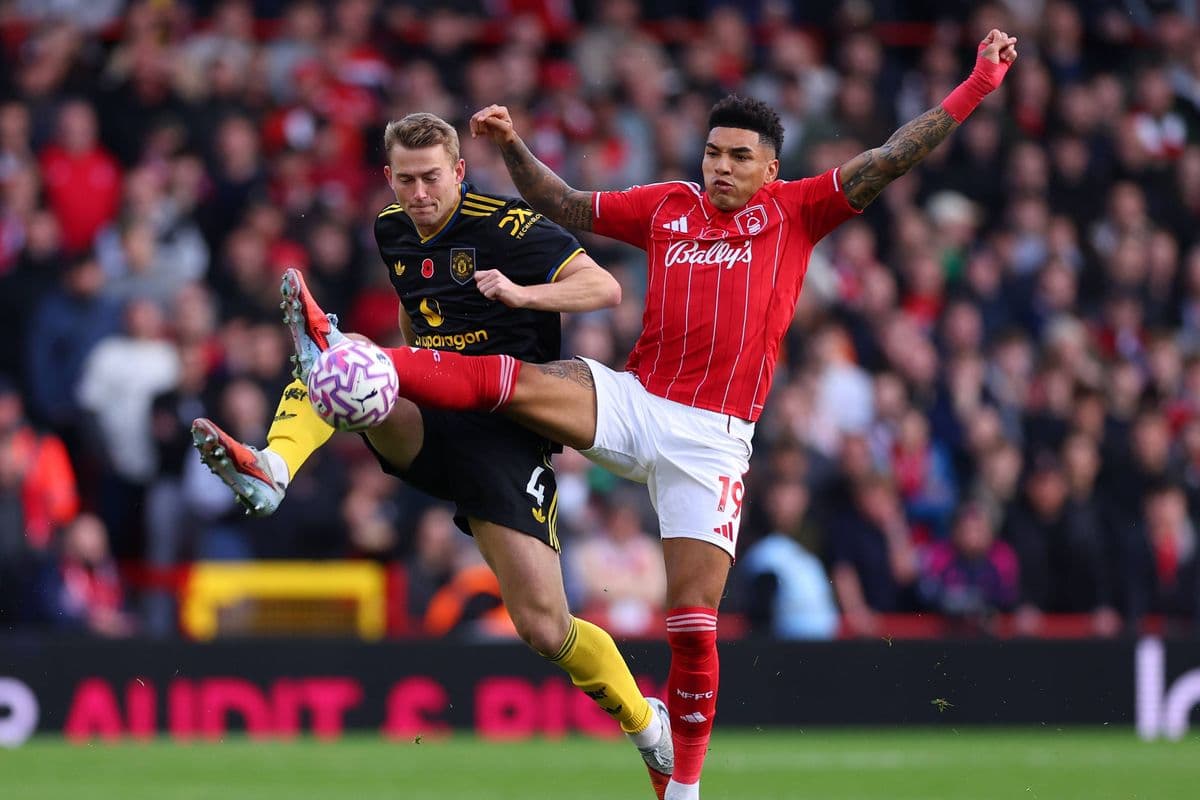
Manchester United vs Nottingham Forest: Match Analysis
Old Trafford had the feel of a club settling back into its old skin. A 3–2 win over Nottingham Forest, in the penultimate round of the Premier League season, underlined why Manchester United sit 3rd in the table on 68 points and why Forest, 16th with 43, are still glancing over their shoulders. Following this result, United’s overall record reads 19 wins, 11 draws and 7 defeats from 37 matches, with 66 goals scored and 50 conceded – a goal difference of +16 that speaks to an attacking side still learning to live with risk.
Forest, by contrast, embody survival by fine margins: 11 wins, 10 draws, 16 defeats, 47 goals for and 50 against, a goal difference of -3 that mirrors United’s tally conceded but with far less firepower at the other end. On their travels, Forest have actually been bolder than at home, winning 7 of 19 away games and scoring 28, but conceding 28 in return.
I. The Big Picture – Structures and Season DNA
Michael Carrick stayed loyal to the system that has defined United’s resurgence: a 4-2-3-1 that leans heavily on technical superiority between the lines and relentless occupation of the half-spaces. At home, United have been ruthless all season, winning 13 of 19 and averaging 2.1 goals per game at Old Trafford, even as they concede 1.3. The shape on the teamsheet is familiar; the interpretation is not conservative.
S. Lammens anchored the back line behind a defence of D. Dalot, H. Maguire, L. Martinez and L. Shaw. In front, the double pivot of Casemiro and K. Mainoo provided the platform, with an attacking trio of A. Diallo, Bruno Fernandes and Matheus Cunha supporting B. Mbeumo as the nominal striker.
Forest, under Vitor Pereira, set up in a 4-4-2 – a departure from their most-used 4-2-3-1 this season – with M. Sels in goal, a back four of N. Williams, N. Milenkovic, Morato and L. Netz, and a midfield band of O. Hutchinson, N. Dominguez, E. Anderson and M. Gibbs-White behind the front two of Igor Jesus and C. Wood. It was a structure designed less to outplay United than to compress the centre and spring quickly into the spaces behind Shaw and Dalot.
Heading into this game, United’s total scoring average of 1.8 goals per match, against 1.4 conceded, suggested exactly the type of open, chaotic contest that eventually unfolded. Forest’s overall average of 1.3 goals scored and 1.4 conceded told of a side that lives on the edge in both boxes.
II. Tactical Voids – Absences and Discipline
Both managers had to navigate significant absences in key zones.
United were without B. Šeško and M. de Ligt, both listed as “Missing Fixture”. The former’s 11 league goals made his absence particularly notable: Carrick was forced to lean on Mbeumo’s movement and Cunha’s versatility rather than a classic penalty-box presence. De Ligt’s absence shifted leadership duties in the back line more heavily onto Maguire and Martinez, with the latter’s aggression and timing critical to holding a high line.
Forest’s problems were even more structural. O. Aina, W. Boly, C. Hudson-Odoi, Murillo and N. Savona all missed out. That stripped Pereira of both defensive depth and wide threat. Without Murillo and Boly, Milenkovic and Morato had to form a centre-back pairing that had far less shared rhythm, while the absence of Hudson-Odoi removed a natural outlet on the flank, increasing the creative burden on Hutchinson and Gibbs-White.
Discipline was always going to be a fault line. United’s season-long yellow-card profile is heavily weighted to the middle and closing phases: 20.63% of their yellows arrive between 46-60 minutes and another 20.63% from 76-90, a pattern of increasing aggression as games open up. Their red-card distribution is brutally specific: 66.67% of reds between 46-60 minutes, 33.33% from 76-90. Casemiro, with 10 yellows and a yellow-red this season, is the embodiment of that edge.
Forest are similarly combustible. Their yellow-card peak comes between 46-60 minutes as well, with 25.42% of cautions in that window and 22.03% between 61-75. N. Williams, with 6 yellows and 1 red, personifies their willingness to defend on the front foot. Heading into this game, Forest’s only red in the league had come in the 31-45 window, a reminder that their intensity can boil over even before half-time.
III. Key Matchups – Hunter vs Shield, Engine Room
The “Hunter vs Shield” duel was clearest in the clash between United’s multi-headed attack and Forest’s patched-up back line. At home, United’s 39 goals from 19 matches, at 2.1 per game, were always likely to stretch a Forest defence that concedes 1.5 goals per game away.
Bruno Fernandes, the league’s top assist provider with 20, is United’s primary hunter by delivery rather than finishing. His 133 key passes and 54 shots, 23 on target, make him both creator and secondary shooter. Against Forest’s central duo of Dominguez and Anderson, his freedom to drift into pockets between their midfield and defence was decisive; every time Forest’s double pivot stepped forward to close him, space opened for Cunha and Mbeumo to dart into the channels.
For Forest, M. Gibbs-White carried the mantle of chief hunter. With 14 league goals and 4 assists, plus 57 shots (31 on target), he arrived at Old Trafford as one of the division’s most productive attacking midfielders. Operating nominally from the left of the midfield four but constantly sliding inside, his job was to exploit any disconnect between Casemiro and Mainoo, particularly in transitions when United’s full-backs were high.
The “Engine Room” battle pitted Casemiro and Mainoo against Dominguez and Anderson. Casemiro’s numbers – 90 tackles, 27 blocked shots and 32 interceptions this season – underline how much of United’s defensive identity flows through his reading of danger. His timing in front of Maguire and Martinez allowed United to hold a high line and compress play, forcing Forest into longer, riskier passes towards Wood and Igor Jesus.
Forest’s shield, by contrast, was more about collective volume than an individual destroyer. Dominguez’s role was to screen the channels in front of Milenkovic and Morato, while Anderson tried to connect the first pass into Gibbs-White or Hutchinson. But against a United side that averages 1.5 goals per game on their travels and 2.1 at home, simply holding shape was never likely to be enough; Forest needed turnovers in advanced areas, and they came too rarely.
Out wide, the duel between Shaw and Hutchinson, and on the other flank between Dalot and Williams, framed much of the narrative. Shaw, with 72 tackles and 9 blocked shots this season, is more than a progressive full-back; he is a one-man stabiliser on United’s left. Williams, meanwhile, brings 94 tackles, 17 blocks and 45 interceptions, plus 30 successful dribbles, making him both Forest’s best outlet and their most proactive defender. His willingness to step high left space behind him for Diallo and Mbeumo to exploit whenever Forest lost the ball.
IV. Statistical Prognosis – xG Shape and Defensive Solids
While explicit xG values are not provided, the season profiles sketch a clear expected goals landscape. United’s total scoring rate of 1.8 per match, coupled with Forest’s total concession rate of 1.4, points to a baseline expectation of United creating the higher-quality chances, especially at Old Trafford where their attacking average climbs to 2.1.
Defensively, both sides concede 1.4 goals per game overall, but the context differs. United’s back line is protected by Casemiro’s volume of defensive actions and Martinez’s aggression, while Forest’s solidity is more fragile, reliant on Williams’ duels and the organisation of rotating centre-back pairings. Forest’s 9 clean sheets in total, 5 of them away, show they can shut games down, but they also failed to score in 14 matches, including 5 on their travels – a sign that when they sit deep, their attacking threat can evaporate.
United’s penalty record adds a layer of reliability: 4 penalties taken this season, all scored, no misses. Forest have also been perfect from the spot, scoring all 3 penalties, but with far fewer opportunities. In a tight, late-season match, the likelihood of a spot-kick swinging momentum tilted slightly towards United, who generate more sustained pressure in the box.
Overlaying United’s late-game yellow and red-card spikes with Forest’s own post-interval disciplinary surges, the second half was always likely to become stretched and fractious – a phase where United’s superior technical quality and bench depth (M. Mount, J. Zirkzee, M. Ugarte) could tilt the balance.
Following this result, the numbers and the narrative align. United’s attacking structure, powered by Bruno’s vision, Cunha’s dynamism and Mbeumo’s movement, found just enough incision to outscore Forest’s spirited, Gibbs-White-led resistance. The statistical prognosis – a high-event game favouring United’s firepower over Forest’s patchwork defence – played out under the Old Trafford lights, and the table now reflects it.