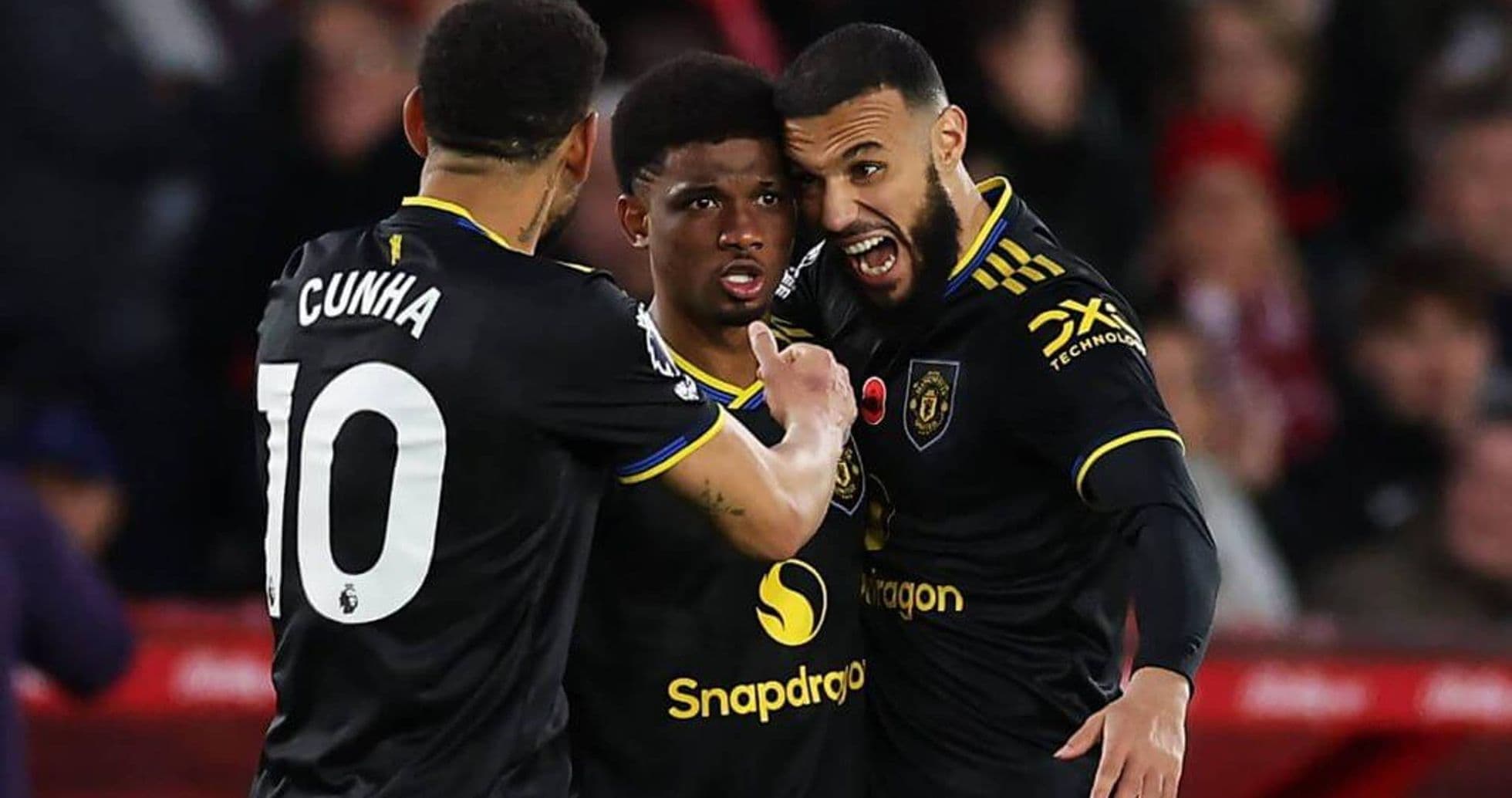
Manchester United vs Nottingham Forest: High-Stakes Premier League Clash
Old Trafford stages a high‑stakes meeting on 17 May 2026 as Manchester United host Nottingham Forest in the Premier League’s penultimate round. With United sitting 3rd on 65 points and Forest 16th on 43, the motivations are clear: the hosts are closing out Champions League qualification, while the visitors are trying to put the final seal on survival and climb away from danger.
Context: Table, form and pressure
In the league, Manchester United have pieced together a strong campaign. They are 3rd with 18 wins, 11 draws and only 7 defeats from 36 games, and a positive goal difference of +15 (63 scored, 48 conceded). Their recent form line of DWWWL shows momentum, even if not flawless, and underlines how hard they have been to beat across the run‑in.
At Old Trafford, United have been especially reliable: 12 wins, 3 draws and just 3 losses from 18 home matches, scoring 36 and conceding 22. Averaging 2.0 goals for and 1.2 against per home game, they have turned their stadium into a consistent source of points, backed up by 4 home clean sheets and only 2 home blanks.
Forest arrive 16th, on 43 points, with an all‑phase record of 11 wins, 10 draws and 15 defeats (45 scored, 47 conceded). The goal difference of -2 reflects a side often competitive but frequently on the wrong side of fine margins. Yet their current form is quietly impressive: DWWWD from the last five, suggesting a late‑season surge when it matters most.
Interestingly, Forest’s away record is stronger than their home one. On their travels they have 7 wins, 3 draws and 8 defeats, scoring 26 and conceding 25. Averaging 1.4 goals for and 1.4 against away, plus 5 away clean sheets, they are capable of producing disciplined, effective away performances.
Tactical outlook: structures and key zones
Across all phases, United have split their season evenly between a 3‑4‑2‑1 and a 4‑2‑3‑1, each used 18 times. That flexibility allows them to tailor their approach to Forest’s strengths.
- In 3‑4‑2‑1, United can overload central areas, push wing‑backs high and use two attacking midfielders between the lines. This suits a control‑heavy approach, with Casemiro anchoring and wing‑backs stretching the pitch.
- In 4‑2‑3‑1, they can deploy a more classic attacking shape: double pivot for stability, a No.10 linking midfield and attack, and wide forwards attacking Forest’s full‑backs.
Forest, by contrast, have been more structurally stable around a 4‑2‑3‑1, used 29 times across the season. They have occasionally shifted to back‑five systems (5‑3‑2, 3‑4‑3, 3‑4‑2‑1) but their default is a mid‑block 4‑2‑3‑1 that tries to spring forward quickly once possession is won.
The battle between United’s attacking midfielders and Forest’s double pivot will be central. If United’s No.10 and wide playmakers can receive between the lines, they can drag Forest’s midfield out of shape and open lanes for the striker. Forest’s task is to keep distances compact, deny central progression and funnel United wide, where they can defend crosses with numbers.
Key players and attacking weapons
For Nottingham Forest, Morgan Gibbs‑White is the standout figure. He has 13 league goals and 4 assists from 35 appearances, operating as a creative and goalscoring midfielder. With 46 key passes and 52 dribble attempts (25 successful), he is Forest’s main conduit between midfield and attack. His penalty record in the league is 1 scored from 1, underlining his responsibility in high‑pressure moments.
Gibbs‑White’s influence is not just technical. He has played 2930 minutes, started 33 times, and carries significant creative load, reflected in his 46 key passes and 39 fouls drawn. If he is available – he is listed as “Questionable” with a head injury – Forest’s attacking ceiling is significantly higher. If he misses out, Forest lose their primary link player and set‑piece threat.
For United, Benjamin Šeško has been a key goal source with 11 league goals and 1 assist in 30 appearances, despite starting only 17 times and playing 1636 minutes. His 51 shots (34 on target) show a high volume and accuracy profile; he is a classic penalty‑box striker whose movement and finishing are central to United’s threat. However, he is also listed as “Questionable” with a leg injury, so his availability is a major tactical variable.
Bryan Mbeumo adds another dimension for United. With 9 goals and 3 assists, plus 46 key passes and 51 dribble attempts (16 successful), he offers both end product and ball progression from wide or half‑spaces. His ability to attack Forest’s full‑backs and combine with the central striker will be crucial, particularly if United opt for the 4‑2‑3‑1.
Casemiro underpins United’s entire structure. With 9 goals and 2 assists, 1547 passes at 81% accuracy, and 88 tackles plus 30 interceptions, he is both destroyer and deep playmaker. His physical presence in duels (349 contested, 185 won) and his ability to break up Forest counters could dictate the rhythm of the match.
Injuries and selection headaches
United are definitely without M. de Ligt, ruled out with a back injury. That removes a first‑choice central defender and may influence whether United trust a back three or revert to a back four for greater simplicity at the back.
Beyond de Ligt, United have two major doubts: B. Šeško (leg injury) and M. Ugarte (back injury), both listed as “Questionable”. If Šeško does not start, United might need to adjust their attacking structure, perhaps leaning more on Mbeumo or a different central option, and potentially playing with more fluid interchanging rather than a fixed No.9.
Forest’s absentee list is longer. W. Boly, C. Hudson‑Odoi, John Victor and N. Savona are all confirmed out, with various knee injuries and unspecified issues. That weakens their defensive depth (Boly), wide threat (Hudson‑Odoi) and attacking rotation.
On top of that, a cluster of important names are “Questionable”: Z. Abbott (concussion), O. Aina (injury), M. Gibbs‑White (head injury), Murillo (muscle injury) and I. Sangare (injury). If Murillo and Sangare are unavailable, Forest lose a key centre‑back and a powerful defensive midfielder, which would directly impact their ability to withstand United’s pressure and protect the box.
Head‑to‑head: Forest’s recent edge
The last five competitive meetings between these sides (Premier League and FA Cup only) show a surprisingly positive picture for Forest:
- 1 November 2025, Premier League at City Ground: Nottingham Forest 2‑2 Manchester United – draw.
- 1 April 2025, Premier League at The City Ground: Nottingham Forest 1‑0 Manchester United – Forest win.
- 7 December 2024, Premier League at Old Trafford: Manchester United 2‑3 Nottingham Forest – Forest win.
- 28 February 2024, FA Cup 5th Round at The City Ground: Nottingham Forest 0‑1 Manchester United – United win.
- 30 December 2023, Premier League at The City Ground: Nottingham Forest 2‑1 Manchester United – Forest win.
Across these five, Forest have 3 wins, United 1, and there has been 1 draw. Notably, Forest have already won at Old Trafford in December 2024 by 2‑3, a psychological marker that they can take into this trip.
Game pattern and tactical nuances
Given United’s home scoring average (2.0 per game) and Forest’s away profile (1.4 scored, 1.4 conceded), this fixture leans towards a game with chances at both ends rather than a cagey stalemate.
United’s 7 clean sheets across all phases and Forest’s 9 suggest both can defend well in spells, but Forest’s 14 games without scoring underline a tendency to go flat in attack, especially if their key creators are missing.
Expect United to dominate possession, with Casemiro orchestrating from deep and the attacking midfielders rotating in the half‑spaces. The hosts’ biggest home win margin (4‑2) and heaviest home loss (1‑2) indicate that Old Trafford games often carry goal threat both ways.
Forest’s best away result of the season, a 0‑5 win, shows their capacity to explode in transition when everything clicks. Their preferred 4‑2‑3‑1 will likely sit in a mid‑block, looking to exploit any United errors in build‑up and target the space behind advanced wing‑backs if United use a back three.
Discipline could also matter. United’s yellow‑card distribution is heavily weighted towards the second half (notably 46‑60 and 76‑90 minutes), while Forest accumulate most of their bookings between 46‑75 minutes. With Casemiro on 9 yellows and Forest’s midfield combative, late‑game control of emotions may be key.
From the spot, both teams have been flawless across all phases this season: United have scored 4 of 4 penalties, Forest 3 of 3. Gibbs‑White has converted his only attempt, while neither Šeško nor Mbeumo has scored a league penalty yet.
The verdict
On paper, this is a meeting between a top‑four side with a strong home record and a lower‑table team, but Forest’s recent head‑to‑head record complicates the picture. They have taken 3 wins from the last 5 competitive meetings and have already left Old Trafford with a 2‑3 victory in December 2024.
However, the broader 2025 league context leans towards Manchester United. Their home form, attacking numbers and midfield platform, combined with Forest’s injury doubts in key areas, suggest the hosts are better placed to impose themselves over 90 minutes.
Forest’s improved recent form and away resilience mean they should not be discounted, especially if Gibbs‑White is passed fit. Yet if United manage to control transitions and get consistent service into their forwards – whether or not Šeško starts – they have enough firepower and structure to edge a high‑intensity contest.
A United win, potentially in a game where both sides score, looks the most logical outcome, with Champions League consolidation on one side and Forest’s survival fight ensuring the stakes remain high right to the final whistle.