Mircea Lucescu: A Legendary Figure in Romanian Football
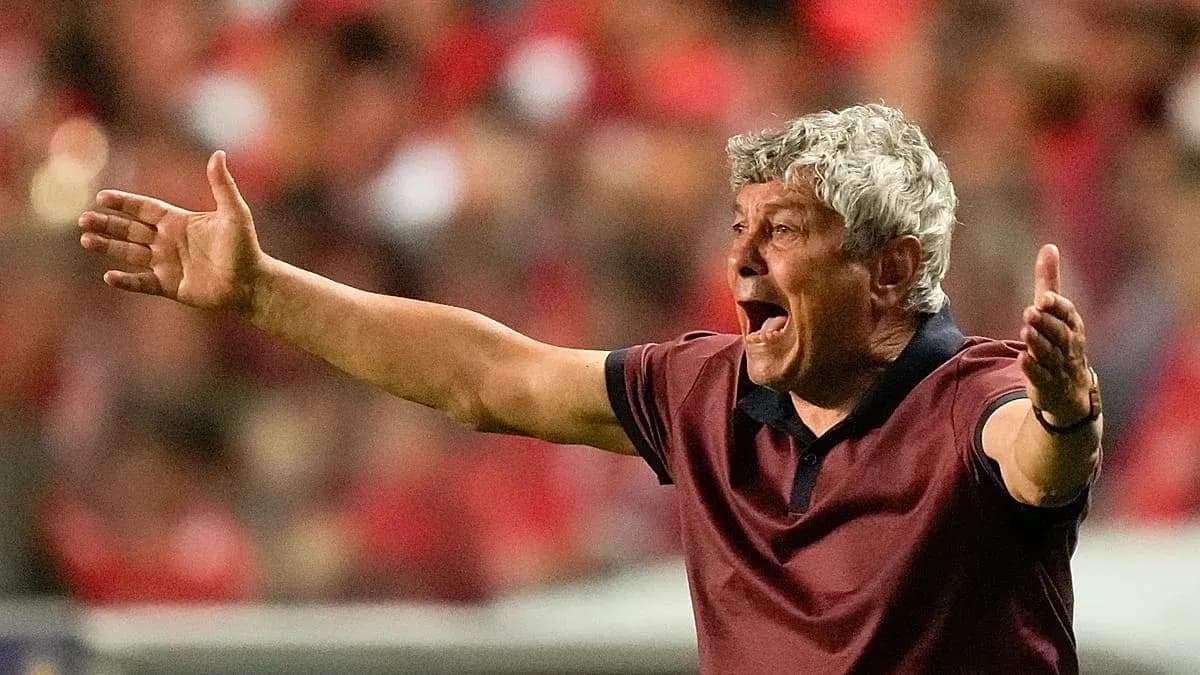
Mircea Lucescu, one of Romanian football’s defining figures and a serial winner on the pitch and in the dugout, has died at the age of 80.
Bucharest University Emergency Hospital confirmed his death on Tuesday. Lucescu had been admitted after reportedly suffering a heart attack on Friday morning, a sudden and stark turn for a man who had spent a lifetime defying time and expectation.
“Mr. Mircea Lucescu was one of the most successful Romanian football coaches and players, the first to qualify the Romanian national team for a European Championship, in 1984,” the hospital said in a statement, noting how “entire generations of Romanians grew up with his image in their hearts, as a national symbol.”
That image was forged over decades. First as a clever, authoritative forward who captained his country at the 1970 World Cup. Then as the coach who dragged Romanian football onto the European stage and kept returning to its touchline whenever the national team called.
Final Stint
His final spell in charge underlined that bond. Lucescu was in his second stint with Romania’s national side when illness forced his hand. He stepped down last Thursday after falling ill during training, the decision coming just three days after Romania’s World Cup hopes had been crushed by a playoff defeat to Turkey.
The timing was cruel. He had come back after a 38-year gap specifically to chase another World Cup, to try to repeat the feats that had once made him a pioneer for his country. Instead, the playoff loss drew a line under Romania’s campaign and, as it turned out, under Lucescu’s long service on the touchline.
His coaching career stretched across Europe, a well-travelled journey marked by league titles and cups, by rebuilding jobs and revival acts. Wherever he went, he carried the same intensity that had marked him out as a player. He led Romania to the European Championship, set standards for those who followed, and remained a reference point for what Romanian football could be at its best.
From captain in 1970 to the architect of Euro qualification in 1984 and a national-team return almost four decades later, Lucescu’s life in football traced the modern history of the Romanian game. His passing leaves a space not just on the bench, but in the identity of a football nation still shaped by his ambition.