Nottingham Forest vs Bournemouth Tactical Analysis: A 1-1 Draw
Nottingham Forest and Bournemouth shared a 1-1 draw at City Ground, but the tactical story was of contrasting structures and a gradual shift in control. Forest, under Vitor Pereira, leaned into a direct 4-4-2 with an emphasis on wide service and second balls, while Andoni Iraola’s Bournemouth imposed a more patient, possession-heavy 4-2-3-1 that grew stronger as the game went on. Forest’s 45% of the ball and 396 passes were a deliberate trade-off for verticality and territory, whereas Bournemouth’s 55% possession and 483 passes reflected a plan to stretch Forest and work shooting lanes from range.
Forest’s 4-4-2 was built around a clear reference point in C. Wood alongside Igor Jesus, supported by a narrow, creative midfield band. M. Gibbs-White operated as the advanced playmaker from the right side of midfield, frequently stepping inside to form a box with I. Sangare and E. Anderson centrally and O. Hutchinson wide left. This narrowness helped Forest flood the half-spaces and explain their 10 shots inside the box out of 15 total attempts: they consistently looked to combine between the lines and then attack the penalty area with numbers.
Bournemouth’s 4-2-3-1, by contrast, hinged on the double pivot of A. Toth and T. Adams protecting the back four and facilitating circulation. Ahead of them, Rayan, E. J. Kroupi and M. Tavernier supported lone striker Evanilson, with Tavernier especially important drifting inside from the left. Bournemouth’s shot profile – 17 total attempts but only 6 from inside the box and 11 from outside – underlined a game plan that accepted more speculative efforts from distance in exchange for territorial control.
First Half
The first-half pattern saw Forest at their most effective. With the game still relatively even in possession, they used early crosses and quick transitions to pin Bournemouth’s full-backs. N. Williams and Cunha pushed high from full-back, allowing Hutchinson and Gibbs-White to step into pockets closer to Wood and Igor Jesus. The breakthrough at 34' – M. Gibbs-White finishing after a contribution from O. Hutchinson – was the archetype of Forest’s approach: win the ball, connect quickly through the creative wide midfielders, and arrive in the box with a midfielder finishing rather than a classic No 9.
Out of possession, Forest’s 4-4-2 block tried to screen central access rather than press high. Wood and Igor Jesus focused on cutting lanes into Toth and Adams, forcing Bournemouth to circulate via the full-backs. With 11 fouls to Bournemouth’s 7 and a yellow card for Taiwo Awoniyi for “Foul” after his introduction, Forest’s defensive game was combative and occasionally late, but largely effective in the first phase. Their 5 blocked shots show how often the back four and double pivot managed to get bodies in front of Bournemouth’s efforts around the edge of the area.
Second Half
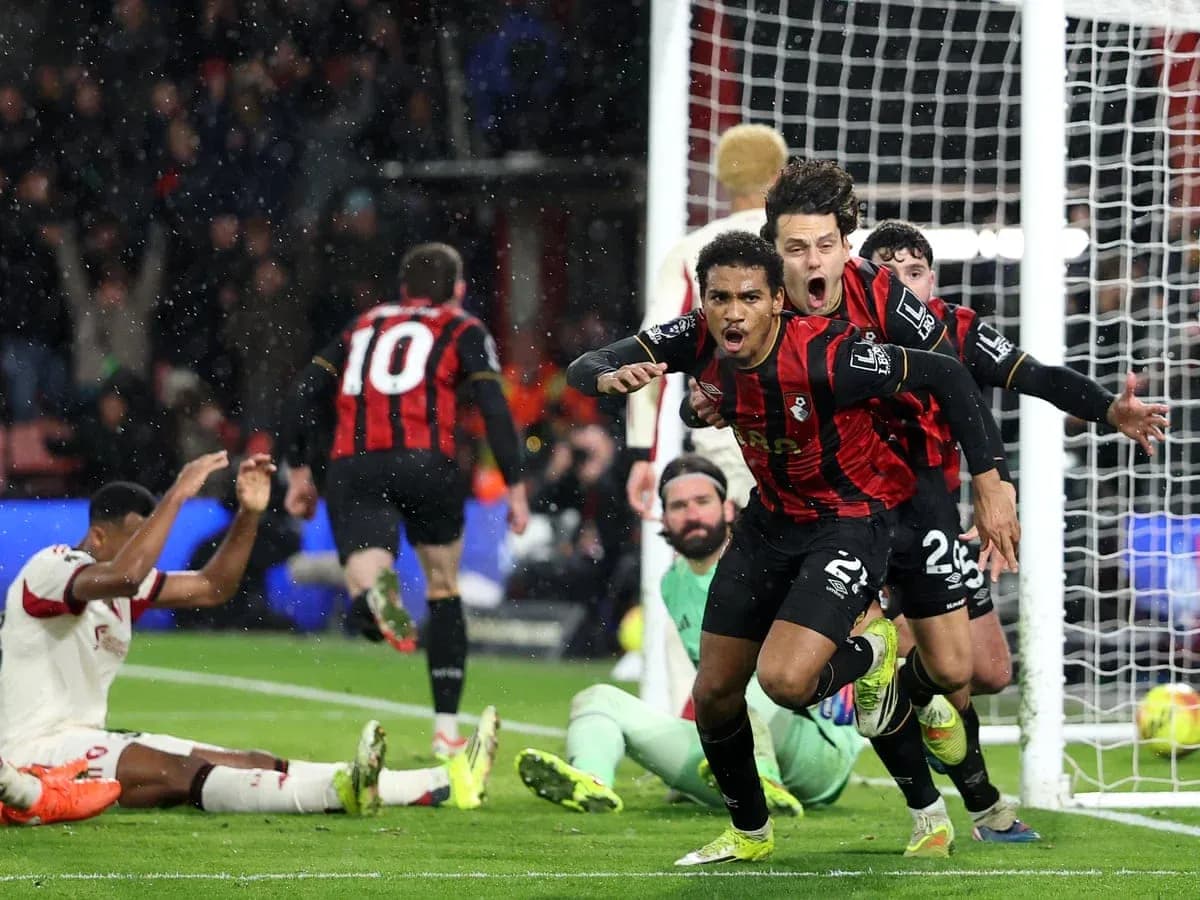
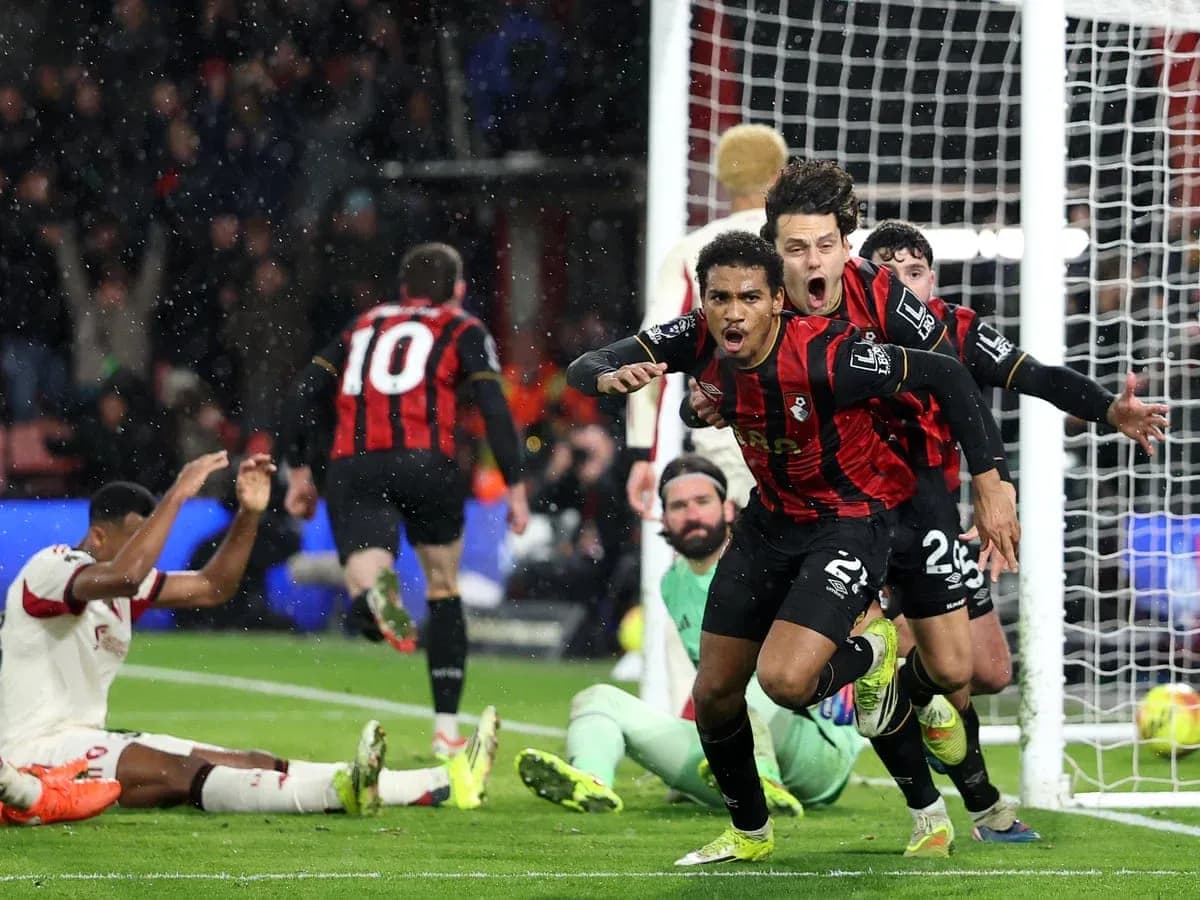
Bournemouth’s response after half-time was tactical and structural. With Forest ahead 1-0 at the interval, Iraola encouraged his full-backs A. Smith and A. Truffert to advance more aggressively, effectively pinning Forest’s wide midfielders deeper and turning the game into a 2-4-3-1 in possession. This higher positioning created the platform for the 54' equaliser: M. Tavernier struck following involvement from A. Truffert, a move that encapsulated Bournemouth’s intent to overload the flanks and then cut inside to shoot.
The substitutions around the hour mark sharpened these trends. For Bournemouth, A. Toth (OUT) was replaced by B. Gannon-Doak (IN) at 57', signalling a tilt towards more attacking presence higher up the pitch and reducing the double pivot’s conservatism. Later, the triple change at 73' – Evanilson (OUT) for E. Unal (IN), E. J. Kroupi (OUT) for J. Kluivert (IN), and Rayan (OUT) for A. Adli (IN) – refreshed the front line with more mobility and dribbling threat, keeping Forest’s back four pinned and contributing to Bournemouth’s 7 blocked shots as Forest threw bodies in the way.
Forest’s own changes were more about energy than structural overhaul. C. Wood (OUT) for T. Awoniyi (IN) at 62' preserved the 4-4-2 template but added more depth-running and pressing from the front. Cunha (OUT) for L. Netz (IN) at 63' and the double midfield change at 65' – E. Anderson (OUT) for R. Yates (IN) and I. Sangare (OUT) for N. Dominguez (IN) – indicated Pereira’s desire to stabilise the middle of the pitch and protect the lead that ultimately slipped. The later change at 78', with O. Hutchinson (OUT) replaced by J. McAtee (IN), aimed to inject fresh creativity on the flank but did not materially alter Forest’s structure.
Goalkeepers Performance
In goal, M. Sels (Nottingham Forest) made 3 saves, mirroring D. Petrovic (Bournemouth), who also registered 3. Yet the underlying metrics show both keepers underperformed slightly against expectation: Forest’s xG of 1.87 versus their single goal, and Bournemouth’s xG of 1, paired with negative goals prevented values for both sides, point to finishing and shot placement that could have produced a different scoreline.
Statistical Overview
Statistically, Bournemouth’s 55% possession and superior passing line – 483 passes, 405 accurate (84%) – reflect their control, especially after the break. Forest, with 396 passes and 307 accurate (78%), were more direct and risk-tolerant in their progression. Both sides created a similar volume of high-quality chances relative to the scoreline: Forest’s 5 shots on goal from 15 attempts and Bournemouth’s 4 from 17 underline a marginal attacking edge for the hosts in terms of shot quality, even if Bournemouth had the higher volume overall.
Discipline was finely balanced. James Hill’s yellow card for “Foul” at 33' and Taiwo Awoniyi’s caution for “Foul” at 67' were isolated incidents rather than signs of systemic loss of control. Forest’s 11 fouls to Bournemouth’s 7 fit the picture of a home side increasingly forced into reactive defending as Bournemouth’s possession game advanced.
Ultimately, the tactical narrative is of Forest’s compact, vertical 4-4-2 starting brighter and leveraging their creative midfield band, before Bournemouth’s possession-based 4-2-3-1, aided by proactive substitutions and full-back aggression, tilted the game territorially. The 1-1 at City Ground aligns with the xG balance and shot patterns: Forest closer to a second goal on underlying numbers, Bournemouth more dominant in territory and control, with both coaches’ structural choices clearly visible across the 90 minutes.