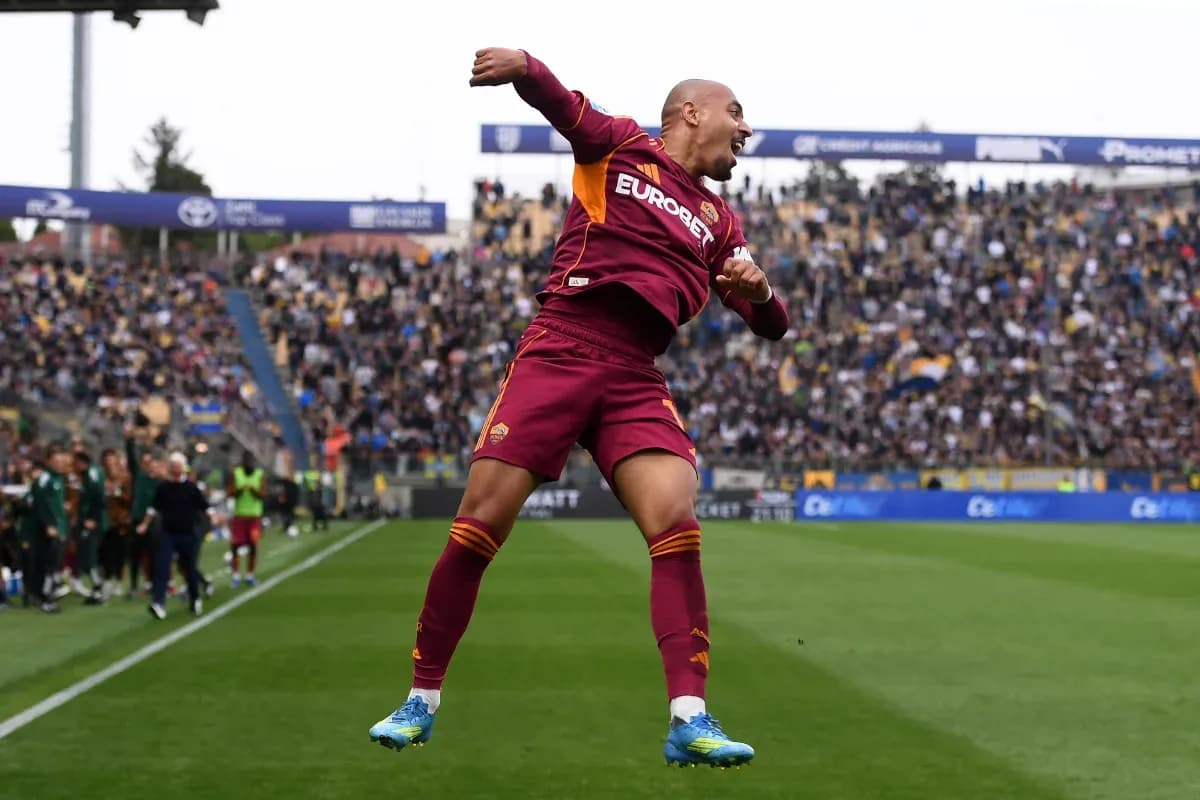
Parma vs AS Roma: A 3-2 Thriller Reflecting Serie A Dynamics
Under the late-afternoon light at Stadio Ennio Tardini, Parma and AS Roma delivered a 3-2 spectacle that felt like a compressed version of their entire Serie A seasons. Following this result in Round 36, the table tells a familiar story: Roma, fifth on 67 points with a robust overall goal difference of +24 (55 scored, 31 conceded), are a side built for European nights. Parma, 13th on 42 points with an overall goal difference of -18 (27 scored, 45 conceded), remain a team whose margins are thin and whose survival is stitched together by resilience more than firepower.
I. The Big Picture – Structures and Seasonal DNA
On paper, this was a clash of mirrored back-threes but very different identities. Parma lined up in their most-used 3-5-2, a shape they have deployed 17 times this campaign, with Z. Suzuki behind a trio of A. Circati, M. Troilo and L. Valenti. Ahead of them, E. Delprato and E. Valeri stretched the width as wing-backs, while C. Ordonez, H. Nicolussi Caviglia and M. Keita formed a central band of workers and connectors. Up front, N. Elphege and G. Strefezza were tasked with turning half-chances into lifelines for a side that has averaged only 0.8 goals in total this season, including 0.8 at home.
Roma, by contrast, arrived with the conviction of a side comfortable in its skin. Piero Gasperini Gian stayed loyal to the 3-4-2-1 that has underpinned 28 league outings. M. Svilar anchored a back line of G. Mancini, E. Ndicka and M. Hermoso, with Z. Celik and Wesley Franca as the wide engines. Inside, B. Cristante and M. Kone offered ballast and progression, while the fluid trio of M. Soule, P. Dybala and D. Malen provided the cutting edge. It is a structure that explains Roma’s attacking averages: 1.5 goals in total per game, with 1.3 on their travels, balanced by a disciplined defence conceding just 0.9 in total and 1.2 away.
Heading into this game, the contrast in profiles was stark. Parma’s home record – 4 wins, 6 draws, 8 losses, with only 15 goals scored and 25 conceded – painted them as stubborn but limited. Roma’s away profile – 9 wins, 1 draw, 8 losses, 24 scored and 21 conceded – suggested volatility but also a capacity to overwhelm.
II. Tactical Voids – Absences and Discipline
Both managers had to navigate significant absences that reshaped their plans. For Parma, A. Bernabe’s muscle injury removed a creative conduit between lines, while the knee injuries to B. Cremaschi, M. Frigan and G. Oristanio stripped depth and variation from the attacking and midfield rotations. It left Cuesta leaning heavily on workmanlike profiles: Nicolussi Caviglia as the metronome, Keita as the runner, Ordonez as the disruptor.
Roma’s absentees were even more telling. A. Dovbyk’s groin injury and E. Ferguson’s ankle problem deprived them of a different type of penalty-box presence and midfield aggression. L. Pellegrini’s thigh injury removed one of Serie A’s more nuanced tempo-setters, while B. Zaragoza’s knee injury cut away a wide option. The response was to double down on the Dybala–Soule–Malen axis, trusting their movement and intelligence rather than sheer physicality.
Disciplinary trends added another layer of tension. Parma’s season-long yellow-card distribution shows a clear late-game spike: 21.88% of their bookings arrive between 46-60 minutes and another 21.88% between 76-90, with a further 14.06% from 91-105. Their red cards are scattered but ominous: 40.00% between 31-45, and then 20.00% each across 61-75, 76-90 and 91-105. This is a team that tends to fray under pressure as matches stretch.
Roma, meanwhile, are no strangers to the referee’s notebook either. Their yellows cluster in the heart of the second half: 23.08% between 46-60, another 23.08% between 61-75, and again 23.08% from 76-90. Reds are concentrated between 46-60 and 61-75, 50.00% in each range. It is the profile of a side that defends on the edge when protecting or chasing leads.
III. Key Matchups – Hunter vs Shield, Engine Room Battles
The headline duel was always going to be “Hunter vs Shield”: D. Malen against Parma’s fragile defensive record. Malen arrived as one of Serie A’s most efficient forwards, with 13 goals in total from 16 appearances and 45 shots, 28 of them on target. His three penalties scored underline a calmness in high-leverage moments. Set against a Parma defence conceding 1.3 goals in total per game – 1.4 at home – the matchup tilted towards Roma’s number 14.
Within that, the sub-plot was how Parma’s back three would cope. M. Troilo, a key figure in their defensive structure, brings an intriguing profile: 23 tackles, 15 interceptions and, crucially, 15 blocked shots this season. Troilo blocked 15 shots in total, a testament to his willingness to step out and sacrifice his body. But his disciplinary record is volatile: 7 yellows, 1 yellow-red and 1 straight red. Against Malen’s relentless movement and Dybala’s knack for drawing fouls, any mistimed step risked tilting the game.
On the Roma side of the defensive equation, G. Mancini stood as both shield and potential flashpoint. With 50 tackles, 14 blocked shots and 44 interceptions, he is the enforcer at the heart of their back three. Yet his 9 yellow cards and 69 fouls committed show how often he walks the line. Against a physical forward like Mateo Pellegrino – Parma’s top scorer this season with 8 goals and 504 duels contested, winning 215 – this was a battle of attrition. Pellegrino’s presence on the bench meant his impact was timed, not structural, but once introduced, his aerial and physical threat would have targeted Mancini’s aggression directly.
The “Engine Room” duel lived in midfield. For Roma, B. Cristante’s 1,553 passes and 22 key passes this season mark him as the pivot through which they stabilise and accelerate play. Alongside him, M. Kone’s energy offered vertical thrust. Parma countered with Nicolussi Caviglia as their deep organiser, flanked by Keita’s legs and Ordonez’s bite. Without Bernabe, Parma lacked a true line-breaking passer from central zones, forcing them to rely more on Valeri and Delprato to progress play wide.
In the half-spaces, M. Soule was the creative storm Roma built around. With 6 goals, 5 assists and 43 key passes, Soule is the league’s 11th-ranked provider. His tendency to drift inside from the right invited overloads against Parma’s left-sided pairing of Valeri and Valenti, drawing out defenders and creating lanes for Malen’s diagonal runs and Dybala’s ghosting between lines.
IV. Statistical Prognosis – xG Logic and Defensive Reality
Even without explicit xG numbers, the statistical scaffolding around this match points towards a high-chance environment tilted Roma’s way. Roma’s attack, averaging 1.3 goals on their travels, meeting a Parma defence conceding 1.4 at home, suggests that Roma were likely to generate and convert multiple opportunities. Their clean-sheet record – 16 in total, with 6 away – underlines a capacity to control games once ahead.
Parma, conversely, came in with 0.8 goals scored at home and 0.8 in total, against a Roma unit conceding just 1.2 away. For Parma to score twice, as they ultimately did, required efficiency at the edge of their norm: set-pieces, transition moments, or individual brilliance from the likes of Strefezza or a late cameo from Pellegrino.
The disciplinary patterns also fed into the expected flow. With both sides prone to picking up cards in the 46-90 window, the second half was always likely to become stretched and chaotic. That kind of game state suits Roma’s front three, who thrive in broken structures, more than Parma’s more system-dependent attack.
Following this result, the 3-2 scoreline feels like the logical meeting point of data and narrative. Roma’s superior attacking metrics, the presence of an elite finisher in Malen, and the creative weight of Dybala and Soule were always likely to overwhelm a Parma side whose defensive bravery, epitomised by Troilo’s 15 blocked shots, cannot fully mask structural frailties. Parma’s spirit and late-season form spikes kept them in the contest; Roma’s quality and statistical profile ensured they emerged from Tardini with the points their season-long numbers have promised.