Qarabag vs CSKA Sofia: Tactical Analysis of a Goalless First Leg
Qarabag and CSKA Sofia produced a goalless but tactically dense first leg at Azərsun Arena, a match defined less by chaos in either box and more by structure, spacing and mid-block control. Across 90 minutes, the numbers underline how finely poised this 2nd Qualifying Round tie remains: Qarabag edged total shots 12–11 and led 8–2 in corners, while CSKA Sofia held a narrow possession advantage at 52–48. Both sides finished with identical 7 shots off target and no blocked efforts recorded, reinforcing the sense of a game where most attempts came from relatively clean but sub-optimal positions rather than frantic penalty-area scrambles.
Qarabag's Strategy
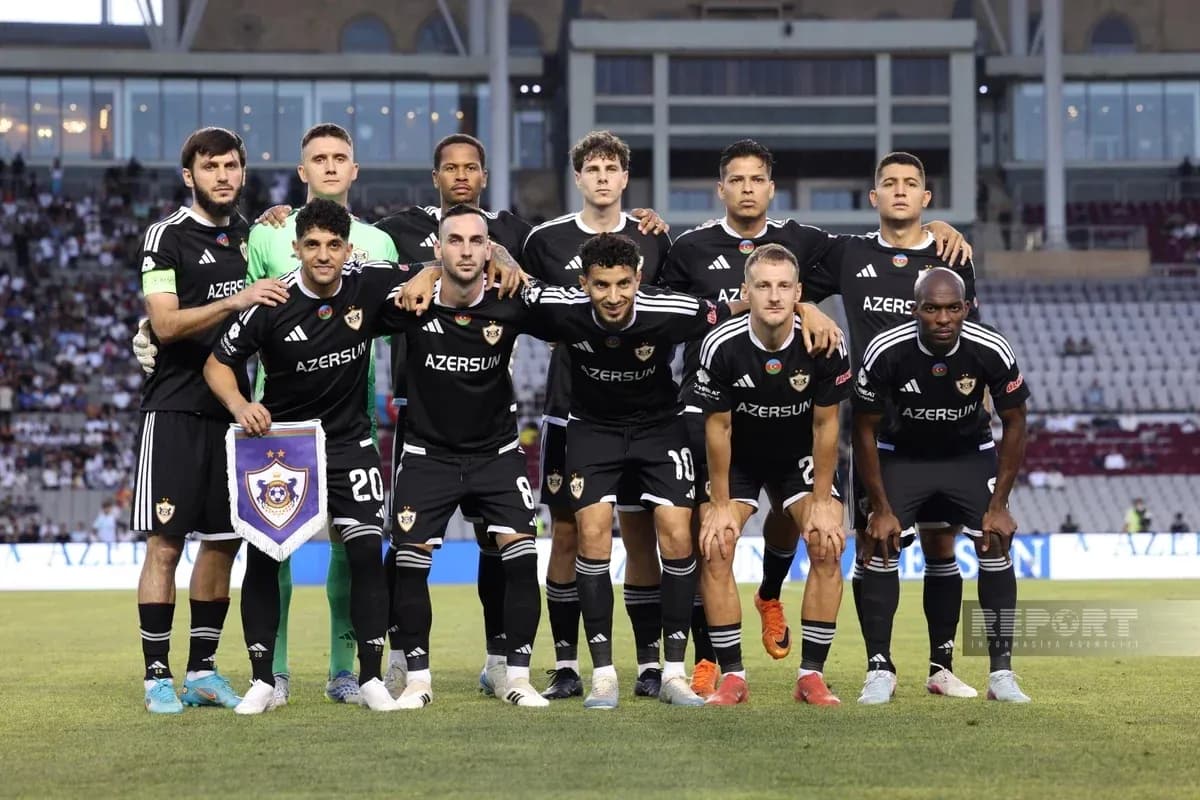
Qarabag’s 4-2-3-1 under Qurban Qurbanov was clearly designed to dominate territory via the ball and full-back height, even if the raw possession split shows only a slight deficit. With Matheus Silva and B. Langa as the wide defenders and a double pivot of Pedro Bicalho and M. Jankovic, Qarabag tried to build through the thirds with short circulation, then accelerate play into the half-spaces where Kady Borges and A. Zoubir could receive between the lines. O. Kashchuk, starting from the right, often tucked inside to form a narrow three behind lone forward Z. Sawo, aiming to overload CSKA Sofia’s central midfield.
The shot profile reflects this territorial intent: 12 total shots, 5 on goal, and 8 corners indicate Qarabag were the side more frequently pinning CSKA back and forcing defensive actions in and around the box. The absence of blocked shots suggests CSKA’s back four, shielded by J. Gbamin, were often able to hold their line and engage late, allowing attempts but from distances or angles where pressure could be applied without desperate last-ditch interventions.
CSKA Sofia's Response
CSKA Sofia, in Hristo Yanev’s 4-4-2, set up with a compact, horizontally tight block. Pastor and A. Martino at full-back stayed relatively conservative, allowing the wide midfielders M. Ebong and S. Sensi to step out to Qarabag’s full-backs without exposing the half-spaces. Gbamin’s role as a screening defender in the midfield line was crucial: he sat close to the centre-backs F. Rodriguez and T. Ivanov, narrowing the channels where Kady Borges and Zoubir like to operate. Up front, L. Godoy and I. Pittas worked as a classic split-striker pair, one dropping onto the pivots while the other threatened the space behind.
CSKA’s 11 shots with 4 on target, despite fewer corners and slightly more of the ball, point to a more selective, transition-oriented attacking plan. When they did break, it was usually via quick vertical passes into Godoy or Pittas, then wide to Ebong or Sensi, rather than through long, sustained positional attacks. The equal number of shots off target (7 each) suggests that while CSKA were dangerous enough to test Qarabag’s defensive structure, they were not able to generate a clear volume advantage in higher-quality chances.
Card Sequence
The card sequence highlights how tightly contested the midfield battle was. At 35', Leandro Godoy (CSKA Sofia) received a yellow card, followed two minutes later at 37' by Marko Janković (Qarabag). With no additional info provided, the disciplinary data still tells us that both forwards and central midfielders were operating on the edge of physicality, trying to disrupt build-up early. CSKA finished with 2 yellow cards to Qarabag’s 1, a small but telling indication that their out-of-possession plan relied more on aggressive interventions to slow Qarabag’s rhythm.
Substitution Patterns
Qarabag’s substitution pattern in the second half reveals Qurbanov’s intent to increase attacking variety and energy. At 56', R. Cephas (IN) came on for M. Jankovic (OUT), a clear shift from a double-pivot profile towards more vertical thrust from midfield and an extra runner between lines. Simultaneously, at 56', E. Cafarquliyev (IN) came on for B. Langa (OUT), injecting fresh legs at left-back and allowing Qarabag to maintain high full-back positions without sacrificing defensive recovery speed.
The 74' double change further underlined the attacking tilt: J. Mouaddib (IN) came on for O. Kashchuk (OUT), and C. Makreckis (IN) came on for B. Huseynov (OUT). Mouaddib’s introduction in the right attacking channel added dribbling and combination play, while Makreckis, a midfielder, replacing a centre-back signalled a calculated risk—likely a backline reconfiguration to keep numbers high in midfield and in the final third. At 78', J. Montiel (IN) came on for A. Zoubir (OUT), ensuring Qarabag’s left-sided creativity and one-v-one threat remained high into the closing stages.
CSKA Sofia’s response was more conservative and structurally protective. At 73', J. Zwarts (IN) came on for L. Godoy (OUT), and I. Solet (IN) came on for M. Ebong (OUT). Zwarts offered fresh pressing energy and depth running, while Solet reinforced the midfield line, helping CSKA cope with Qarabag’s growing central overloads. At 77', Facundo Rodríguez picked up CSKA’s second yellow card, again with no specified reason, but consistent with a defender under sustained pressure from crosses and combinations.
Final Phase of Changes
The final phase of changes underlined Yanev’s priority: preserve the clean sheet away from home. At 84', T. Ouorou (IN) came on for A. Martino (OUT), refreshing the left side of the defence. Then at 90+1', M. Brahimi (IN) came on for Pastor (OUT), and P. Panayotov (IN) came on for S. Sensi (OUT), effectively rotating defensive and midfield legs to see out the final minutes. These late substitutions, all in deeper roles, were about maintaining compactness and closing down Qarabag’s wide supply lines rather than chasing a decisive away goal.
Match Statistics
Statistically, the match reflects two coherent but contrasting strategies cancelling each other out. Qarabag leveraged their 4-2-3-1 to generate more territorial pressure, more corners (8–2), and a slight edge in shots on goal (5–4). CSKA Sofia, with marginally more possession and a disciplined 4-4-2, traded some territory and set-pieces for structural solidity and transition threat. With no goals, no red cards, and no blocked shots, the data paints a picture of a controlled, chess-like first leg where both coaches prioritised staying alive in the tie over taking reckless risks. The second leg will likely hinge on which side can convert similar marginal advantages into actual goals without unbalancing their defensive frameworks.