Rodri Reflects on Resilience After World Cup Triumph
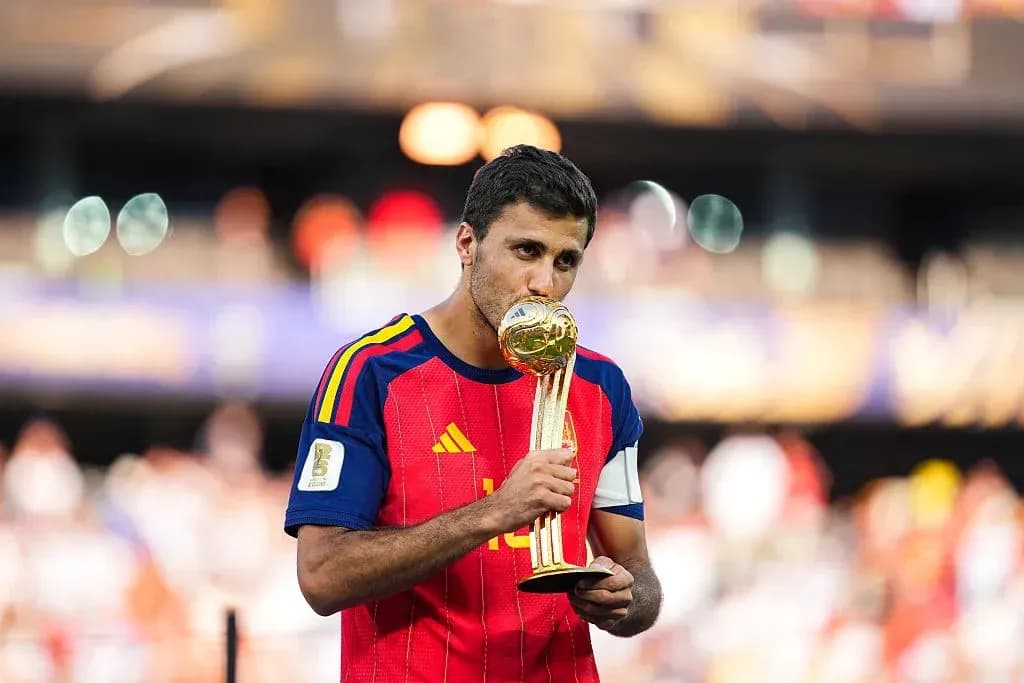
Rodri stands on the podium, World Cup trophy in one hand, Golden Ball in the other, and talks not about glory, but about pain.
Spain have just edged past Argentina 1-0 in extra time to become world champions, a tight, brutal final decided by fine details and even finer nerves. At the heart of it all, again, was Rodri – the tournament’s outstanding player, the man who dictated the tempo of Spain’s run and now leaves with the Golden Ball to prove it.
Yet his first instinct is to look back to September 2024, to the moment everything seemed to collapse.
A serious knee injury, the kind that can quietly derail even the most disciplined careers, ripped him out of his rhythm and out of the game. The months that followed were not a straight line. Setbacks, frustrations, more questions than answers. The kind of grind supporters never see, hidden in training grounds and treatment rooms.
So when he admits, “We’re a bit shocked right now, even myself. I cannot express with words. I think now we’re like in a cloud,” it lands with weight. This isn’t just a champion in disbelief. It is a player who has walked through the darker corners of the sport to stand in its brightest light.
Rodri’s performance across the tournament has been a study in control. Calm under pressure, relentless without the ball, ruthless with it. Against Argentina, in a final loaded with tension and history, he again set the tone, steering Spain through extra time and into the small slice of immortality reserved for world champions.
But he clearly sees this night as more than a tactical triumph or a personal accolade. He frames it as a message.
“I just want the new generations to see my example as an opportunity,” he says. “When you go down, you can rise again. This is my philosophy for my entire life.”
There is no grand speech, no polished slogan. Just a simple creed forged in rehab rooms and lonely gym sessions. He talks about “positiveness” not as a slogan on a wall, but as a choice made daily when the knee aches, when the scans are unclear, when the doubt creeps in.
Inside the dressing room, before the final, Rodri’s words to his teammates were not about caution or fear of Argentina’s stars. They were about confrontation.
“I said to the lads before the game, ‘we have to go for the game.’ We need to face them, we have to look to their eyes. We want this game.”
Spain did exactly that. They didn’t shrink from the occasion, didn’t retreat into themselves. They pressed, they passed, they took the initiative. The winning margin was narrow; the intent was not.
“And then life gives you the World Cup or not,” he adds, a reminder that even the bravest approach offers no guarantees. On this night, life did give him the World Cup. But he is just as keen to talk about the nights when it didn’t give him anything at all.
He takes a moment to acknowledge those who carried him through the worst of it. The medical staff, the coaches, the people around him who steadied him when the knee and the mind were both under strain. Then he does something footballers rarely do in public.
“But I want to thank myself, to be honest, in those moments.”
It is blunt, almost jarring, but entirely honest. No one else can do the rehab for you. No one else can get up again after another setback and choose to believe there is still a stage like this waiting at the end.
On a night when Spain reclaimed the world and Rodri was crowned its best player, the story he wanted to tell was not about dominance, but resilience. For the younger players watching, the message was clear enough: the road to the World Cup can run straight through your worst injury.
And if you handle those days the way he did, it doesn’t have to stop there.