Sporting JAX vs Tampa Bay Rowdies: Group 7 Showdown
Under the lights at Hodges Stadium, the USL League One Cup’s Group 7 narrative tightened and tilted decisively. Sporting JAX, still feeling their way through this inaugural cup run, were handed a 0–2 home defeat by a ruthless Tampa Bay Rowdies side that already looked like a playoff machine.
Following this result, the table tells a stark story. Sporting JAX sit 3rd in Group 7 on 4 points with a goal difference of -3, having scored 4 and conceded 7 overall. At home they have been particularly fragile: 2 matches, 2 defeats, 0 goals scored and 3 conceded. On their travels they have been more competitive, winning once and losing once, with 3 goals for and 2 against.
Tampa Bay, by contrast, are setting the group’s standard. They top Group 7 with 9 points, a goal difference of +7 (8 scored, 1 conceded overall), and the “Playoffs” tag already attached to their name. Their balance is striking: at home they have a 2–0 win, away they have taken 6 goals for and conceded just 1 across 2 victories. The Rowdies’ seasonal DNA is clear: an attack that averages 2.7 goals in total, including 3.0 away, backed by a defence that allows only 0.3 goals in total and 0.5 on their travels.
Within that framework, this match played out almost exactly along statistical fault lines: a Sporting side that had failed to score in both previous home fixtures again drew a blank, while a Rowdies outfit that had scored freely away from home calmly added another 2-goal haul without reply.
Tactical voids and discipline
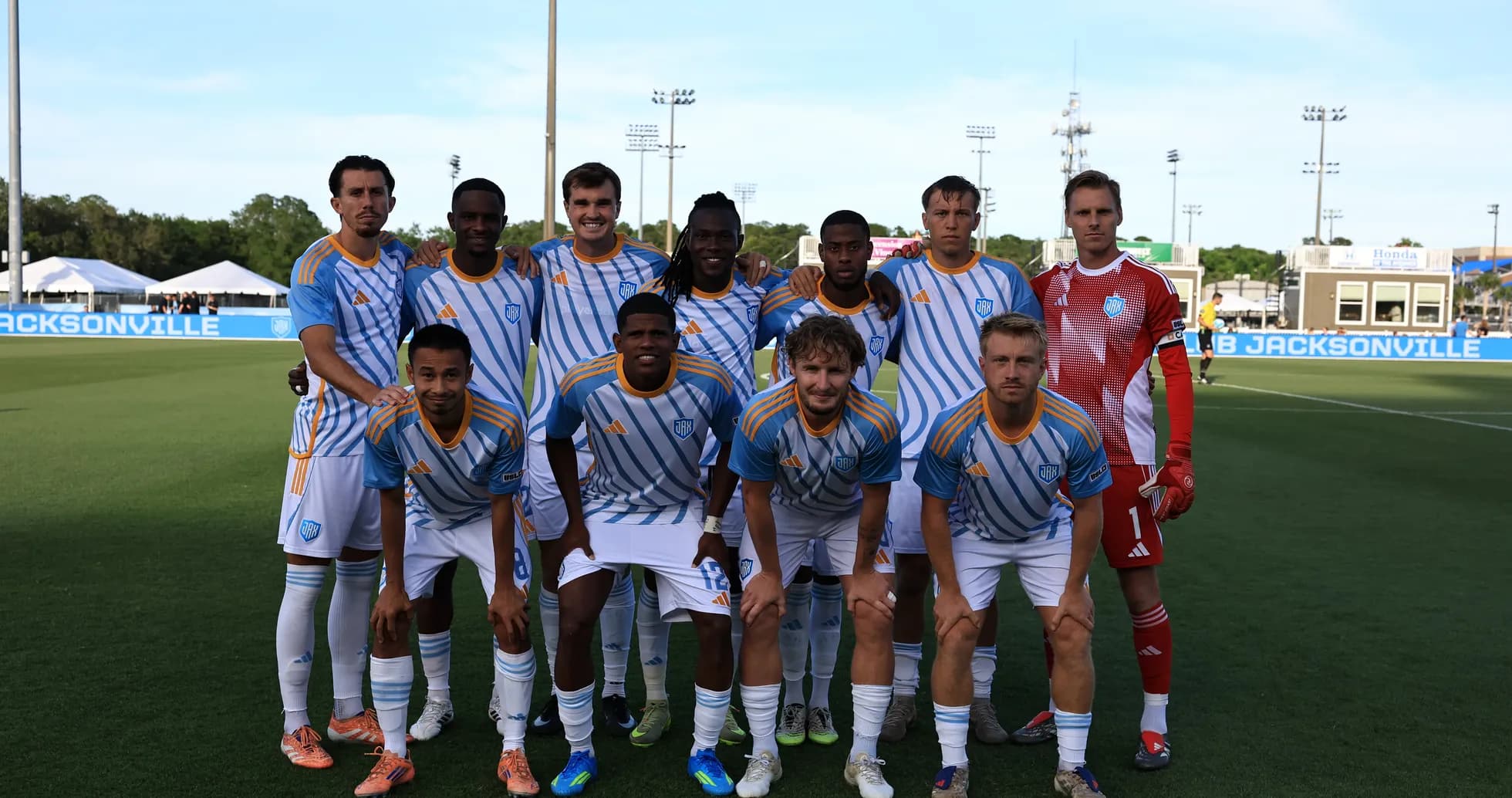
The squads named for this tie revealed no officially listed absentees, but the shapes and roles told their own story. Sporting JAX went with a spine built around J. McGuire in goal, a defensive unit of W. Ackwei, A. Gomez, E. Dudley and E. Rito, and a central core featuring W. Kuzain and B. Soumaoro. Ahead of them, T. Rose and J. Evans were tasked with connecting to the front pair of E. Jaaskelainen and K. Sadlier.
The void for Sporting was less about personnel and more about profile. Heading into this game, they had 0.0 home goals on average and had failed to score in both home fixtures. That lack of a proven home finisher hung over the front line. Jaaskelainen’s movement and Sadlier’s creativity are useful, but the data suggested neither had yet cracked the code of Hodges Stadium.
On the Rowdies’ side, coach Dominic Casciato named an XI with a clear structural logic: J. Waite in goal; a defensive line marshalled by L. Wyke and B. Schaefer, flanked by A. Rodriguez and N. Dossantos; and a midfield blend of control and thrust through C. Ostrem, M. Schneider and L. Perez. In the attacking band, the technical craft of S. Cruz and M. Micaletto supported the penalty-box instincts of M. Myers.
Discipline was always going to be a hidden subplot. Heading into this game, Sporting JAX’s yellow cards clustered heavily in the 46–60 minute window, where 55.56% of their cautions arrived, with a further late-game surge of 22.22% between 76–90 minutes. That pattern hints at a team that struggles to manage transitions after half-time and then again in the closing stages, often chasing games and arriving late into challenges. Tampa Bay’s yellows were more evenly spread but still had a second-half tilt: 33.33% between 46–60 minutes and another 33.33% in the 76–90 window.
With neither side registering red cards in the competition so far, the expectation was for controlled aggression rather than chaos. Yet for Sporting, those recurring second-half bookings symbolise a tactical deficit: when they lose structure, they foul.
Key matchups
Hunter vs Shield
This tie’s central duel was always going to be Tampa Bay’s away attack against Sporting JAX’s home defence. Heading into this game, the Rowdies were averaging 3.0 goals on their travels, with 6 away goals scored and only 1 conceded. Sporting, at Hodges Stadium, had conceded 3 in 2 home fixtures at a rate of 1.5 per game while failing to score.
The “Hunter” role was shared across Tampa’s front line. M. Myers, leading the line with shirt number 9, offered the penalty-area presence, while the likes of S. Cruz and M. Micaletto floated between the lines. L. Perez, nominally part of the midfield, often becomes an extra forward in transition, turning Tampa’s shape into a wave of four or five green shirts.
Sporting’s “Shield” was a collective of McGuire, Dudley, Ackwei and Rito. Dudley’s job was to step into duels early, while Rito’s athleticism had to handle wide overloads from Rodriguez and Dossantos. The numbers suggested they would be under siege: Tampa’s overall goalsFor average of 2.7 contrasted brutally with Sporting’s goalsAgainst total average of 1.3.
Engine Room
In midfield, the battle between Sporting’s W. Kuzain and B. Soumaoro against Tampa’s M. Schneider and L. Perez was the game’s tempo dial. Kuzain, wearing 8, is the natural metronome, tasked with progressing play from deep. Soumaoro, with 32 on his back, is the disruptor, the one who has to snap into those duels that so often lead to Sporting’s 46–60 minute yellow-card spike.
For Tampa, Schneider is the hinge – the first outlet from the back line – while Perez drifts into half-spaces, linking with Cruz and Micaletto. Given Tampa’s lack of penalties (0 taken, 0 scored, 0 missed), their threat is almost entirely from open play and structured patterns, making this central area even more critical. If Sporting’s engine room could not slow those combinations, the back four would be overwhelmed.
Statistical prognosis and narrative verdict
From a data lens, this result was almost pre-written. Heading into this game, Sporting JAX’s total goalsFor average of 0.8 (0.0 at home) met a Tampa defence that had conceded just 1 goal in 3 matches, with a total goalsAgainst average of 0.3 and 0.5 away. The probability of Sporting finally exploding at home against this unit was always slim.
Conversely, Tampa’s away firepower – 3.0 goals on their travels – faced a Sporting defence that had allowed 1.5 per home game and 1.3 overall. Even with variance, a multi-goal Rowdies performance was the likeliest outcome.
Without explicit xG numbers, the expected goals story can only be inferred, but the patterns are clear. Tampa’s high scoring volume with low concession rate suggests they regularly win the xG battle by a healthy margin. Sporting’s negative goal difference of -3 (4 for, 7 against) in the standings underlines a side whose chance creation lags behind the chances they allow.
Narratively, this match felt like a crystallisation rather than a surprise. Tampa Bay Rowdies arrived as a side with a 3-game winning streak, 2 clean sheets, and a perfectly balanced away record. Sporting JAX, still searching for a home identity, ran into a fully-formed cup contender.
For Sporting, the path forward is clear but demanding: they must re-engineer Hodges Stadium from a place of drought – 0 home goals so far – into a venue where the likes of Jaaskelainen, Sadlier and Evans can impose themselves. For Tampa, this was another step in a methodical march: Waite’s calm in goal, Wyke and Schaefer’s control at the back, and the layered threats of Myers, Cruz and Micaletto all feeding a campaign that now looks built for late-stage cup football.