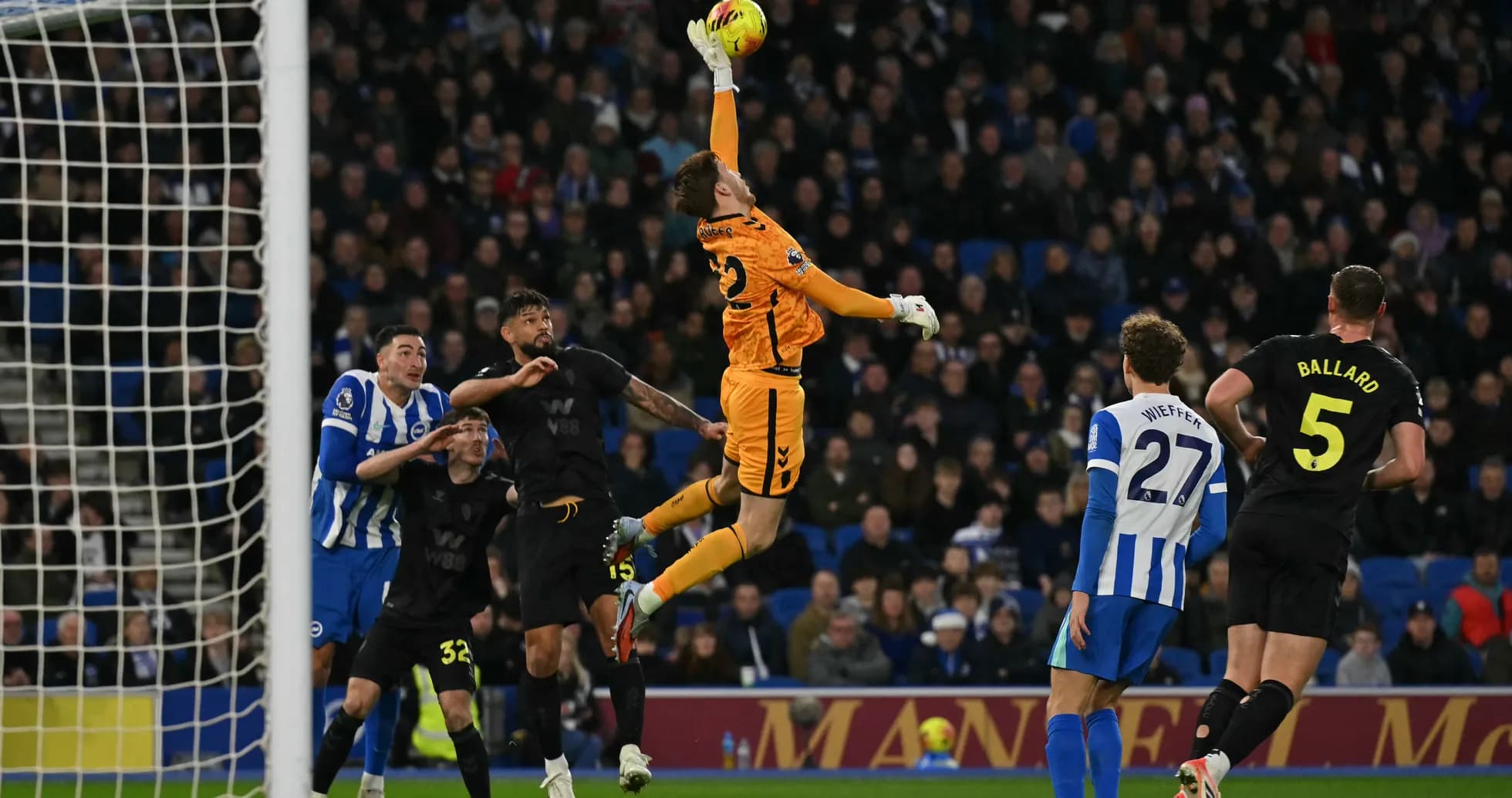
Sunderland vs Brighton: Mid-Table Clash Preview
Stadium of Light under the lights of a March weekend, Premier League tension in the air, and two sides separated by just three points meet in what feels like a mid-table crossroads. Sunderland, 11th on 40 points, welcome 14th-placed Brighton, who sit on 37, for a fixture that could redraw the landscape of the league’s congested middle pack. This is no title showdown or relegation scrap, but a classic “table-tier decider”: the winner can start glancing upwards, the loser risks being dragged back towards the scrap behind them.
Both clubs arrive with contrasting moods and styles. Sunderland’s home form has quietly turned the Stadium of Light into one of the division’s more awkward away days, while Brighton’s season has been powered by an attack that scores at 1.3 goals per game but still hasn’t fully shaken defensive inconsistencies. With only a three-point gap between them, this feels like a six-pointer for positioning, momentum, and ambition heading into the final stretch of the 2025–26 campaign.
Form Guide & Home/Away Dynamics
If there is a single statistic that frames this game, it is Sunderland’s home record. Seven wins, five draws and just two defeats from 14 home matches in the league underline how difficult T. Kirk’s officiated contest is likely to be for the visitors. They average 1.6 goals scored per home game and concede only 0.9, a profile that screams balance and control. Five home clean sheets and only two occasions where they have failed to score at the Stadium of Light add to the sense of a side that generally turns up in front of its own fans.
Away from home, Sunderland are a different proposition: three wins from 15, just eight goals scored and 21 conceded. But that split only reinforces the narrative – this is a team that relies heavily on its fortress. Their overall goals numbers (30 for, 34 against across 29 games) paint them as a low-scoring, tight-margin outfit; 26 of their 29 matches have finished under 2.5 total goals. Expect Sunderland to keep things compact, build pressure in key spells, and look to manage the game’s tempo.
Brighton, by contrast, are the more expansive travellers. Their away record – three wins, four draws, seven defeats from 14 – is inconsistent, but they still average 1.1 goals scored and 1.4 conceded on the road. Over the whole season they have 38 goals for and 36 against, making them slightly more open than Sunderland. Their biggest away win, a 3-1 scoreline, shows they can be ruthless when their attacking patterns click, but a 4-2 defeat away from home highlights the flip side: when Brighton open up, games can become chaotic.
Form-wise, neither side is flying. Sunderland’s recent run of “WDLLL” in the standings suggests a team struggling for rhythm, with only one win in their last five and three straight defeats leading into this. Brighton’s “LWWLL” is equally erratic – two wins followed by back-to-back losses. That volatility, combined with Sunderland’s strong home numbers and Brighton’s slightly leaky away defence, sets the stage for a clash where control of the game’s pace and territory could decide everything.
Head-to-Head: The History
Recent head-to-head history offers a fascinating subplot. The most recent meeting, at the Amex Stadium on 20 December 2025, finished Brighton 0–0 Sunderland. Over 90 minutes, neither side could find a breakthrough, a result that fits neatly with Sunderland’s season-long trend of low-scoring, tight contests. That stalemate will still be fresh in the minds of both squads, particularly for Brighton, who failed to convert home advantage and now must travel to a ground where Sunderland are far stronger.
Delving further back, the last other recorded clash came in the League Cup on 23 August 2011, when Brighton edged Sunderland 1–0 after extra time at The American Express Community Stadium. That cup tie, also goalless after 90 minutes, underlines a pattern: these clubs tend to produce attritional, finely balanced encounters rather than goal-fests. In two competitive meetings across league and cup in the data, Sunderland have yet to score a goal in open play against Brighton, which gives the visitors a subtle psychological edge.
However, context matters. That 2011 tie belongs to a different era, and the goalless draw in December 2025 will probably be the more relevant reference point for both coaching staffs. Sunderland will take heart from having shut down a Brighton attack that has been one of the more productive mid-table units in the division, while Brighton will believe that, having already avoided defeat once this season, they know how to frustrate Sunderland’s approach. The historical balance is narrow, but the sense of unfinished business at the Stadium of Light is strong.
Team News & Key Battle
Team news tilts the narrative in intriguing ways. Sunderland are heavily hit by absences. J. T. Bi, B. Brobbey, D. Cirkin, R. Mandava, N. Mukiele, R. Mundle, R. Roefs and B. Traore are all ruled out, with a mix of injuries and muscle problems thinning the squad significantly. That many missing players across different positions limits rotation options and could force Sunderland to lean on their most-used formations, particularly the 4-2-3-1 they have deployed 14 times this season.
Brighton are not unscathed either. Defensive stalwarts L. Dunk and A. Webster are both out with knee injuries, a major blow to their back line’s leadership and aerial presence. S. Tzimas is also sidelined, while C. Tasker is doubtful with an injury. For a team that already concedes 1.4 goals per game away from home, losing such experience at the back is a significant concern, especially against a Sunderland side that tends to come on strong in the latter stages of matches – 32.14% of Sunderland’s league goals arrive between minutes 61–75, and another 28.57% between 76–90.
The standout individual in this fixture is Brighton’s top scorer D. Welbeck. With 10 league goals from 28 appearances, he has been the cutting edge of Brighton’s attack, averaging more than a goal every three games. He has taken 32 shots, 17 of them on target, and his presence as the focal point in a 4-2-3-1 system makes him the primary threat to a Sunderland defence that concedes 1.2 goals per game overall but is far more solid at home.
The key battle, then, may be Sunderland’s structured, home-strong defence – even without several squad members – against Welbeck’s movement and Brighton’s fluid attacking patterns. If Sunderland can again limit Brighton to half-chances, as they did in December’s 0–0, their strong home averages and late-goal tendencies could tilt the balance. Conversely, if Brighton exploit Sunderland’s injury-hit depth and drag the game into a more open rhythm, Welbeck’s finishing could become decisive.
The Verdict
This feels like a finely poised mid-table contest where margins will be razor-thin. Sunderland’s formidable home record, defensive solidity at the Stadium of Light, and habit of scoring late give them a slight edge, especially against a Brighton side missing key defenders and conceding 1.4 goals per game away. However, Brighton’s superior overall scoring rate (1.3 goals per match to Sunderland’s 1.0) and the presence of a proven finisher in D. Welbeck mean the visitors carry genuine threat.
Expect a tactical, cagey affair rather than a shootout, with the first goal – if it comes – likely to be decisive. A narrow Sunderland win or another draw both feel plausible outcomes, with the home side marginally favoured by their numbers at the Stadium of Light and Brighton’s defensive absences. Whatever the result, the winner will take a significant step towards securing a top-half push in the run-in.