Tottenham vs Crystal Palace: Premier League Survival Six-Pointer
Tottenham Hotspur Stadium stages a tense Premier League survival six-pointer as 16th‑placed Tottenham host 14th‑placed Crystal Palace in Round 29 on 5 March 2026 (scheduled time). The table tells its own story: Palace arrive with 35 points, Spurs languish on 29. Six points separate them, but psychologically it feels like more. Palace can open up a potentially decisive gap to the bottom pack; Tottenham, in freefall, can drag their London rivals right back into the relegation conversation.
Tottenham’s recent form is alarming: just 7 wins from 28 league games, a goal difference of -5 and a form line that reads “LLLLD”. At home they have been fragile, winning only 2 of 14. Palace, by contrast, have quietly built a solid platform, especially away from home, where 6 wins from 14 and a neutral goal difference hint at a side far more comfortable on the road than Spurs are on their own turf. Add a lengthy Tottenham injury and suspension list into the mix, and this becomes a high‑pressure, high‑stakes battle to change the trajectory of the season.
Form Guide & Home/Away Dynamics
Tottenham’s season has been defined by inconsistency and a stark home‑away split. Overall, they have 7 wins, 8 draws and 13 defeats from 28 matches, scoring 38 and conceding 43. That works out at 1.4 goals scored and 1.5 conceded per game. At Tottenham Hotspur Stadium, however, the numbers worsen: just 2 wins in 14, with 4 draws and 8 defeats. They average 1.2 goals scored and 1.6 conceded at home (17 for, 22 against). The stadium that was supposed to be a fortress has become a source of anxiety.
The timing of their goals underlines the chaos. Spurs are most dangerous late on, with 24.32% of their league goals coming between the 76th and 90th minute and another 21.62% between 31st and 45th. But they also concede heavily in key phases: 31.82% of goals against arrive just before half-time and 27.27% in the final quarter of an hour. That combination of late attacking surges and late defensive collapses has fed into their long, stuttering form sequence: “WWLWDDWLWLDLLDWLLWDDLLDDLLLL” – a long run of draws and defeats culminating in four straight losses.
Crystal Palace, by contrast, look far more balanced. They sit on 9 wins, 8 draws and 11 defeats, with 30 goals scored and 34 conceded – around 1.1 scored and 1.2 conceded per match. Crucially for this trip, their away record is impressive: 6 wins, 2 draws and 6 defeats, with 16 goals scored and 16 conceded. An average of 1.1 goals for and 1.1 against on the road suggests a team comfortable in tight, controlled away games.
Their form line of “LWLWD” in the table context hints at a side capable of bouncing back quickly from setbacks. Offensively, Palace are most productive between the 31st and 45th minute, where 30% of their goals are scored, and they remain dangerous in the final half hour, with 23.33% of goals in both the 61–75 and 76–90 ranges. Defensively, they share Tottenham’s vulnerability just before half-time: 32.35% of their goals conceded come between the 31st and 45th minute. This overlap points towards a potentially frantic end to the first half on Thursday night.
Clean sheet numbers also matter in a relegation‑tinged scrap. Palace have 10 shutouts (5 home, 5 away), while Spurs have managed 7 (2 at home, 5 away). Combine that with Tottenham’s tendency to concede (over 1.5 goals against in 16 of their 28 matches) and Palace’s ability to keep things tight, and the visitors may feel they can control the tempo and silence the home crowd.
Head-to-Head: The History
Recent history between these two London clubs has been evenly poised, with a slight edge to Tottenham overall but some notable Palace blows. The most recent meeting, on 28 December 2025 at Selhurst Park, ended in a 1–0 away win for Spurs. They led 1–0 at half-time and saw it through, a rare example this season of Tottenham managing a game effectively from the front.
But rewind to their last clash at Tottenham Hotspur Stadium and the narrative flips. On 11 May 2025, Palace stunned Spurs with a 2–0 away victory, overturning a 0–0 first half into a clinical second‑half performance. That result will still be fresh in Palace minds: they know they can come to this stadium, frustrate Tottenham and strike after the break.
The five most recent league meetings read:
- 28 Dec 2025: Crystal Palace 0–1 Tottenham (Selhurst Park)
- 11 May 2025: Tottenham 0–2 Crystal Palace (Tottenham Hotspur Stadium)
- 27 Oct 2024: Crystal Palace 1–0 Tottenham (Selhurst Park)
- 2 Mar 2024: Tottenham 3–1 Crystal Palace (Tottenham Hotspur Stadium)
- 27 Oct 2023: Crystal Palace 1–2 Tottenham (Selhurst Park)
That sequence gives Tottenham three wins and Palace two, but crucially, Palace have taken the last two league meetings without conceding a goal. The psychological edge in this stadium may well belong to the visitors after that 2–0 win in May 2025. Spurs will remember that defeat as a turning point in a faltering campaign; Palace will remember it as proof they can execute an away game plan perfectly in N17.
Team News & Key Battle
Team news heavily shapes the tactical picture – and Tottenham are ravaged. They will definitely be without a core spine of their side:
- Rodrigo Bentancur (muscle injury)
- Lucas Bergvall (ankle injury)
- Ben Davies (ankle injury)
- Mohammed Kudus (muscle injury)
- Dejan Kulusevski (knee injury)
- James Maddison (knee injury)
- Wilson Odobert (knee injury)
- Cristian Romero (suspended – red card)
- Destiny Udogie (muscle injury)
On top of that, Djed Spence is doubtful with a calf injury. This is not just depth being tested – it is leadership, creativity and defensive authority all stripped away at once. Romero’s suspension removes their most aggressive centre-back, while Maddison and Kulusevski’s absences significantly blunt their chance creation from midfield and wide areas.
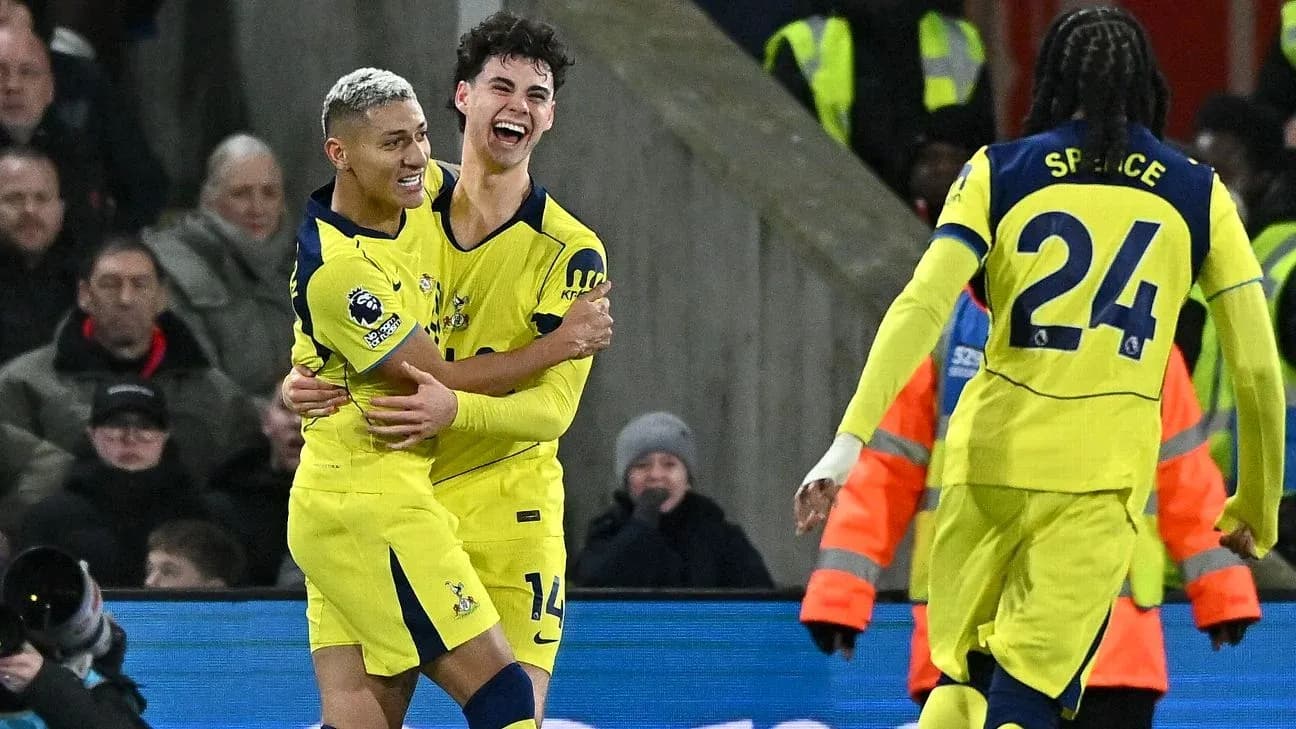
Amid the chaos, Richarlison becomes even more central. The Brazilian is Tottenham’s leading Premier League scorer this season with 8 goals and 3 assists from 23 appearances. He averages more than a goal contribution every other game and has 16 shots on target from 27 attempts, underlining his efficiency when chances do come. His physicality and relentlessness in duels (207 contested, 90 won) make him the natural focal point for a patched‑up Spurs side. How well he can occupy Palace’s back three and create space for team‑mates could define Tottenham’s attacking threat.
Crystal Palace are not without problems of their own. Cheick Doucouré (knee injury), Maxence Lacroix (suspended – red card), Jefferson Lerma (muscle injury), Jean‑Philippe Mateta (knee injury) and Eddie Nketiah (thigh injury) are all ruled out. The absence of Mateta is particularly significant: he is Palace’s joint‑top league scorer with 8 goals, plus 3 penalties converted from 3 attempts. His 47 shots and 26 on target speak to a high‑volume, central threat that Palace must now replace.
Without Mateta, Palace may need to redistribute goals across the frontline and lean even more on their collective structure. Their 3‑4‑2‑1 system, used 26 times this season, is built on solidity and quick transitions rather than pure centre‑forward dominance. But in a game where Tottenham are depleted at the back, the key battle could be between Spurs’ makeshift defence and Palace’s flexible front line, rather than a classic striker‑versus‑centre‑back duel.
The Verdict
Everything about the numbers points to a tight, nervy contest with enormous implications for the lower half of the table. Tottenham’s home struggles, leaky defence and brutal injury list are impossible to ignore, even with the backing of Tottenham Hotspur Stadium. Palace’s away record – 6 wins and a neutral goal difference – suggests they will not be overawed by the occasion and will be comfortable absorbing pressure.
Yet, Spurs still carry individual quality in Richarlison and retain the memory of that 1–0 win at Selhurst Park in December. Palace, for their part, arrive without their 8‑goal spearhead in Jean‑Philippe Mateta, which may limit their cutting edge in front of goal.
Expect a cagey, tactical affair rather than a shoot‑out, with both sides wary of the consequences of defeat. A low‑scoring draw or a narrow win either way feels the likeliest outcome, with Palace marginally better placed to exploit Tottenham’s vulnerability – but Spurs’ desperation and home crowd could just about keep them alive in this survival six‑pointer.