Aaron Ramsey: The Heart of Cymru’s Golden Generation Retires
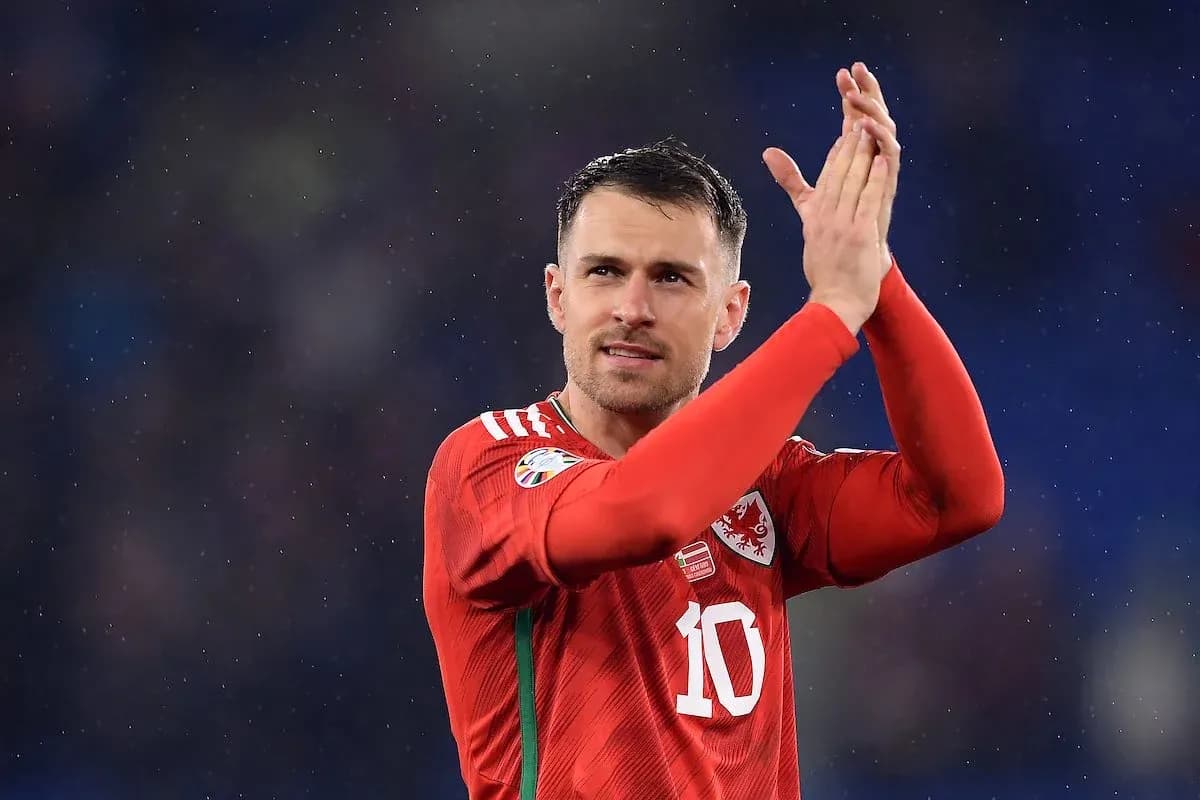
Aaron Ramsey, the beating heart of Cymru’s golden generation and one of the finest players his country has ever produced, has retired from football at 35.
A career that carried Wales from hopeful outsiders to genuine contenders at major tournaments has reached its final whistle. The numbers alone are imposing: 86 caps, 21 goals, three major tournaments, almost 550 club games. But Ramsey’s story was never just about statistics. It was about timing, temperament and a talent that refused to dim, even when his body tried to betray him.
“It has been my privilege to wear the Welsh shirt and experience so many incredible moments in it,” Ramsey said as he confirmed the end of his playing days, paying tribute to the managers and staff who guided him across 16 years in the senior setup. The word “privilege” felt telling. For all the accolades, Ramsey always carried himself as if he owed something to the red shirt, not the other way round.
From teenage prodigy to captain
John Toshack saw it early. In November 2008, he threw a 17-year-old Ramsey into the senior side and watched him take to international football with the assurance of a veteran. Before that, Ramsey had already torn through the U17, U19 and U21 levels ahead of schedule, a midfielder whose technique and vision simply outgrew youth football.
By 20, he was no longer just a rising star. Gary Speed placed the captain’s armband on his arm, a symbolic passing of responsibility to a player who already dictated the rhythm of Cymru’s play. Ramsey’s versatility became a weapon: deep-lying playmaker, driving No. 8, or advanced creator operating closer to the forwards. Wherever he lined up, the game seemed to bend to his tempo.
Those leadership traits never left him. He wore the armband at various points through his international career and ends it as Craig Bellamy’s captain, a bridge between the era that changed Welsh football and the one trying to sustain that standard.
EURO 2016 and the birth of a golden generation
Cymru’s 58-year exile from major tournaments ended on the back of a team that refused to accept its own history. At the heart of Chris Coleman’s side at EURO 2016 stood Ramsey, yellow hair, chest out, playing as if the stage had always belonged to him.
He drove Wales through that tournament in France, knitting together midfield and attack, threading passes into spaces only he seemed to see. The run to the semi-finals, ended by eventual champions Portugal, remains one of the defining chapters in Welsh sporting history.
Ramsey never played in that semi-final. Suspended, like Ben Davies, after picking up a second booking, he watched from the stands. The absence only underlined his importance. Yet his body of work in the competition earned him a place in the UEFA Team of the Tournament alongside midfield partner Joe Allen, recognition from the continent that matched what the Red Wall already knew.
The man for the moment
Ramsey’s knack for arriving when it mattered most followed Cymru into the next cycle. In the decisive EURO 2020 qualifier against Hungary, with the pressure suffocating and the margins thin, he scored both goals in a 2-0 win that sealed qualification. Big night, big stage, big player.
EURO 2020, delayed and reshaped by the pandemic, still carried his imprint. He struck in the 2-0 victory over Türkiye, another reminder that when Wales needed a cool head and a ruthless finish, Ramsey rarely blinked.
The journey then stretched to Qatar and the 2022 FIFA World Cup, a long-held personal ambition. Cymru’s return to the biggest stage in football, after generations of near misses and heartbreak, felt like a natural continuation of the path Ramsey had helped carve.
His last outing for his country came in September 2024, stepping off the bench in a 2-1 away win over Montenegro in the UEFA Nations League. Before that match, Bellamy captured the mood around his captain.
“We’re talking about one of the best players to ever play for Wales,” he said, pointing to Ramsey’s club pedigree and his influence on younger teammates. Watch him closely, Bellamy urged: the attitude, the tiny details, the professionalism that kept him at the top for so long. For the next generation, Ramsey wasn’t just a hero. He was a manual.
Arsenal, adversity and a Wembley habit
Ramsey’s club story began at Cardiff City, the boyhood club where he came through the ranks and reached the 2008 FA Cup Final, still a teenager, in a losing effort against Portsmouth. That day hinted at what was to come. Bigger stages awaited.
Arsenal moved swiftly, and under Arsène Wenger he blossomed into one of the Premier League’s most complete midfielders. The journey was not smooth. In 2010, a horrific broken leg threatened to derail everything. Many players never truly return from such trauma.
Ramsey did more than return. He evolved. Over the best part of the next decade, he became a driving force in north London, timing his runs into the box to perfection and imposing his will on big matches.
Wembley became his playground. He lifted the FA Cup three times with Arsenal, scoring the winning goal in the 2014 final and again in 2017. Those moments cemented his reputation as a man for the decisive occasion, a player who thrived when the stakes rose and the noise swelled.
Juventus, Europe and the final chapters
In 2019, Ramsey took his game abroad, following in the footsteps of Cymru great John Charles by joining Juventus. Turin brought a new culture, a new league, and more silverware. During three seasons in Italy, he helped deliver the Serie A title, the Coppa Italia and the Supercoppa Italiana, adding heavyweight honours to an already decorated CV.
The next move took him to Rangers, where he became part of the side that lifted the Scottish Cup and reached the UEFA Europa League final in 2022. Another European final, another high-pressure environment, another reminder of the level he had operated at for so long.
Spells at Nice and then UNAM in Mexico’s Liga MX closed out his club playing career, an experienced campaigner still seeking new challenges and new atmospheres. Back where it all began, at Cardiff City, he stepped into the dugout as interim head coach for the final fixtures of the 2024/25 season, hinting at a possible future on the touchline.
An irreplaceable Welsh original
For all the medals and milestones, Ramsey’s legacy with Cymru rests on qualities that cannot be measured. The way he received the ball under pressure, always open, always brave. The disguise on his passes, the angles he saw a split-second before defenders reacted. The leadership that never needed to be loud to be unmistakable.
His goals at EURO 2016 against Russia and at EURO 2020 against Türkiye will live long in the collective memory, snapshots of a player who rose with the magnitude of the moment. But ask those who watched him closely, and they will talk just as quickly about the defence-splitting passes, the control in tight spaces, the sense that when Ramsey played well, Cymru played with a different belief.
He arrived as a teenager burdened with expectation and left as a standard-bearer who met it. One of the best of his generation. One of the finest ever to wear the dragon.
The Red Wall will move on. New talents will emerge, new leaders will step forward. But there will not be another Aaron Ramsey.