Africa’s Final: Senegal’s Fury and CAF’s Crisis
By the time the final kicked off in Rabat, Senegal already felt the game was being played on tilted ground.
According to Spanish newspaper AS, the resentment had been building for days. The “Lions of Teranga” arrived in Morocco expecting five-star conditions befitting a continental final. Instead, they were shunted from a luxury hotel in Tangier to the Al-Rihab complex, a venue not even on CAF’s official list of approved accommodation.
They protested. Loudly.
CAF responded with a compromise: a move to the Amfitrit Hotel on the outskirts of Rabat. On paper, a solution. In reality, it only deepened the distrust. Senegal left convinced they were being treated as an afterthought in a showpiece they had earned the right to headline.
A Training Ground That Felt Like Enemy Territory
The tension spiked again when the Mohammed VI Sports Complex was assigned as Senegal’s training base. It is the same high-performance facility Morocco’s national team uses as its own camp.
To Senegal, that was not a neutral decision. It was a breach of the principle of equal opportunity.
Officials within the Senegalese delegation feared their sessions could be monitored, their tactical plans exposed. The feeling grew that nothing about this final was being handled at arm’s length. Every detail, from hotel keys to training pitches, seemed to come with a question mark.
Then came the security and ticketing mess.
On arrival in Rabat, Senegal complained of poor organisation, chaotic logistics and what they described as an “unfair distribution” of match tickets. Hours before kick-off, they were no longer just grumbling behind closed doors. They went public, warning of “irregularities” around the final.
The game had not started. The atmosphere already felt poisoned.
Chaos at Moulay Abdallah: Disallowed Goal, Penalty Fury, Walkout
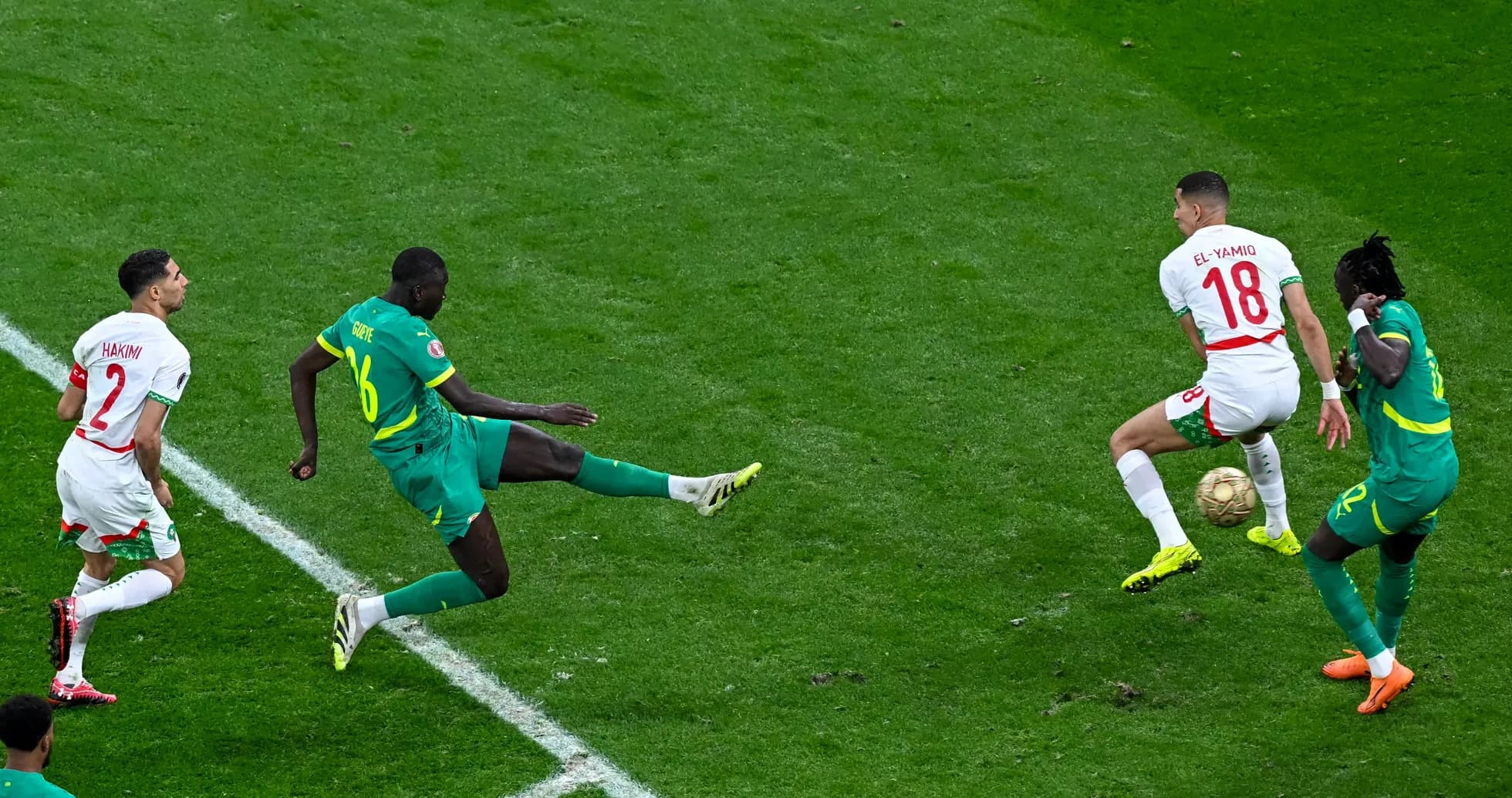
When the teams finally emerged at Moulay Abdallah Stadium, the football should have taken over. Instead, the night descended into chaos.
A controversial Senegalese goal was ruled out. The decision lit the fuse.
Soon after, Morocco were awarded a penalty that triggered furious protests from the Senegalese players and bench. The sense of persecution, simmering all week, exploded. Tempers boiled over. Arguments raged. Then came the moment that turned a final into a scandal.
The entire Senegal squad walked off the pitch in protest, denouncing what they called “blatant refereeing injustice”. A continental final had been reduced to a stand-off.
When play resumed, the drama only intensified. Ibrahim Diaz stepped up and tried a Panenka-style penalty. It backfired. He missed. The gamble looked reckless, almost cavalier, on a night already drowning in controversy.
Senegal dug in. They held firm. In extra time, they found the winner and kept a clean sheet. On the field, they felt they had settled the argument the only way that matters to footballers: on the scoreboard.
Morocco saw something very different.
From their perspective, Senegal’s walkout amounted to an official withdrawal. Under that interpretation, the result should be a 3-0 defeat for Senegal by default. CAF initially sided with that view, recording a 3-0 win for Morocco.
The African champions, it seemed, would be decided in a boardroom, not a stadium.
CAF Under Fire: “Institutional Instructions” and a Storm in Dar es Salaam
The story did not end with that administrative ruling. It simply moved to another arena.
Senegal appealed to the Court of Arbitration for Sport (CAS). Months later, CAF’s original decision was overturned. The legal tug-of-war only sharpened the spotlight on the governing body’s handling of the entire affair.
Then AS dropped another bomb.
The newspaper revealed explosive details from a CAF Executive Committee meeting in Dar es Salaam on 13 February. There, according to the report, Olivier Safary, head of CAF’s Referees’ Committee, admitted that the match referee had received “institutional instructions” not to send off Senegalese players during the suspension of the match.
The logic, as presented, was simple: keep the game going at all costs.
The implications were anything but simple. That admission ignited uproar within CAF circles and fuelled accusations of direct interference in refereeing decisions. If officials were being guided from above on disciplinary calls in a final, what did that say about the integrity of the competition?
CAF suddenly found itself not just criticised, but distrusted by both finalists.
A “Disastrous” Hearing and Claims of Conflict of Interest
The battle then shifted to Paris.
On 26 March, at a press conference in the French capital, lawyers representing the Senegalese Football Federation tore into the appeal process before CAS. They described the hearing as “disastrous” and accused the presiding judge of having made up his mind before the arguments were even fully heard.
For Senegal, the courtroom felt as skewed as the pitch.
They also went after the composition of CAF’s own Appeals Committee. At the heart of their complaint stood lawyer Moez Nasri, who not only sat on the committee but also serves as president of the Tunisian Football Federation.
Senegal called it a “clear conflict between his role as a judge and that of a party to the competition”. Even CAF President Patrice Motsepe, according to those present, expressed surprise at Nasri’s presence on the panel.
The sense of institutional confusion was no longer just an external perception. It seemed to seep from within CAF’s own leadership.
Seventy-Seven Days On: A Continent Without a Champion
And so Africa waits.
Seventy-seven days after the final whistle, the continent still has no official champion. Senegal insist they won the title on the grass, in extra time, with a clean sheet and a decisive goal. Morocco maintain that the law, and CAF’s initial ruling, grant them the crown by forfeit.
CAF stands in the middle, accused by both sides of “mismanagement” and a “lack of transparency”, its authority battered by legal reversals and internal contradictions.
The trophy, in effect, sits in limbo.
In a sport that demands clear winners and losers, African football is left staring at a haunting question: how long can a flagship competition live without a champion before the damage becomes permanent?