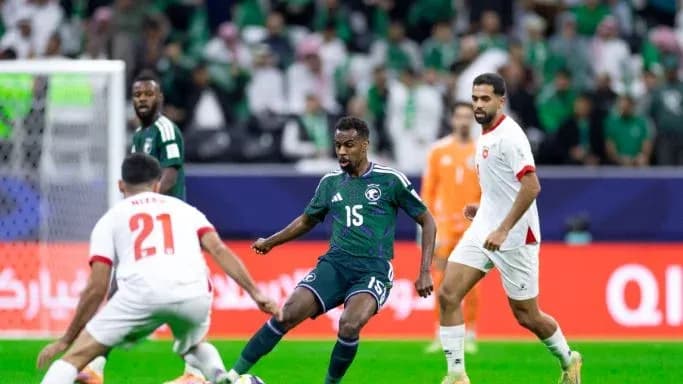
Al-Juwair's Absence Threatens Saudi Arabia's Gulf Cup Bid
The absence of Al-Juwair is not just a missing name on Georgios Donis’ team sheet. It rips out one of the few players in this Saudi Arabia squad capable of dictating the rhythm in midfield, stitching the lines together and stepping into the build-up with real authority.
On the tactics board, Mukhtar Ali’s call-up closes the numerical gap. On the pitch, it changes the equation. The two midfielders do not offer the same profile, and Donis now has to redraw responsibilities inside his system, shifting who controls tempo, who links play, who breaks forward. One player out, one player in — but the roles don’t transfer so neatly.
The real danger, though, lies away from the grass.
A crisis that won’t stay in the dressing room
Players watch everything. They hear the constant debate about their excluded team-mate. They read the management’s statements and the reactions to them. That noise seeps into training, into team meals, into quiet moments before sleep.
For a short tournament like the 27th Gulf Cup, that’s toxic. There is no long runway to correct course. One bad performance, one distracted half, and the margin for error shrinks fast.
Donis and the administrative staff now have two tournaments to manage: the one on the pitch and the one in the background. A successful camp is never just tactics and fitness drills. It depends on an environment where every player understands his primary task: train, recover, play. Not chase every comment on social media or dissect every word in the press.
Saudi Arabia arrive at this Gulf Cup with something to repair. Recent performances have dented their image, and this competition offers a chance to restore belief and reset direction, not simply add another trophy to the cabinet. That mission becomes far more complicated when the conversation before a ball is kicked shifts from how to develop the national team to who mishandled the Al-Juwair situation and who leaked what.
Voices of dissent, and a growing split
Each new statement threatens to stretch the crisis wider.
Hazazi has openly criticised the handling of the case, describing what is happening as “a distraction” for the national team. Al-Mefreg, by contrast, has underlined that regulations must apply to everyone, warning that stepping back from them could create chaos inside the camp.
Between those two positions sits the squad, trapped in a debate that already feels larger than its sporting weight. The Al-Juwair issue risks becoming a permanent backdrop, a storyline that refuses to leave, even as the team tries to focus on the tournament.
What could have remained a limited disciplinary matter now hovers on the edge of something far more serious. The turning point is clear: either the federation and staff close ranks, settle the matter internally and demand that everyone respects the decision, or they allow the controversy to live on in public, feeding off every comment and counter-comment.
Handled decisively, this episode could quickly shrink into a footnote: a pre-tournament incident, nothing more. Mishandled, it becomes the lens through which every performance is judged.
No time, no hiding place
The calendar offers no breathing space. Saudi Arabia open against Kuwait on 23 September, meet Oman on 26 September, then finish the group stage against Iraq on 29 September.
Three games in six days. No long breaks, no extended reset.
In that kind of schedule, there is barely time to analyse matches, let alone nurse a crisis. Donis and his players cannot afford to drift into side calculations or off-field battles. Every training session has to be sharp, every team talk clear, every distraction pushed to the edge.
These three fixtures will expose more than just tactical shape. They will reveal how this group copes under pressure. A strong start against Kuwait could mute much of the outside noise and allow the football to take control of the narrative. A stumble, though, would drag every buried argument back into the spotlight and risk turning the Al-Juwair affair into a broader question about the team’s mentality and resilience.
The most convincing answer will not come from microphones or press releases. It will come from the performances.
A narrow line between setback and spiral
It would be an exaggeration to claim Saudi Arabia have already “lost” Gulf Cup 27 because of this crisis. The tournament has not started. The path out of the group remains open, and the squad still holds enough quality to navigate it.
What is non-negotiable is this: they cannot allow the issue to grow by the day while publicly insisting the target is to fight for the title. Ambition and distraction rarely coexist for long.
If the players manage to separate what happened with Al-Juwair from the job in front of them, the storm may pass quietly and leave only a faint trace. If they cannot, if the controversy keeps echoing inside the camp and beyond it, Saudi Arabia may find themselves locked in a mental battle long before they face their first real one.