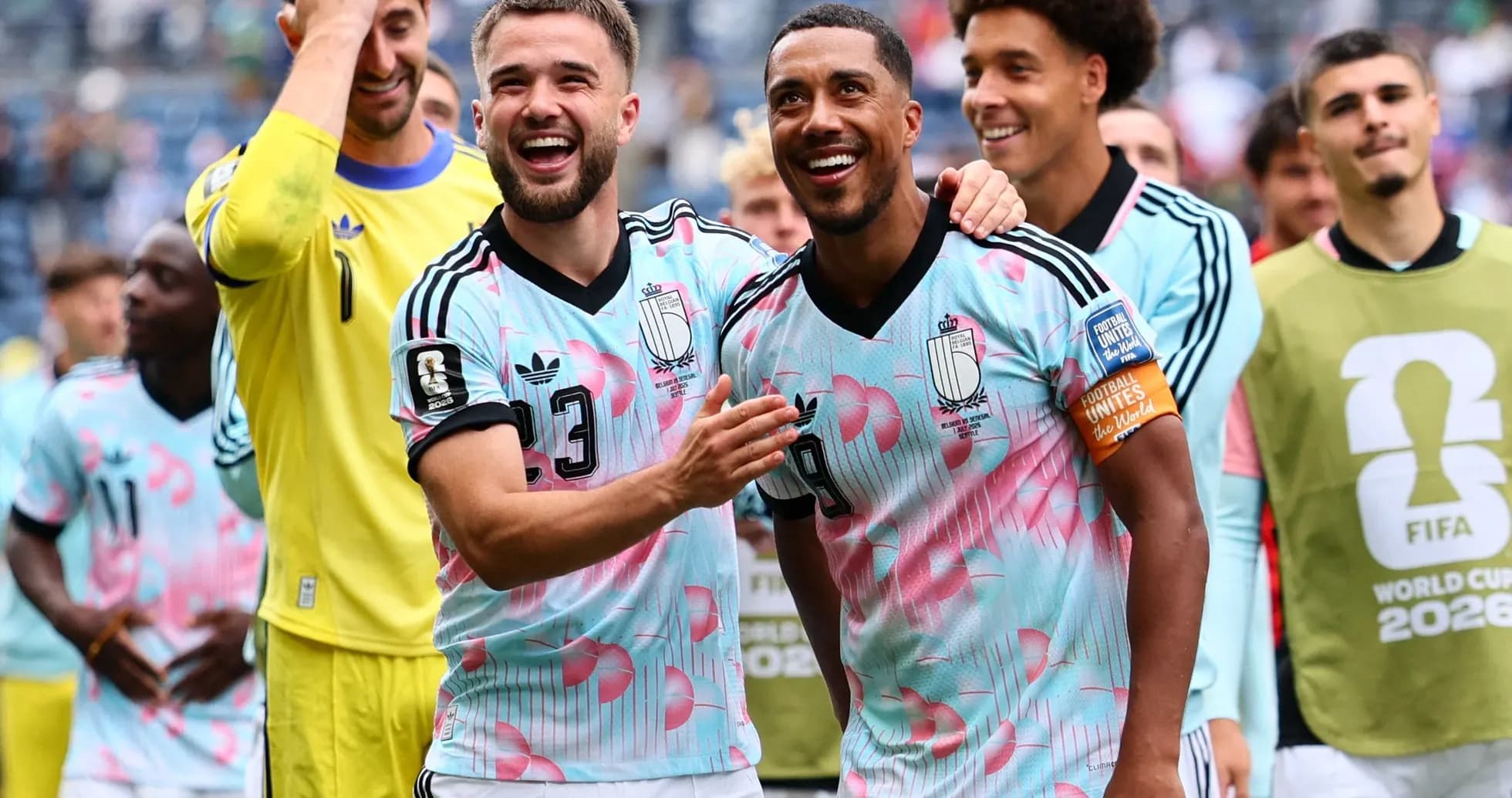
Belgium's Tactical Comeback Against Senegal in World Cup Thriller
Belgium’s 3-2 extra-time win over Senegal at Lumen Field in this World Cup Round of 32 tie was a classic of game-state swings and structural adjustments. Belgium trailed 0-1 at half-time and 0-2 early in the second half, yet used bench power and a rebalanced attacking structure to drag the game back, then finally tip it with a late penalty in the 120+5’ minute.
The scoring sequence underpins the tactical story. At 25’, Habib Diarra (Senegal) struck the opener with a normal goal, giving Bouna Thiaw Pape’s 4-3-3 the perfect platform to sit in a compact mid-block and counter. After the break, Ismaïla Sarr (Senegal) doubled the lead at 51’, assisted by Moussa Niakhaté, punishing Belgium’s exposed left side in transition.
Rudi Garcia’s response was substitution-led and structurally clear. At 46’, Romelu Lukaku (IN) came on for Charles De Ketelaere (OUT), turning the 4-2-3-1 into a more classic target-man setup. At 56’, Nicolas Raskin (IN) replaced Kevin De Bruyne (OUT) and Dodi Lukebakio (IN) came on for Jérémy Doku (OUT), refreshing the attacking lanes and central energy. Hans Vanaken (OUT) then made way for Diego Moreira (IN) at 63’, further tilting the side towards verticality and dribbling threat between the lines.
Discipline remained manageable but tactically relevant. At 64’, Brandon Mechele (Belgium) received a yellow card — Foul — underlining Belgium’s growing desperation to stop Senegal’s counters. At 67’, Lamine Camara (Senegal) was booked — Foul — soon after entering the game, a reminder of Senegal’s physical edge in midfield duels. Those were the only two cards: Belgium 1, Senegal 1, total 2.
Senegal’s own substitution pattern tried to refresh pressing and protect the lead. Lamine Camara (IN) came on for Pape Gueye (OUT) at 66’, then Pape Matar Sarr (IN) for Habib Diarra (OUT) and Ibrahim Mbaye (IN) for Iliman Ndiaye (OUT), both at 73’, subtly reconfiguring the midfield and forward line for work-rate and depth runs rather than pure creativity. Later, El Hadji Malick Diouf (IN) replaced Ismail Jakobs (OUT) and Nicolas Jackson (IN) replaced Sadio Mané (OUT) at 93’, while Bara Sapoko Ndiaye (IN) came in for Idrissa Gana Gueye (OUT) at 96’, all clearly aimed at surviving the mounting Belgian pressure.
The game flipped once Belgium’s wing-backs were adjusted. At 78’, Thomas Meunier (IN) replaced Maxim De Cuyper (OUT), adding crossing quality and late runs from right-back. That change directly paid off: at 86’, Romelu Lukaku (Belgium) scored, assisted by Thomas Meunier, a classic pattern of a wide overload and delivery into the box for a dominant No. 9. Three minutes later, at 89’, Youri Tielemans (Belgium) equalised, assisted by Leandro Trossard, with Belgium now camped in Senegal’s half and their double pivot stepping higher to pin the visitors back.
Extra time became a question of who could manage fatigue and details. At 109’, Amadou Onana (IN) replaced Leandro Trossard (OUT), giving Belgium fresh legs and height in central areas while allowing Tielemans to push into more advanced pockets. The decisive moment arrived at 120+5’: Youri Tielemans converted a penalty for Belgium. The process was technology-led: a penalty decision was confirmed by VAR at 120’, and Tielemans then delivered from the spot to complete his brace and the comeback.
From a structural standpoint, Belgium’s 4-2-3-1 relied on the ball-dominant axis of Tielemans and Vanaken initially, with Kevin De Bruyne as the advanced playmaker and Doku and Trossard as wide dribblers around De Ketelaere. This setup produced territorial control but lacked deep-penalty-box presence until Lukaku’s introduction. Once Lukaku led the line, Belgium’s attacks became more direct: crosses from Meunier, half-space combinations with Trossard, and second-ball shots for Tielemans.
Senegal’s 4-3-3, with Idrissa Gana Gueye anchoring between Pape Gueye and Habib Diarra, was built to spring Sadio Mané, Ismaïla Sarr and Iliman Ndiaye into space. The early 0-1 and then 0-2 scoreline allowed them to compress the pitch horizontally, inviting Belgium outside and then breaking through Sarr’s pace and Diarra’s ball-carrying. As the game wore on, however, the cumulative defending and reduced attacking outlets (after withdrawing Diarra, Ndiaye and later Mané) left them struggling to retain the ball and relieve pressure.
In goal, Thibaut Courtois (Belgium) and Mory Diaw (Senegal) each made 3 saves, according to the statistics. For Courtois (Belgium), conceding twice from Senegal’s 5 shots on goal reflects the high quality of chances faced, with Belgium’s own figures indicating -0.61 goals prevented. Senegal’s goalkeeper metrics show the same goals prevented figure (-0.61), underlining that Diaw (Senegal), too, was beaten three times from a relatively contained number of on-target efforts, particularly as Belgium’s shot volume grew late.
The statistical verdict frames the tactical narrative. Belgium finished with 52% possession to Senegal’s 48%, a slim edge but one that became pronounced after they fell 0-2 behind. Total shots were level at 19-19, yet the profiles differed: Belgium had 5 shots on goal and 5 blocked shots, with 11 attempts inside the box, reflecting sustained territorial pressure and crowded central channels. Senegal also recorded 5 shots on goal but with 3 blocked and a near-even split between shots inside (10) and outside (9) the box, mirroring their more transitional, mixed-distance threat.
The xG numbers are revealing: Belgium’s xG of 1.8 versus Senegal’s 3.54 suggests Senegal generated the higher-quality chances overall, especially before Belgium’s late surge. Both teams share the same negative goals prevented value (-0.61), implying that neither goalkeeper significantly outperformed expectation. Passing metrics underline Belgium’s control-oriented approach: 699 passes, 602 accurate (86%), against Senegal’s 639 passes, 536 accurate (84%). Belgium’s 22 fouls to Senegal’s 12 encapsulate their increasingly aggressive counter-press and emergency defending once they were chasing the game. In the end, depth, structural tweaks and penalty-box presence allowed Belgium to overturn an xG deficit and survive a tactically sharp Senegal in a high-level knockout contest.