Spain Crowned World Champions After 1-0 Victory Over Argentina
Spain 1-0 Argentina after extra time at MetLife Stadium, a World Cup Final settled by Ferrán Torres’ extra-time strike, crowns Spain as world champions and ends Argentina’s title defence. Spain, group winners on 7 points coming out of the Round of 32 phase, add one more win to a flawless knockout run, while Argentina, who had taken 9 points from their group, fall one step short despite their status as one of the tournament’s form sides.
Match Report
The final unfolded as a tense, tactical contest with discipline and substitutions shaping the rhythm long before the decisive goal in extra time.
On 41' Argentina picked up the first booking of the night: Lisandro Martínez (Argentina) — yellow card (Foul) after stepping in late to halt a Spanish attack, a sign of the strain Spain’s possession game was beginning to impose.
Argentina reacted quickly with a defensive reshuffle. On 44' Nicolás Otamendi replaced Lisandro Martínez (Argentina), an early centre-back change that suggested either a fitness concern or Scaloni’s desire for more aerial presence against Spain’s crossing threat.
Just before the break on 45' Leandro Paredes replaced Nicolás Iván González (Argentina), moving Argentina towards a more compact, midfield-heavy structure to contest Spain’s control in the centre of the pitch.
Early in the second half, the temperature rose. On 52' Leandro Paredes (Argentina) — yellow card (Argument) after protesting a decision, reflecting Argentina’s growing frustration as they struggled to progress the ball under Spain’s press.
Scaloni continued to adjust his back line on 58' when Nahuel Molina replaced Gonzalo Montiel (Argentina), a like-for-like change at right-back aimed at injecting more energy down the flank.
Spain’s first major attacking rotation arrived on 62'. Ferrán Torres replaced Mikel Oyarzabal (Spain), adding a more direct, penalty-box-oriented threat to the front line. In the same minute, Pedri replaced Fabián Ruiz (Spain), giving Spain an extra dose of ball retention and line-breaking passing between the lines.
Argentina then made a double change on 70', seeking fresh legs and more aggression. Facundo Medina replaced Cristian Romero (Argentina), another centre-back alteration that underlined Argentina’s concern with Spain’s territorial dominance. Simultaneously, Giuliano Simeone Baldini replaced Rodrigo De Paul (Argentina), pushing an extra forward into the structure to offer depth runs and pressing from the front.
Spain answered on 75' with their own midfield and wing refresh. Nico Williams replaced Alejandro Baena Rodríguez (Spain), bringing pure pace and 1v1 dribbling on the flank, while Mikel Merino replaced Daniel Olmo Carvajal (Spain), adding physicality and late runs from midfield to sustain pressure around the box.
Argentina’s discipline continued to fray. On 82' Enzo Fernández (Argentina) — yellow card (Dissent) after contesting another decision, and on 90+2' Cristian Romero (Argentina) — yellow card (Dissent), further evidence of a side increasingly pinned back and forced into reactive defending and protests rather than controlled possession.
With extra time looming, Spain refreshed their spine. On 99' Martín Zubimendi replaced Rodrigo Hernandez Cascante (Spain), keeping the holding role secure with fresh legs to protect transitions. In the same minute, Eric García replaced Aymeric Laporte (Spain), a straight swap at centre-back to maintain concentration and mobility against any late Argentine counters.
On 102' Argentina made a surprising attacking-into-defensive change: Marcos Senesi replaced Julián Álvarez (Argentina). The introduction of another defender for a forward pointed to a clear intention to hold out for penalties, ceding even more initiative to Spain.
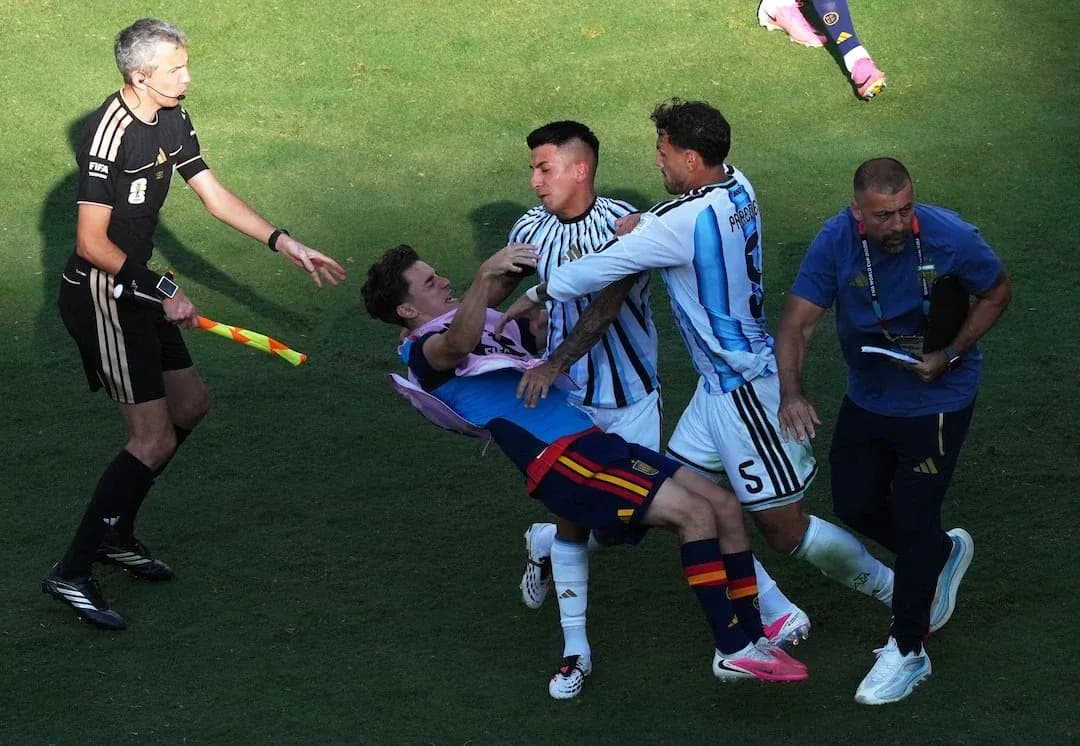
Argentina’s bench also felt the pressure. On 104' Lionel Sebastián Scaloni (Argentina) — yellow card (Dissent), the coach booked as protests spilled over onto the touchline, underlining the psychological shift as Spain’s control deepened.
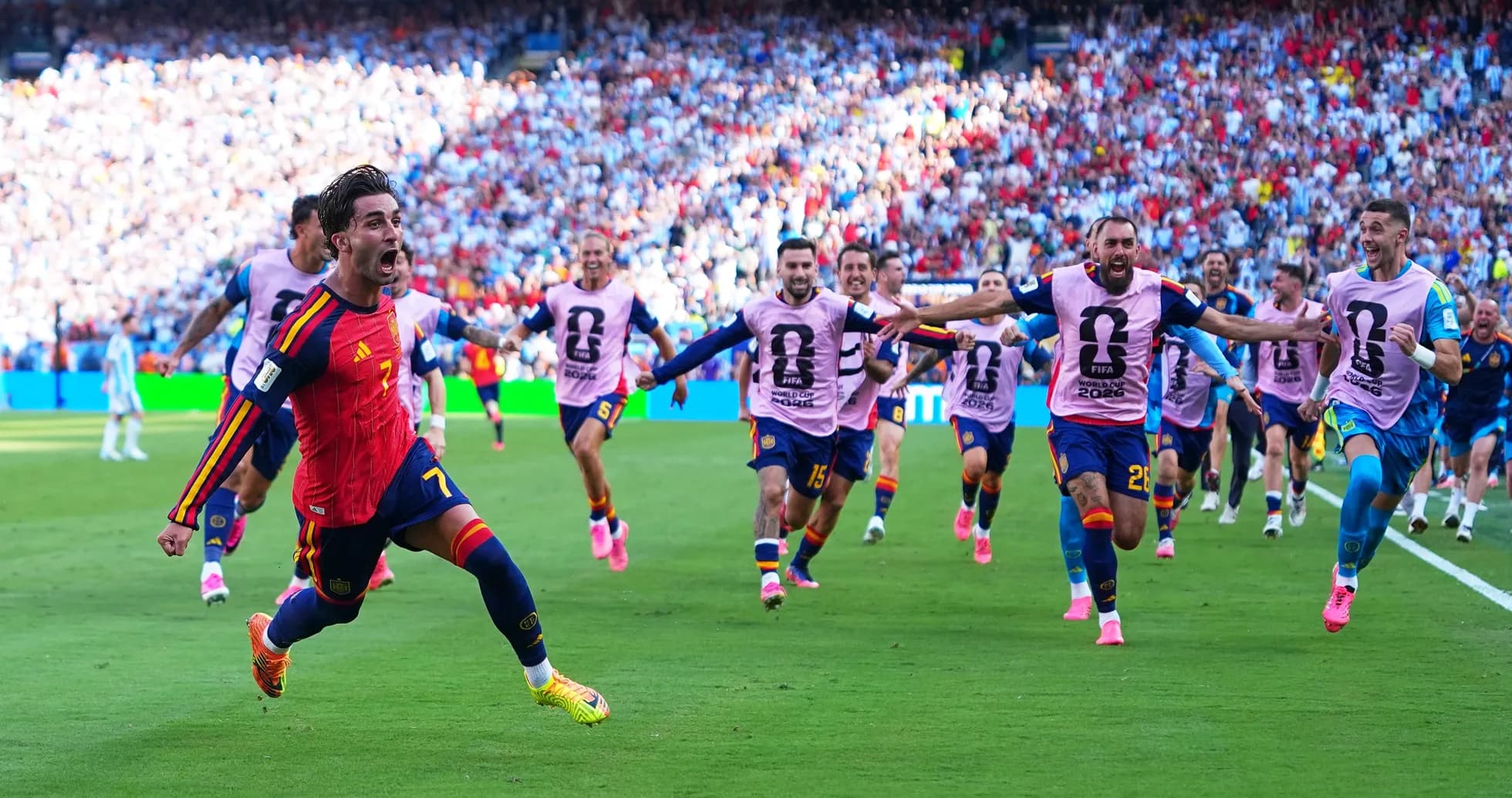
The breakthrough finally came in extra time. On 106' Spain goal — Ferrán Torres (assisted by Nico Williams). Williams, introduced to stretch the game, attacked down the flank and delivered the decisive service for Torres, whose movement in the box had troubled Argentina since his introduction. The finish gave Spain a 1-0 lead and fully punished Argentina’s increasingly passive, deep-block approach.
Argentina’s final card of the night arrived on 111' Alexis Mac Allister (Argentina) — yellow card (Foul), another late challenge as Spain managed the game and Argentina chased an equaliser they never truly looked capable of crafting from open play.
Fixture Statistics & Tactical Audit
- xG: Spain vs Argentina (not provided in data)
- Possession: 65% Spain vs 35% Argentina
- Shots on Target: 12 Spain vs 0 Argentina
- Goalkeeper Saves: 0 Spain vs 11 Argentina
- Blocked Shots: 3 Spain vs 1 Argentina
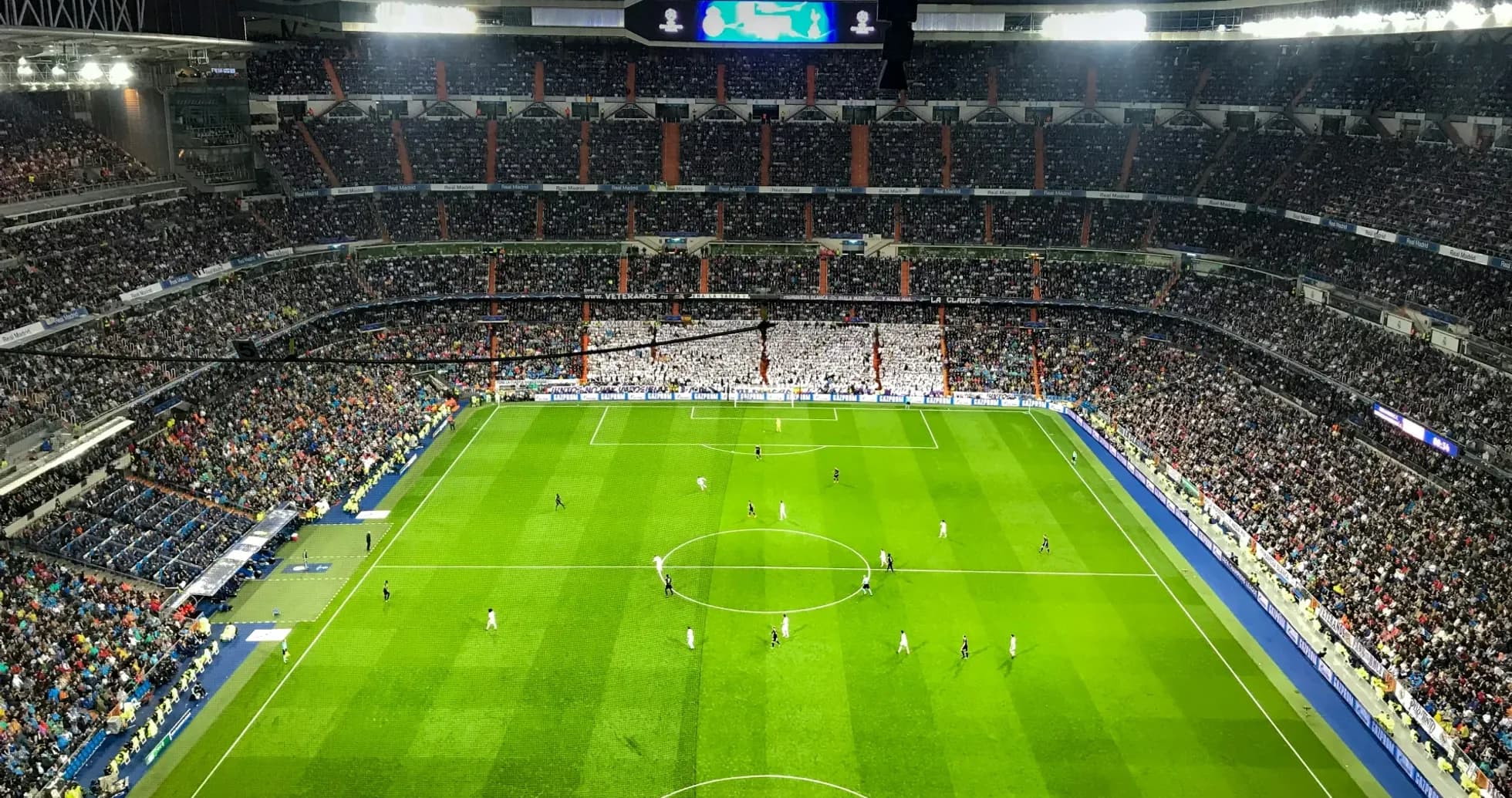
The statistical profile underlines how one-sided the contest was in terms of territory and chance creation. Spain were dominant (65% possession and 20 total shots) and relentlessly pinned Argentina back, using their 4-1-2-3 to circulate the ball through Rodri, then Pedri and Mikel Merino between the lines. With 12 shots on target forcing 11 saves from Emiliano Martínez, Spain translated control into sustained pressure, even if their finishing delayed the breakthrough until extra time.
Argentina, by contrast, were extremely limited (only 2 total shots and 0 on target). Their 4-4-2 rarely progressed beyond the halfway line in settled play, and successive defensive substitutions — Otamendi, Medina, Senesi — gradually turned the shape into a low block designed to survive rather than threaten. The lack of any shot on target in 120 minutes reflects both Spain’s control of central spaces and Argentina’s inability to connect Lionel Messi and Julián Álvarez to meaningful service before Álvarez was withdrawn.
Blocked shots (3 for Spain, 1 for Argentina) show Argentina’s defenders often throwing themselves in front of efforts inside the area, but the volume of Spanish attempts meant that resistance could only last so long. The scoreline is actually conservative relative to the balance of chances; Spain’s 1-0 win after extra time feels fully justified, with Argentina’s game plan hinging on Martínez’s shot-stopping and a hoped-for penalty shootout that never arrived.
Standings Update & Seasonal Impact
Spain entered the knockout phase as Group H winners on 7 points with 5 goals scored and none conceded. Adding this 1-0 victory in the Final extends their record to 6 goals for and 0 against in the competition’s key phases, improving their goal difference to +6 and underlining a campaign built on control and defensive perfection. The win adds 3 more points to their base, taking them to a calculated 10 points from their group and decisive knockout fixtures, and secures the ultimate seasonal objective: the World Cup trophy.
Argentina came into the latter stages as Group J winners with 9 points, 8 goals scored and only 1 conceded (goal difference +7). This defeat, without scoring, leaves them on the same 9-point base from the group, now effectively paired with an additional goal conceded in this Final, taking their goals against tally in the tournament’s accounting to 2 and trimming their goal difference to +6. From a seasonal perspective, they remain one of the tournament’s strongest statistical sides, but the inability to lay a glove on Spain in the Final will be remembered as a missed opportunity to convert group-stage dominance into back-to-back world titles.
Lineups & Personnel
Spain Starting XI
- GK: Unai Simón
- DF: Pedro Porro, Pau Cubarsí Paredes, Aymeric Laporte, Marc Cucurella
- MF: Rodri, Dani Olmo, Fabián Ruiz, Álex Baena
- FW: Lamine Yamal, Mikel Oyarzabal
Argentina Starting XI
- GK: E. Martínez
- DF: G. Montiel, C. Romero, Lisandro Martínez, N. Tagliafico
- MF: R. De Paul, E. Fernández, A. Mac Allister
- FW: N. González, L. Messi, J. Álvarez
Post-Match Verdict
This was a clinical Spanish performance (12 shots on target and 65% possession) built on territorial dominance, patience, and intelligent use of the bench. Luis de la Fuente’s substitutions — particularly Ferrán Torres and Nico Williams — directly produced the winning goal, validating the decision to inject verticality and pace against a tiring Argentine back line.
Defensively, Spain were impeccable (0 shots on target conceded), with their structure in and out of possession denying Messi and Álvarez any central spaces to combine. The late introduction of Zubimendi and Eric García ensured that even as legs tired in extra time, the block remained compact and secure.
For Argentina, this was a reactive, ultimately unsustainable game plan. While Emiliano Martínez delivered a heroic shift (11 saves) and the back line threw bodies in front of shots (1 blocked shot officially recorded, but countless interventions), the attack was anaemic (2 shots total, 0 on target). Successive defensive substitutions and mounting yellow cards for Lisandro Martínez, Paredes, Enzo Fernández, Cristian Romero, Alexis Mac Allister and even Scaloni himself painted the picture of a side increasingly under siege.
In the end, Spain’s dominance of the ball and chance creation made the 1-0 scoreline feel like the logical outcome of the tactical battle. Argentina defended bravely but retreated too deep for too long; Spain, through structure and persistence, finally found the combination that turned control into a world title.