Canada and Bosnia & Herzegovina Draw 1-1: Tactical Analysis of World Cup Opener
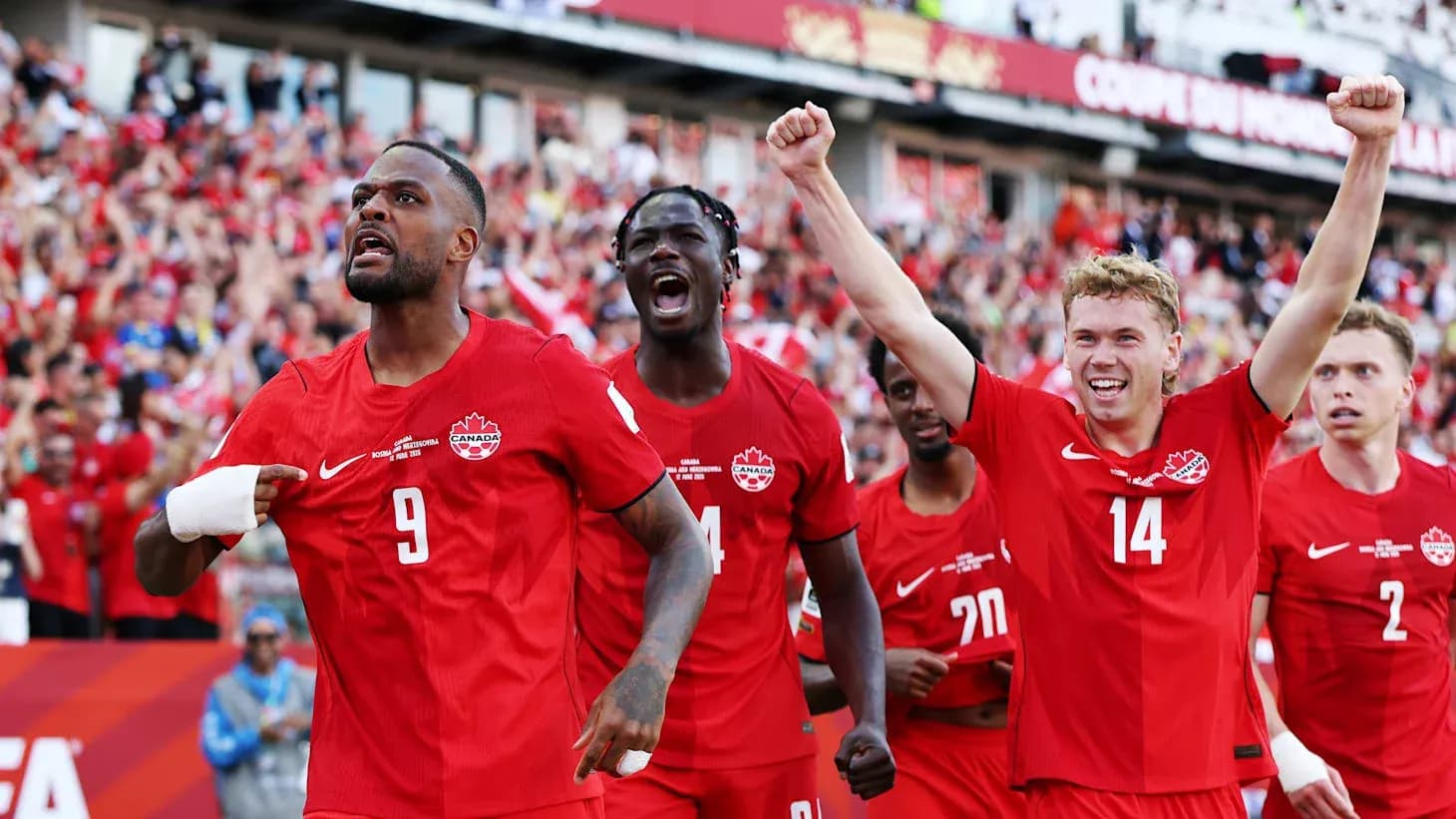
On a cool Toronto evening at BMO Field, the World Cup’s Group Stage opened with a contest that felt less like a curtain-raiser and more like a statement of identity from both sides. Canada and Bosnia & Herzegovina shared a 1–1 draw, but beneath the symmetry of the scoreline lay two very different tactical stories.
Heading into this game, both arrived as unknown quantities in the 2026 World Cup landscape. Canada, designated “home” in Group B, had never before carried this level of expectation on their own soil. Bosnia & Herzegovina, back on the global stage, were tasked with proving they could be more than a romantic outsider. Following this result, both sit on 1 point with a goal difference of 0, Canada ranked 2nd and Bosnia & Herzegovina 4th in the group, each having scored and conceded exactly 1 goal overall.
Canada's Tactical Setup
Canada’s starting 4-4-2 under Jesse Marsch was deliberately orthodox on paper, but the roles within it were anything but static. M. Crepeau in goal had a back four of A. Johnston, L. De Fougerolles, D. Cornelius and R. Laryea in front of him. The wide midfield of T. Buchanan and L. Millar framed a central pairing of I. Kone and S. Eustaquio, with J. David and T. Oluwaseyi leading the line.
The structural backbone of this side is clear. Canada have used 4-4-2 in 1 out of 1 matches overall, and they have both scored and conceded 1.0 goals per game at home so far. They are not yet a clean-sheet team — 0 clean sheets overall and 0 failed-to-score games underline that they are open at both ends. Marsch’s approach at BMO Field reflected that openness: full-backs pushed high, Buchanan and Millar inverted into half-spaces, and David roamed between the lines, often leaving Oluwaseyi as the nominal reference point.
Bosnia & Herzegovina's Tactical Setup
Bosnia & Herzegovina mirrored the formation but not the philosophy. Sergej Barbarez’s 4-4-2 was compact and combative. N. Vasilj anchored a back line of A. Dedic, N. Katic, T. Muharemovic and S. Kolasinac. Ahead of them, E. Bajraktarevic and A. Memic offered width, while B. Tahirovic and I. Basic patrolled central zones. Up front, E. Demirovic and J. Lukic formed a physical, dueling-heavy pair.
Their numbers tell a similar “balanced but brittle” story. On their travels, Bosnia & Herzegovina have played 1 match, scoring 1.0 and conceding 1.0 goals away, with 0 clean sheets and 0 failures to score. Like Canada, they are yet to tilt the margins either way.
Disciplinary Patterns
If there was a tactical void for Canada, it lay in the early phases of games. Statistically, their disciplinary profile hints at a side that starts a little too eager: 50.00% of their yellow cards arrive between 0–15 minutes, and another 50.00% between 46–60 minutes. That pattern was visible in Toronto — a young back line led by De Fougerolles occasionally stepped into challenges they did not need to make, particularly as they tried to compress the field and keep Bosnia & Herzegovina penned in.
Bosnia & Herzegovina’s own card map reveals a different rhythm of tension: 33.33% of their yellows come between 31–45 minutes, another 33.33% between 46–60, and a final 33.33% in 91–105. They grow into aggression rather than beginning with it, and the match reflected that slow-burn edge — a cagey first half-hour, then sharper tackles as Canada’s possession mounted and the game’s stakes rose.
Key Individual Battles
Within that frame, individual battles defined the night. The headline “Hunter vs Shield” duel pitted Canada’s most efficient finisher, C. Larin, against the Bosnian defensive core, particularly N. Katic. Larin did not start but altered the game from the bench. In total this campaign, he has 1 goal from 1 shot, 1 on target, in just 14 minutes of football, with a rating of 7.7. He is ruthlessly economical: 3 total duels, 2 won, and 1 foul drawn. His presence transforms Canada from a side that probes to one that punishes.
The “Shield” was personified by Katic and Kolasinac. Katic’s defensive line reads like a manifesto: 5 tackles, 2 blocked shots, 3 interceptions, 24 duels with 15 won. He is not just a stopper; he is an aerial and ground-dominant anchor. Kolasinac, meanwhile, blended grit with craft. He contributed 3 tackles and blocked 2 shots, but also delivered 1 assist and 1 key pass from his 21 total passes at 71% accuracy. He is simultaneously Bosnia & Herzegovina’s most productive full-back and one of their primary playmakers.
Midfield Dynamics
In the “Engine Room”, Canada’s creative pulse came from the flanks and from the bench. P. David, introduced as an impact attacker, has 1 assist from 3 passes overall, with 1 key pass and 1 shot. He won 3 of 10 duels and drew 1 foul, a profile that screams high-variance chaos rather than control. When combined with Buchanan’s direct running and Millar’s drifting into pockets, Canada’s midfield becomes a platform for late surges rather than patient construction.
Bosnia & Herzegovina’s engine is more traditional. B. Tahirovic and I. Basic kept their shape, while the true disruptive energy came from Lukic and Demirovic. Lukic, already with 1 goal and 1 yellow card in 62 minutes, contested 13 duels and won 10, taking 3 shots with 2 on target. Demirovic added 21 duels (12 won), 3 tackles and 1 shot on target. This front two is less about fluid combinations and more about wearing down centre-backs over 90 minutes.
Defensive Solidity
Defensively, both sides are still searching for solidity. With 1 goal conceded overall each, the raw numbers are symmetrical, but the profiles differ. Canada’s back four, especially De Fougerolles and Johnston, are proactive defenders. De Fougerolles has 3 tackles and 22 duels (10 won) overall, plus 50 passes at 80% accuracy. Johnston adds 1 tackle, 5 duels won out of 7, and 33 passes at 72% accuracy, along with 1 key pass. Both have already picked up a yellow card, underlining the risk baked into their front-foot style.
Bosnia & Herzegovina, by contrast, lean on volume defending in their own third. Katic’s 2 blocked shots and Demirovic’s 3 tackles from the front illustrate a team willing to defend in layers. Kolasinac’s 2 blocked shots complete a back line that prefers to absorb and then spring, rather than squeeze high.
Disciplinary Balance
From a disciplinary standpoint, neither side is reckless but both flirt with danger. Canada’s early and early-second-half bookings can disrupt rhythm and invite pressure. Bosnia & Herzegovina’s spread of yellows, especially in the 31–60 window and late into added time, suggests a team that responds emotionally to game swings. Yet crucially, both have 0 red cards overall, and neither side has conceded or missed a penalty — the margins of their matches are being decided in open play.
In pure numbers, the statistical prognosis is one of balance. Overall, Canada average 1.0 goals for and 1.0 against at home; Bosnia & Herzegovina mirror that with 1.0 for and 1.0 against away. Both have 0 wins and 1 draw, both have 0 clean sheets, and both have yet to fail to score. Without xG data, we cannot quantify chance quality, but the duel and defensive metrics hint at a pattern: Canada rely on moments of individual incision from Larin, David, Buchanan and Millar, while Bosnia & Herzegovina build their threat on sustained physical contests and the delivery of Kolasinac.
Following this result, Group B remains wide open. Canada’s 4-4-2 has shown it can create enough chaos to score, but not yet the control to shut games down. Bosnia & Herzegovina’s mirrored shape has proved rugged and opportunistic, but they, too, have not found the extra gear to turn parity into dominance.
As the tournament unfolds, the key question for both squads is whether they can bend these finely balanced numbers in their favour. For Canada, that likely means leaning even more on the “Hunter” instincts of C. Larin and the creative spark of P. David, while tightening the impulsive edges of a young back line. For Bosnia & Herzegovina, it will be about maintaining the defensive excellence of Katic and Kolasinac while finding more consistent supply and support for the bruising, tireless work of Lukic and Demirovic.
The draw at BMO Field felt like a fair reflection of two teams still discovering their World Cup selves — evenly matched on the scoreboard, intriguingly distinct in their tactical DNA.