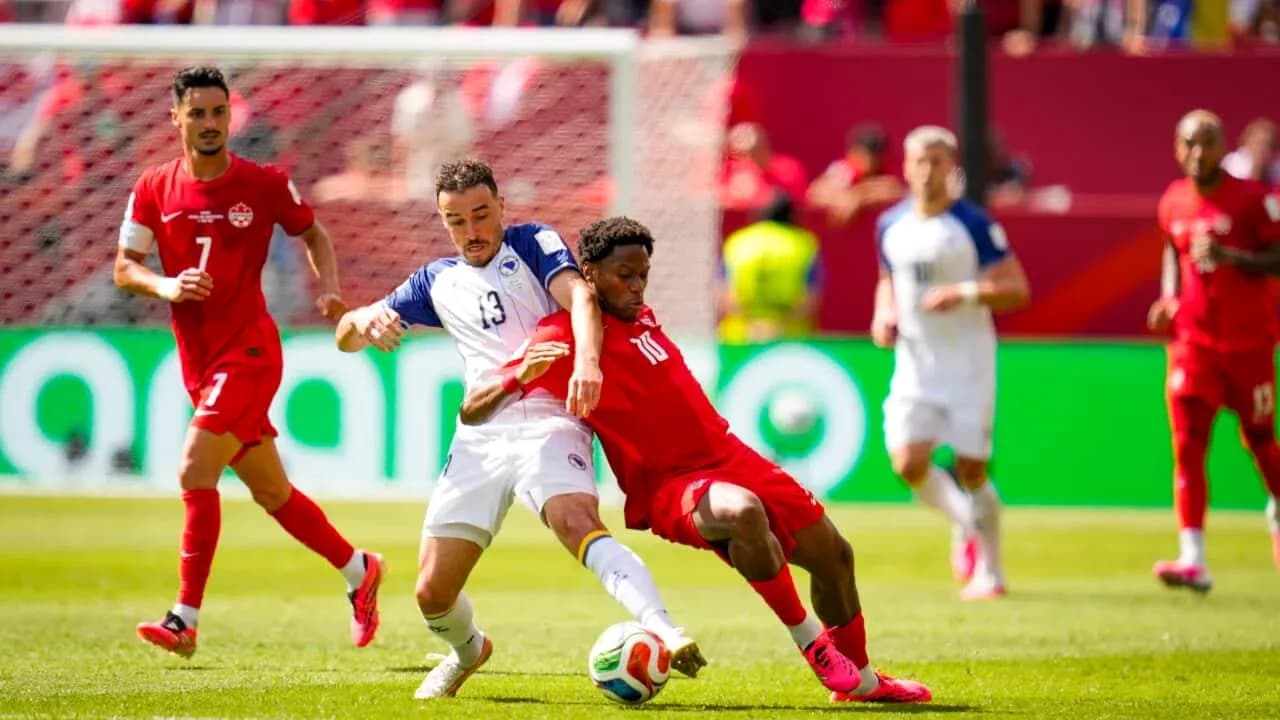
Canada and Bosnia & Herzegovina Battle to a Tactical 1-1 Draw
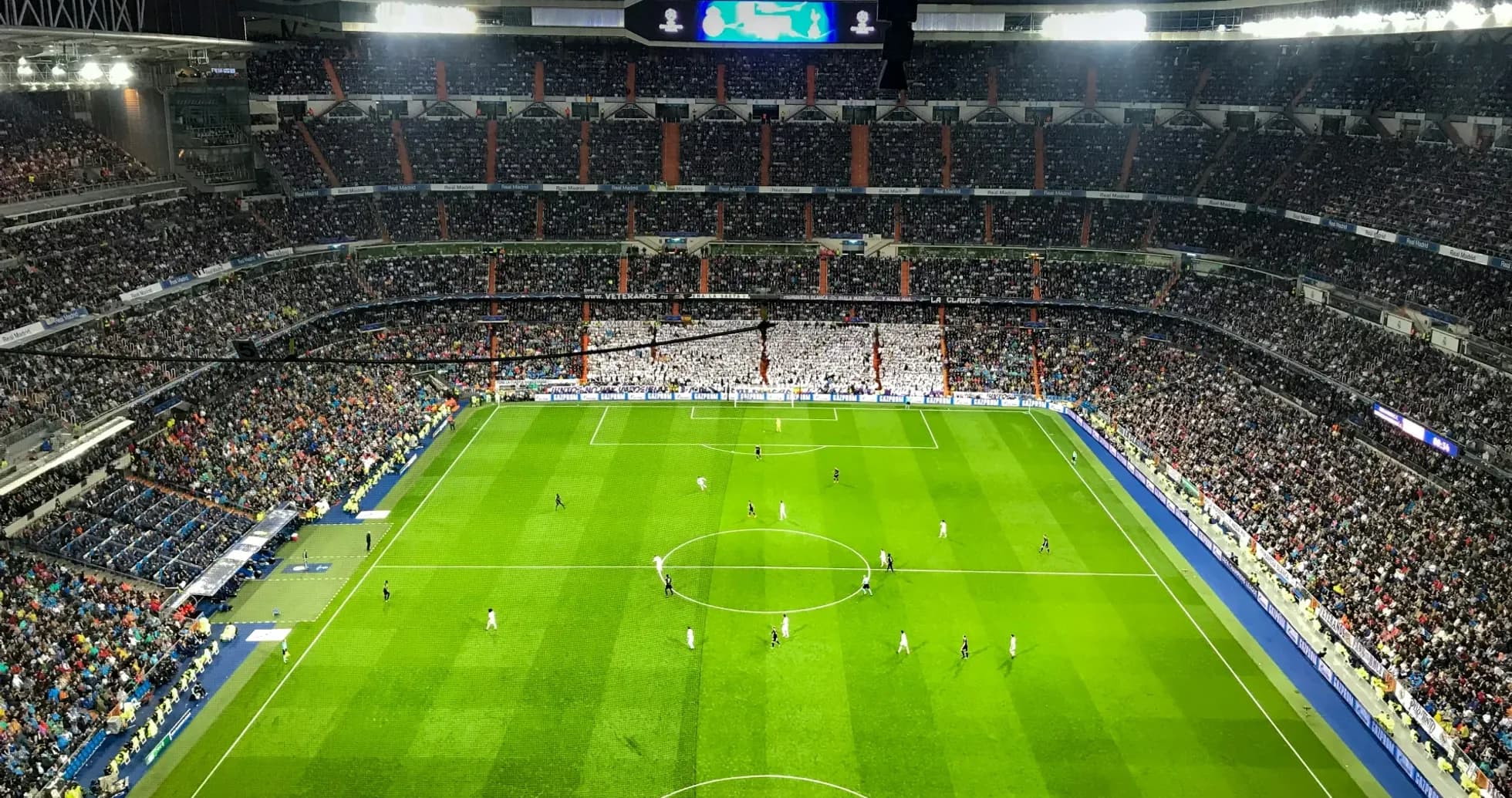
Canada’s 1-1 draw with Bosnia & Herzegovina at BMO Field unfolded as a tactical arm wrestle between two nominal 4-4-2 systems that behaved very differently with and without the ball. Canada, under Jesse Marsch, imposed territorial and possession control (61% of the ball, 415 passes) but needed a late structural tweak and bench impact to finally break down Sergej Barbarez’s compact, foul-heavy block.
Bosnia & Herzegovina’s 4-4-2 was clearly designed for vertical efficiency and defensive density. The front two, Ermedin Demirović and Jovo Lukić, worked primarily as the first line of a mid-block, rarely over-committing in the press. The back four of Amar Dedić, Nikola Katić, Tarik Muharemović and Sead Kolašinac stayed narrow, inviting Canada to play into wide areas and then contest crosses and second balls. With only 270 total passes and 39% possession, Bosnia & Herzegovina accepted long spells without the ball, instead prioritising compact distances and physical duels, as reflected in their 20 fouls and three yellow cards.
Canada’s 4-4-2 was much more fluid. In possession, Richie Laryea and Alistair Johnston advanced aggressively from full-back, often creating a back three in rest defence with Derek Cornelius and Luc De Fougerolles staggering behind the ball. Stephen Eustaquio and Ismael Koné acted as the central pivots, with Tajon Buchanan and Liam Millar providing width and 1v1 threat. The structure produced volume: 13 total shots, 10 from inside the box, and nine corners. However, in the first hour, the spacing between the lines often left Jonathan David and Tani Oluwaseyi isolated between Bosnia & Herzegovina’s centre-backs and double pivot, making it easier for Katić and Muharemović to defend facing play.
Opening Goal
The opening goal at 21' exposed Canada’s transitional vulnerability. With full-backs high and the midfield line stretched, Bosnia & Herzegovina found joy in a more direct pattern: Kolašinac advanced from left-back to deliver, and Lukić finished. This was less about sustained possession and more about exploiting the moments when Canada’s counter-press was broken. It fit Bosnia & Herzegovina’s broader plan: fewer shots (eight total, five inside the box) but high value when they did manage to escape.
Discipline and Tactical Changes
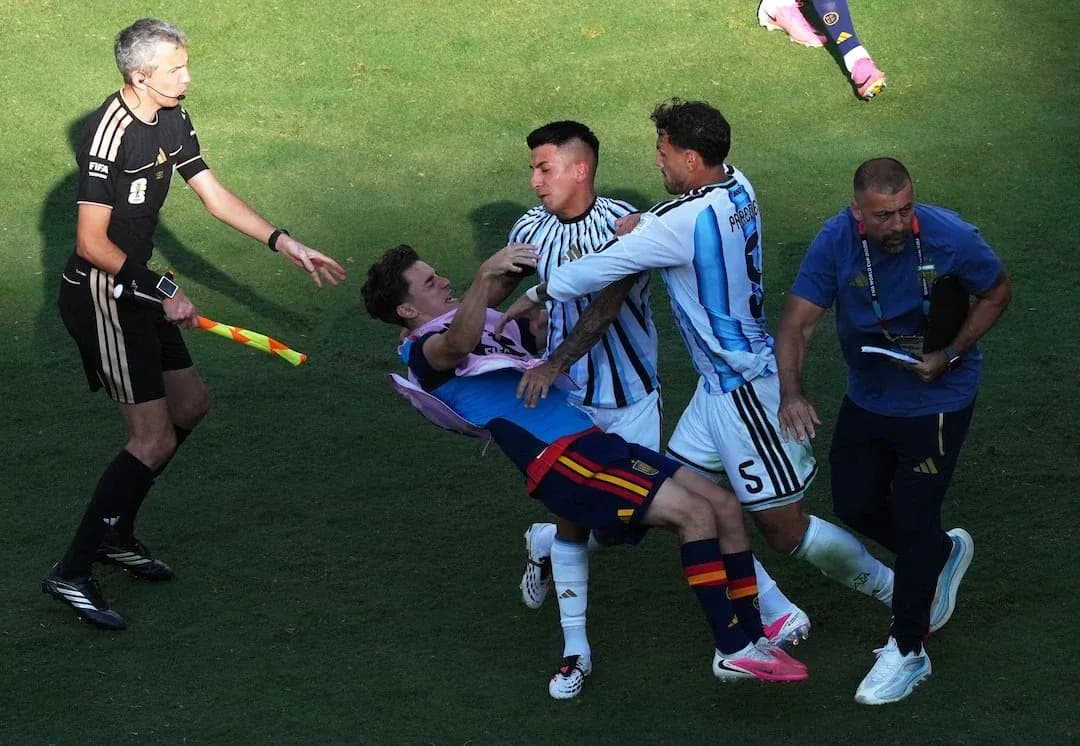
Discipline shaped the rhythm. Early on, at 11', Alistair Johnston’s yellow card for “Foul” forced Canada’s right-back to moderate his aggression in duels, slightly tempering the intensity of the press on that flank. For Bosnia & Herzegovina, the bookings to Demirović at 44' and Lukić at 45+1' (both “Foul”) underlined how reliant they were on breaking up Canada’s build-up and counter-attacks with contact. The late yellow for Katić at 90+3' again for “Foul” reflected a back line under sustained pressure as Canada chased the equaliser.
The match’s key tactical inflection came with Canada’s triple substitution on 61'. Promise David (IN) came on for Jonathan David (OUT), Ali Ahmed (IN) came on for Tajon Buchanan (OUT), and Jacob Shaffelburg (IN) came on for Liam Millar (OUT). These changes injected more direct running and verticality. Promise David offered sharper movements across the Bosnia & Herzegovina back line, while Ahmed and Shaffelburg attacked the half-spaces and wide channels more aggressively. Canada’s 4-4-2 began to resemble a 4-2-4 in sustained possession, pinning back both full-backs and stretching the compact block that had previously been comfortable.
Barbarez responded quickly at 62', with Samed Baždar (IN) for Lukić (OUT) and Armin Gigović (IN) for Ivan Bašić (OUT), aiming to add fresh legs and slightly more control in midfield. Later, at 74', Kerim Alajbegović (IN) for Amar Memić (OUT) and Ivan Šunjić (IN) for Esmir Bajraktarević (OUT) further tilted Bosnia & Herzegovina toward a more robust, defensively oriented midfield. The pattern, however, was now fixed: Bosnia & Herzegovina in a deepening block, Canada piling on territory and crosses.
Decisive Equaliser
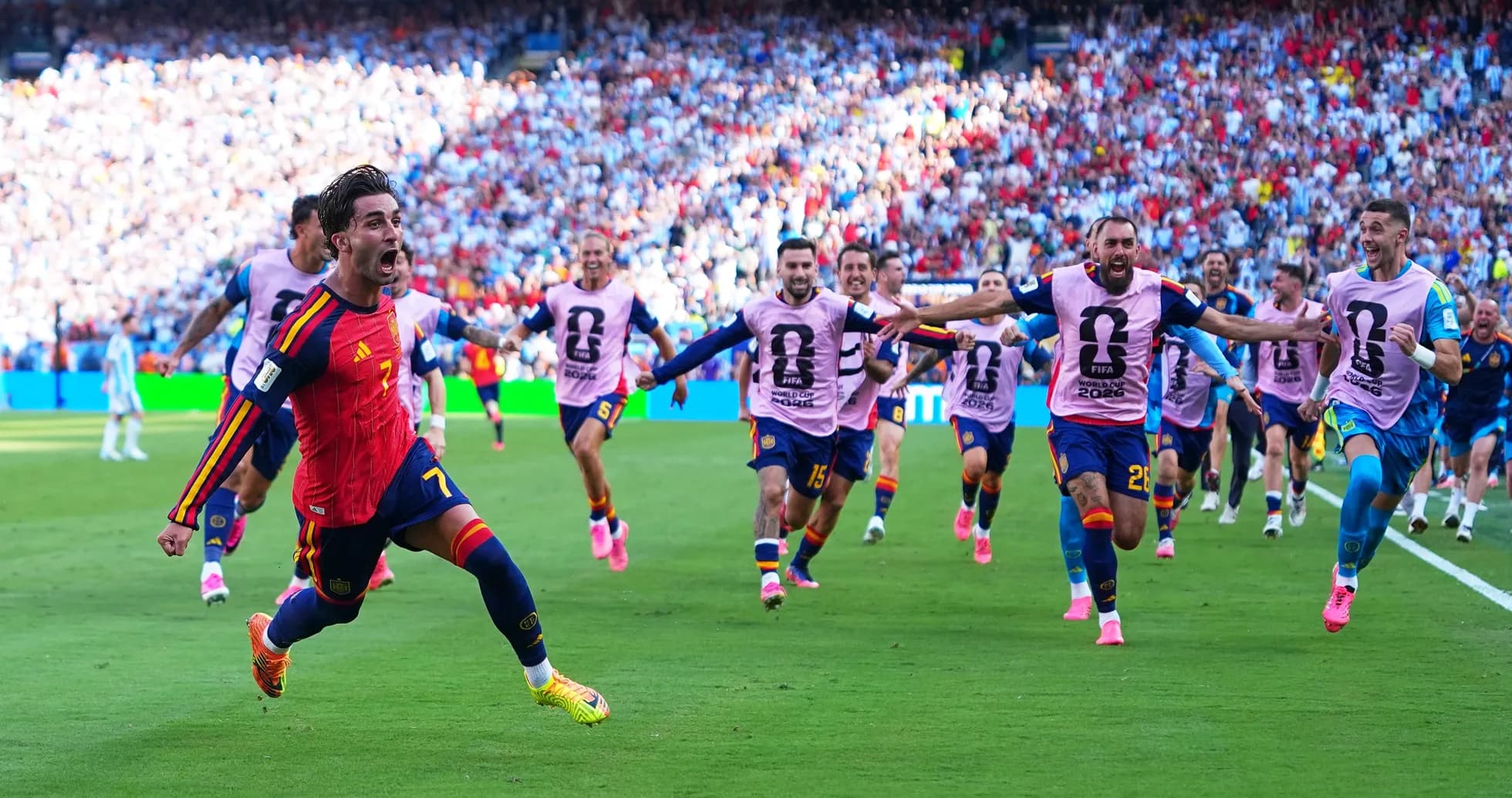
The decisive attacking sequence for Canada came after another substitution: at 76', Cyle Larin (IN) came on for Tani Oluwaseyi (OUT). Larin’s profile as a penalty-box reference point immediately altered the dynamic. At 78', the equaliser encapsulated Marsch’s adjustment: Promise David, now a mobile support striker, provided the assist, and Larin finished. It was a classic “super-sub” impact, but more importantly, it validated the shift toward a front line built around a true target forward plus a runner.
On the Bosnia & Herzegovina side, the 84' change of Dženis Burnić (IN) for Kolašinac (OUT) suggested a late attempt to reinforce midfield control and protect the draw, potentially moving Dedić or another defender to adjust the back line. Canada’s final substitution, Jonathan Osorio (IN) for Stephen Eustaquio (OUT) at 90', added a more advanced, late-arriving midfielder in the hope of snatching a winner, but the structural dominance did not translate into a second goal.
Goalkeeping and Statistical Overview
In goal, Maxime Crépeau (Canada) made 2 saves. Given Bosnia & Herzegovina’s three shots on target and xG of 0.98, this indicates that one of the on-target efforts resulted in the goal, while the others were dealt with. The goals prevented figure of -0.26 suggests that the conceded chance was slightly less difficult than an average goal, statistically speaking. At the other end, Nikola Vasilj (Bosnia & Herzegovina) made 1 save despite facing 4 shots on target and an xG of 1.25 from Canada, a profile consistent with Canada creating one high-quality chance (the Larin goal) plus several lower-quality efforts that were blocked or off target.
Statistically, Canada’s 61% possession, 415 passes (310 accurate, 75%), and 13 shots to Bosnia & Herzegovina’s eight underscore their territorial and creative superiority. The 9-4 corner count and 10 shots inside the box highlight sustained pressure in and around the area. However, Bosnia & Herzegovina’s 20 fouls and three yellow cards, compared to Canada’s 10 fouls and two yellows, show how effectively the visitors disrupted rhythm and turned the match into a stop-start contest.
The xG balance — 1.25 for Canada versus 0.98 for Bosnia & Herzegovina — aligns closely with the 1-1 scoreline, suggesting a broadly fair outcome. Canada’s negative goals prevented figure (-0.26) and Bosnia & Herzegovina’s identical -0.26 indicate that neither goalkeeper significantly overperformed relative to shot quality; the finishing and shot selection largely dictated the result.
Tactically, Canada leave BMO Field with evidence that their possession structure and bench depth can generate sustained pressure, but also with a warning about transitional defence and the need to convert territorial dominance into clearer chances. Bosnia & Herzegovina, meanwhile, showed that a disciplined, compact 4-4-2, underpinned by aggressive duelling and selective vertical attacks, can frustrate a more expansive side and extract a valuable group-stage point.