De Laurentiis on Conte's Return: Italy's Football Needs Order
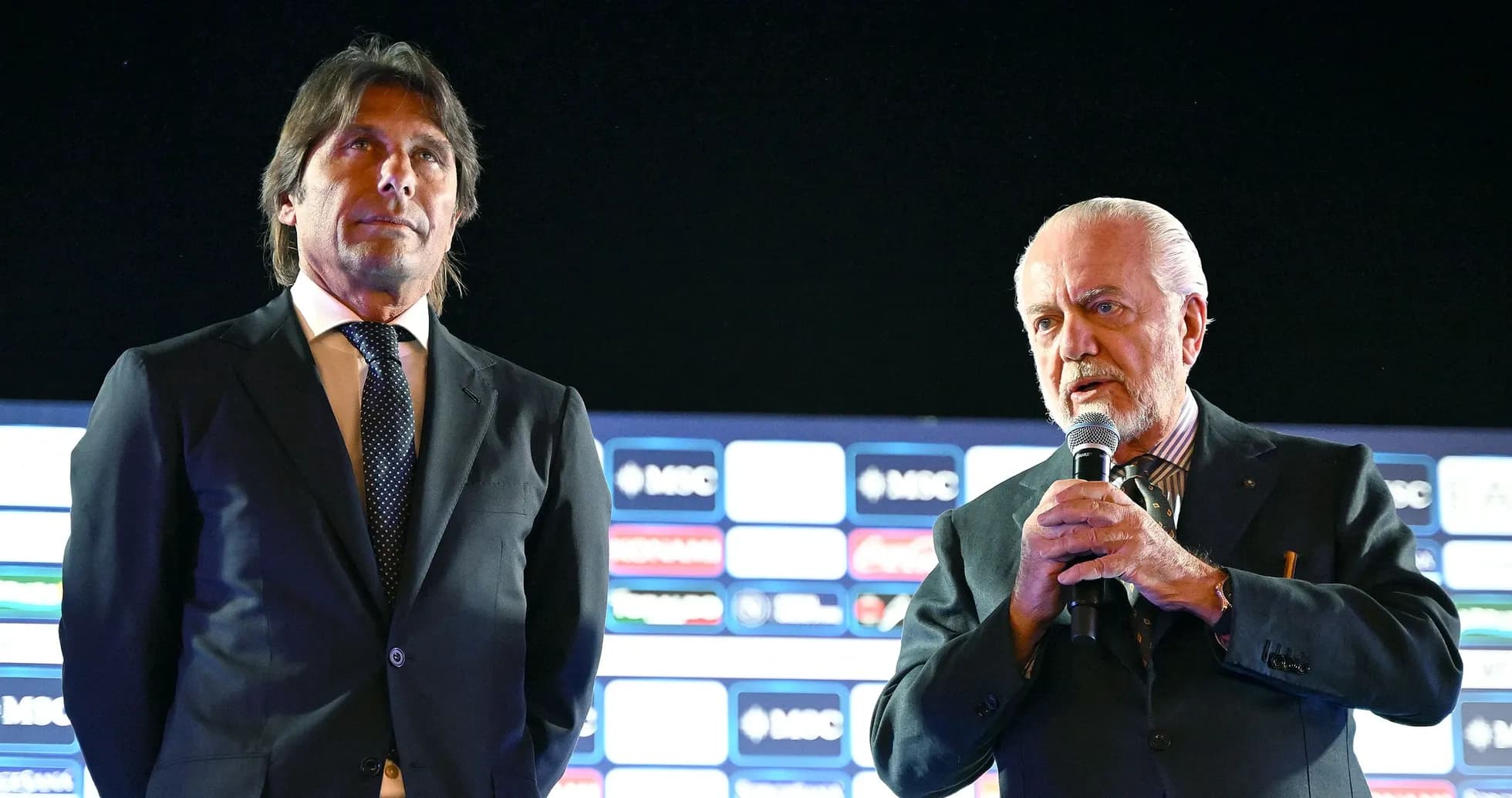
Antonio Conte could return to the Azzurri dugout – but only, Aurelio De Laurentiis insists, if Italian football finally gets its house in order.
The Napoli president has made it clear he would not stand in the way should the national team come calling for his Scudetto-winning coach. Yet in the same breath, he delivered a stinging verdict on the Italian Football Federation (FIGC), describing the current structure as so chaotic that Conte, in his view, would think twice before accepting.
The debate has erupted in the aftermath of Italy’s latest World Cup disaster. Gennaro Gattuso walked away after a play-off final defeat to Bosnia-Herzegovina, a result that confirmed a third straight absence from the sport’s biggest stage in 2018, 2022 and now 2026. For a four-time world champion, it is more than a setback. It is an identity crisis.
Conte Back in the Frame
The vacancy at the top of the Azzurri has inevitably dragged Conte’s name back into the spotlight.
He knows the job, and the job knows him. Conte first took charge in 2014 after leaving Juventus, and in two years he rebuilt a fractured side into a snarling, competitive unit. Across 25 matches, he delivered 14 wins and only five defeats, bowing out after that agonising Euro 2016 quarter-final loss to Germany on penalties.
His club career since then has only burnished his reputation. A Premier League title with Chelsea. A Serie A crown with Inter. Then the revival of Napoli, driven all the way to the Scudetto last season. If Italian football wants a hard-edged reformer in the technical area, the argument runs, Conte is the obvious candidate.
De Laurentiis did not dispute that. Speaking to CalcioNapoli24, he made his position plain: if Conte is formally approached, Napoli will not block him.
“Head of Something Completely Disorganised”
Then came the caveat.
De Laurentiis did not spare the federation. He questioned whether there is, at present, anyone credible enough in the FIGC hierarchy to convince a coach of Conte’s stature to take the plunge.
He painted a picture of a landscape riddled with confusion, lacking what he called a “serious interlocutor”. In his view, Conte is too astute to accept the role while the structure above him remains, as he put it, “completely disorganised”. The implication is sharp: the problem is not the bench, it is the boardroom.
The pressure on the FIGC has been building for months, but the defeat to Bosnia-Herzegovina snapped whatever patience remained. Italy’s qualification campaign lurched from one failed solution to another. Luciano Spalletti started the journey; Gattuso was parachuted in late, tasked with rescuing a sinking project.
Gattuso’s numbers on paper were not disastrous – six wins from eight matches – yet the two defeats, to Norway in the final group game and then to Bosnia-Herzegovina in the play-off, crushed any sense of progress and ultimately his tenure.
The fallout was immediate and brutal. FIGC president Gabriele Gravina resigned. Gianluigi Buffon, serving as delegation chief, followed him out. The sense of a vacuum at the top has only deepened the crisis.
Power, Money and a “Cinderella” League
De Laurentiis has not limited himself to criticism. He has a blueprint in mind.
He has thrown his support behind Giovanni Malagò, the current CONI president, as the man to lead a reset. In De Laurentiis’ eyes, Malagò should first act as commissioner and then move into the FIGC presidency, driving the reforms he believes are essential.
At the heart of his anger lies what he sees as a warped balance of power. Serie A, he argues, bankrolls the system but holds only a marginal voice within it.
“Italian football is Serie A which is considered like a Cinderella,” he said, highlighting that the top flight controls just 18% of the federation’s voting weight, while amateurs and players hold the majority. For De Laurentiis, this is “an absurdity” given that without Serie A’s money – around €130 million a year by his calculation – the federation would not function.
The message is blunt: those who pay the bills want a far greater say in how the game is run.
A Job Too Big to Refuse – Or Too Broken to Touch?
Somewhere in the middle of this storm sits the Italy job, vacant and exposed.
Conte’s name will not go away. His previous tenure, his track record in club football, his combative personality – all of it fits the profile of a coach who could drag a wounded giant back to the elite. Yet the question De Laurentiis poses cuts deeper than a simple yes or no.
Why would a manager of Conte’s calibre step into a role tethered to a federation he views as unstable? And if the FIGC cannot convince someone like him, what does that say about the direction of Italian football?
The Azzurri bench is open. The country is restless. The federation stands at a crossroads.
Whether Conte chooses to walk back through that door may depend less on tactics and formations, and far more on whether Italy finally finds the strong, coherent leadership it has been missing for far too long.