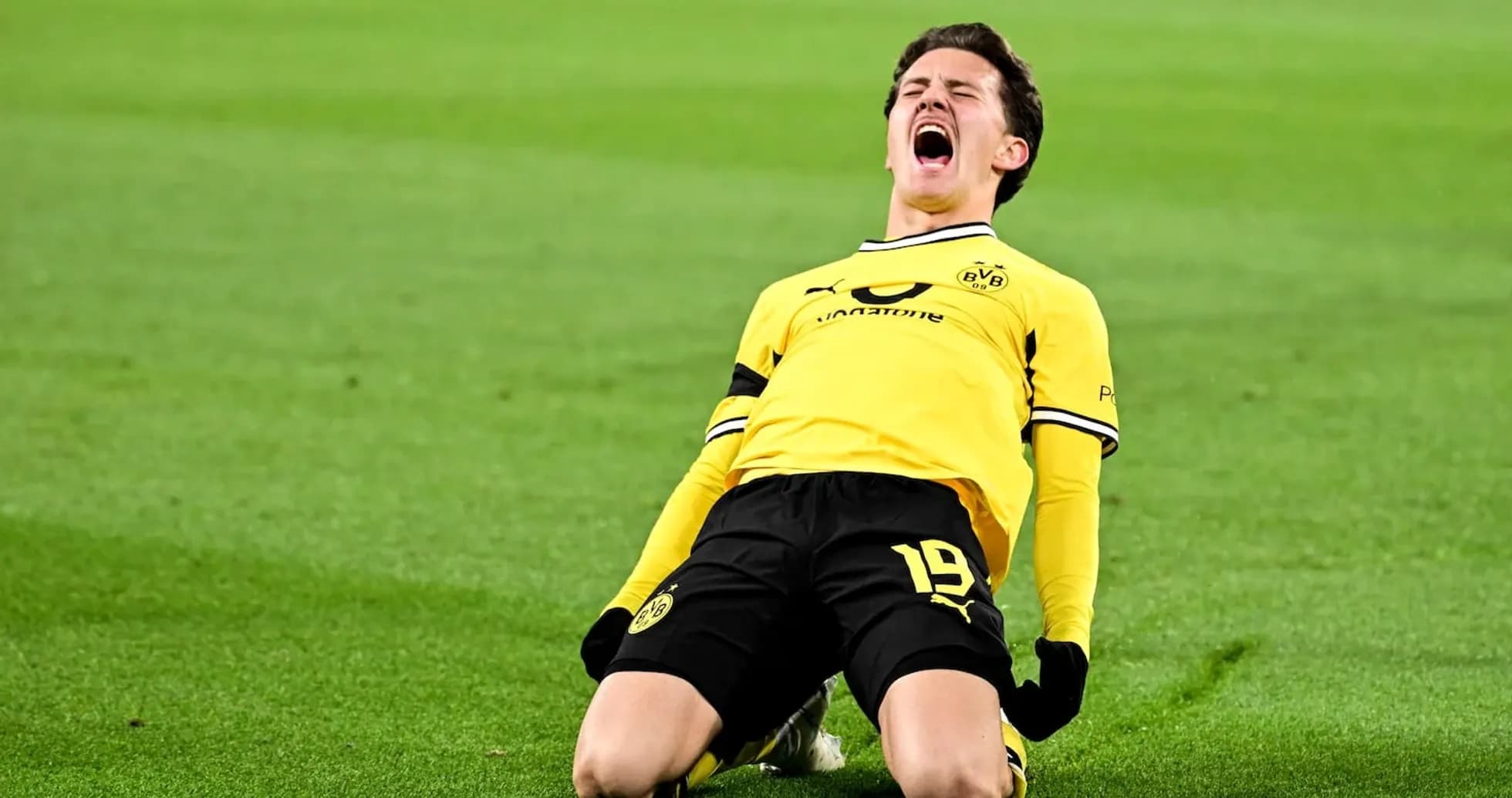
Dortmund Triumphs Over Betis in UEFA Champions League Clash
Under the lights of Signal Iduna Park, this UEFA Champions League League Stage clash felt less like a routine group fixture and more like a dress rehearsal for knockout football. Borussia Dortmund’s 2–1 win over Real Betis did more than tilt a finely balanced mini-table; it showcased two distinct footballing identities colliding and, ultimately, the power of a system built around a ruthless centre-forward.
Heading into this game, both sides were locked on 9 points, each with a goal difference of 2. Dortmund had 7 goals for and 5 against overall, while Betis arrived with 8 scored and 6 conceded. Both were on course for promotion to the Champions League play-offs, but the subtext was clear: this was a duel for positioning, prestige, and psychological edge in a league stage where margins are thin.
Niko Kovac doubled down on Dortmund’s European blueprint, rolling out the now-familiar 3-4-2-1. Gregor Kobel anchored a back three of Waldemar Anton, Nico Schlotterbeck and Ramy Bensebaini, with Julian Ryerson and Davy Svensson stretching the width as wing-backs. In central midfield, Joey Veerman and Felix Nmecha formed the pivot, tasked with both progression and protection. Ahead of them, J. Bellingham and Fabio Silva floated as dual tens, feeding the competition’s in-form spearhead: Serhou Guirassy.
Across from them, Manuel Pellegrini kept faith with Real Betis’ 4-2-3-1 that has underpinned their strong continental run. Arnau Valles started in goal behind a back four of Aitor Ortiz, Diego Llorente, Natan and Victor Gomez. F. Bernal and Dani Ceballos sat as the double pivot, with an attacking trio of Antony, Nelson Deossa and Abde Ezzalzouli supporting Troy Parrott up top. It was a structure built for controlled possession and rapid wide combinations, but one that would be severely tested by Dortmund’s verticality and the noise of Dortmund’s home.
The absences only heightened the tactical tension. Dortmund were without Emre Can, Giannis Konstantelias and Jefferson Lerma, all missing through injury. That stripped Kovac of a natural holding midfielder and a physical enforcer, forcing Veerman and Nmecha to share defensive responsibility and making Dortmund more reliant on collective pressing rather than a single destroyer. For Betis, the absence of Alvaro Fidalgo (illness), Junior Firpo, C. Hernandez and I. Losada trimmed Pellegrini’s rotation options, particularly in defensive depth and left-sided balance. Over 90 minutes in a hostile environment, that lack of fresh legs at full-back and in midfield would matter.
Dortmund’s seasonal profile framed the contest. At home in this campaign, they had scored 5 goals in 2 matches, an average of 2.5, while conceding 3 at 1.5 per game. They had yet to keep a clean sheet in the competition, but crucially had never failed to score at Signal Iduna Park. Betis, meanwhile, travelled well: 4 away goals in 2 games, an average of 2.0, but with 4 conceded at the same 2.0 rate. Both sides came in with three wins from four overall, yet their strengths were mirror images: Dortmund’s attacking relentlessness against Betis’ capacity to trade blows away from home.
In that context, Guirassy was always going to be the central figure. With 4 goals in 4 appearances and a 7.74 average rating, he has been one of the standout attackers in this Champions League season. Fifteen shots, seven on target, and a penalty already converted underline a profile of a forward who doesn’t just finish moves but constantly tests defences. He had also won a penalty in the competition, showing how his movement and physical presence unsettle back lines.
Behind him, the creative axis of Bellingham and Silva offered Dortmund the ability to overload half-spaces. Bellingham’s role as a roaming connector, dropping between lines and drifting wide, allowed Ryerson to push high on the right, while Silva’s subtle movements inside created pockets for Veerman’s passing to exploit. With Dortmund’s preferred 3-4-2-1 having been used in 3 of their 4 European matches, the patterns were clearly ingrained: quick vertical passes into Guirassy’s feet, second balls attacked by the tens, and wing-backs arriving late to sustain pressure.
Betis’ structure offered both promise and peril against that. The double pivot of Bernal and Ceballos had to walk a tightrope: step out to press Veerman and Nmecha, and they risked leaving channels for Bellingham and Silva; sit too deep, and Dortmund would dictate tempo from midfield. Out wide, Antony and Ezzalzouli were Betis’ main outlets, but their defensive work against Ryerson and Svensson was just as critical. With Betis conceding 2.0 goals per game on their travels in this campaign, the flanks were always going to be stress points.
Discipline added another layer. Dortmund’s yellow cards this season have come in waves, with 28.57% shown between 31–45 minutes and another 28.57% from 76–90. That tendency to spike in intensity and aggression either side of the interval and late on dovetailed dangerously with Betis’ own card profile, where 25.00% of their yellows arrive between 46–60, 25.00% from 61–75, and another 25.00% from 76–90. It painted a picture of a match that would grow increasingly fractious as fatigue set in, particularly in midfield duels and transition fouls.
The “Hunter vs Shield” battle was embodied by Guirassy against a Betis defence that had conceded 4 times away. Diego Llorente and Natan were asked to hold a high line against an attacker who thrives on running channels and attacking crosses. Guirassy’s 21 duels overall, with 10 won, and his two successful shot blocks in the competition underline not only his physicality but his work rate in the press and on set pieces. Every long ball from Schlotterbeck or Veerman became a test of Betis’ ability to win first and second contacts.
In the “Engine Room,” Veerman and Nmecha squared off against Bernal and Ceballos. Veerman’s passing range was crucial in bypassing Betis’ first press, while Nmecha’s mobility helped cover the spaces left when Ryerson and Svensson surged forward. For Betis, Ceballos’ task was twofold: dictate tempo when they had the ball, and plug gaps when Dortmund countered. Deossa’s positioning as the central attacking midfielder was meant to exploit any looseness in Dortmund’s double pivot, but without a true holding player like Can, Dortmund compensated through compactness and aggressive stepping from their back three.
Ultimately, the numbers hinted at what unfolded: a high-intensity, chance-rich contest where Dortmund’s attacking ceiling at home edged Betis’ adventurous but porous away profile. Overall this campaign, Dortmund’s averages of 1.8 goals scored and 1.3 conceded, against Betis’ 2.0 scored and 1.5 conceded, pointed toward a narrow, multi-goal margin rather than a cagey stalemate.
The 2–1 scoreline felt like the logical intersection of those trends. Dortmund’s system, honed around Guirassy’s penalty-box presence and the fluidity of Bellingham and Silva, proved just sharp enough to outstrip Betis’ technical, possession-based 4-2-3-1. In a league stage where both sides still look destined for the play-offs, this night in Dortmund may be remembered as the moment Kovac’s evolving 3-4-2-1 announced itself as a genuine knockout weapon on Europe’s biggest stage.