Galatasaray vs Stuttgart: UEFA Champions League Tactical Duel
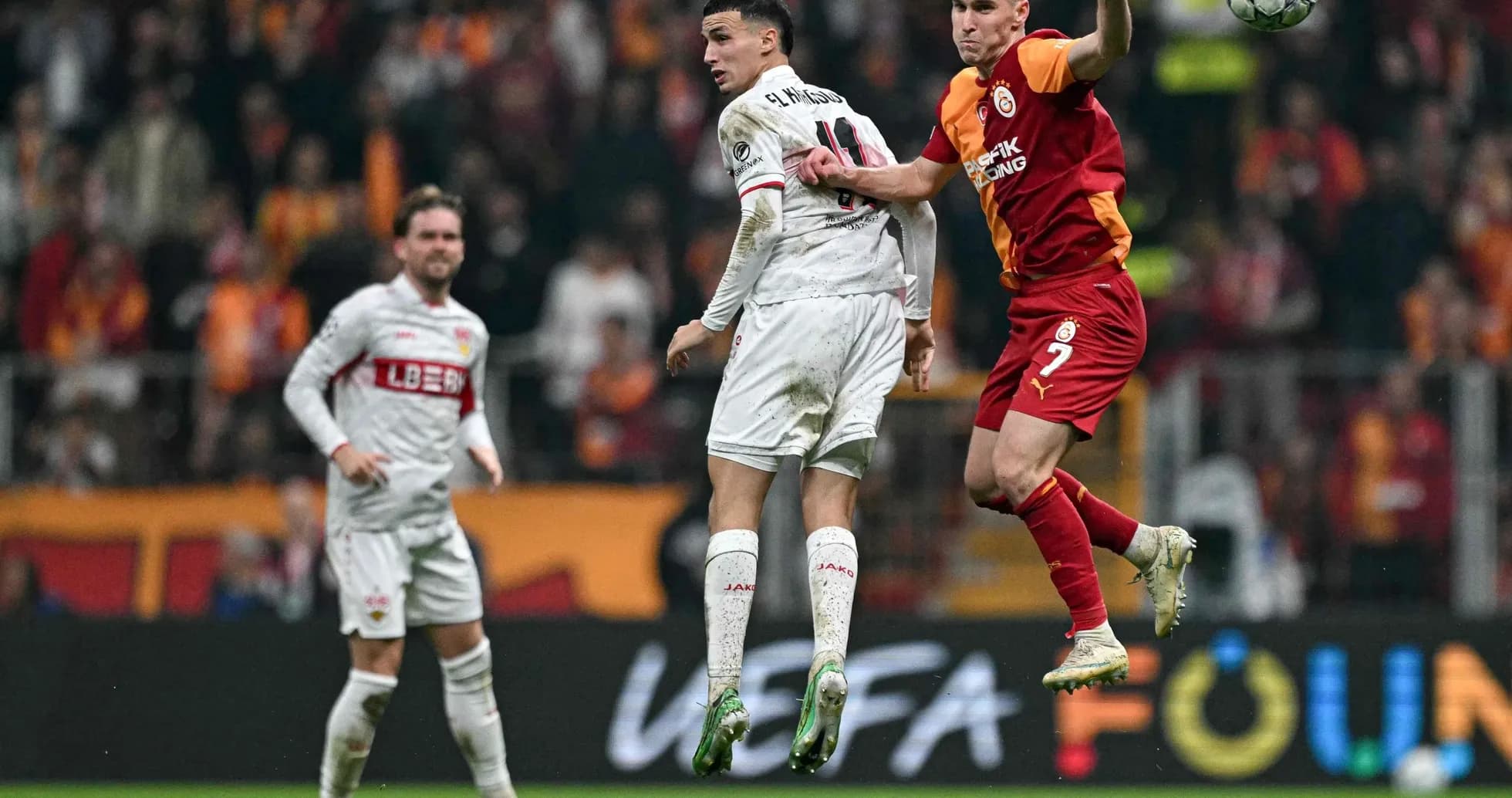
Under the floodlights of Rams Park, this League Stage - 4 meeting in the UEFA Champions League brings together two sides whose seasons have taken different shapes but now intersect in a high‑stakes tactical duel. Galatasaray arrive ranked 18th in the overall table with 6 points and a goal difference of -1, built from 8 goals scored and 9 conceded in total over 4 matches. VfB Stuttgart sit higher in 14th, with 7 points and a goal difference of 3, their 7 goals for and 4 against underlining a more balanced, controlled campaign.
I. The Big Picture – Styles Taking Shape
Heading into this game, Galatasaray’s European identity is clear: front‑foot, high‑variance football. They have won 2 and lost 2 of their 4 fixtures, with no draws, and their attacking output is robust – 8 goals in total at an average of 2.0 per match. At home, they score 1.5 on average but concede 2.0, a reminder that Rams Park amplifies both their power and their risk.
Their goal timing tells a story of early ambushes and sporadic surges. Half of Galatasaray’s total goals (3 out of 8, or 50.00%) arrive between 0‑15 minutes, with further strikes spread across 16‑30, 31‑45 and 61‑75. This is a side that can hit you before you’ve settled, then re‑accelerate just before and just after half‑time.
Defensively, though, the numbers are stark. They concede 2.3 goals per match in total, with a glaring soft spot between 46‑60 minutes, where 4 of their 9 conceded goals (36.36%) arrive. Another 18.18% of their concessions fall in each of the 0‑15, 31‑45 and 61‑75 windows. The pattern is of a team that starts emotionally, sometimes loses control after the interval, and lives with chaos.
Stuttgart are almost the mirror opposite: 2 wins, 1 draw, 1 loss from 4, and a total defensive average of just 1.0 goal conceded per match. At home and away they allow the same 1.0 on average, and their 7 goals scored come at 1.8 per match in total – less explosive than Galatasaray but more measured. On their travels, they score 1.5 and concede 1.0, a profile of a side comfortable managing away nights.
Their attacking timing is more methodical. Half of their total goals (3, or 50.00%) fall in the 16‑30 window, with another 33.33% between 31‑45 and a late 16.67% in 76‑90. Stuttgart grow into games, bending them to their rhythm rather than tearing them open from the start.
II. Tactical Voids – Who Is Missing and What It Means
Both squads arrive with notable absences that shape the tactical board. For Galatasaray, a cluster of players – E. Aydin, K. Ayhan, C. Guner, K. Karatas, A. Unyay and A. Yilmaz – are all listed as missing, largely “Off the roster.” While none feature in the current Champions League core, this restricts Okan Buruk’s depth options, especially in rotation-heavy positions.
Stuttgart’s missing list bites deeper into the spine. J. Diehl, L. Sauer, A. Stiller, J. Vagnoman and D. Zagadou are all out, several with muscle injuries and Stiller with a groin issue, plus S. Drljaca and L. Stergiou off the roster. The absence of Stiller in particular deprives Sebastian Hoeneb of a natural controller in midfield, while Zagadou and Vagnoman would have bolstered defensive height and athleticism. It is no coincidence Stuttgart lean into a back three here, using structure to compensate for missing individuals.
Disciplinary trends also colour the risk map. Galatasaray’s yellow cards cluster late: 44.44% of their cautions arrive between 76‑90 minutes, with another 22.22% between 61‑75 and single cards earlier. This is a team that becomes more combustible as fatigue and pressure build. Stuttgart spread their yellows more evenly, but 22.22% fall in each of 0‑15, 16‑30 and 76‑90, underlining an aggressive start and a combative finish.
III. Key Matchups – Hunter vs Shield, Engine Room Battles
The “Hunter vs Shield” headline writes itself. Stuttgart’s E. Demirović comes into this tie as one of the competition’s most efficient forwards: 4 total goals from just 5 shots, with 4 on target, across 163 minutes. His rating of 7.54 reflects a ruthless penalty‑box presence. He now faces a Galatasaray defence that concedes 2.5 goals on their travels but, crucially here, 2.0 at home, and has already been breached 9 times overall. The critical intersection is that 46‑60 window: Stuttgart’s scoring is quieter then, but Galatasaray’s defensive collapse after half‑time offers Demirović and strike partner D. Undav an obvious target zone if Hoeneb pushes his team higher immediately after the interval.
On the other side, Galatasaray’s creative and scoring fulcrum is A. Batrakov. The 20‑year‑old midfielder is ranked among the league’s top performers with 4 total goals from 5 shots, all 5 on target, and a 7.62 rating. He has also supplied 108 passes with 81% accuracy and 4 key passes, plus 3 tackles and 3 interceptions – a complete modern No.10 profile. His duel is not just with Stuttgart’s back line of R. Hendriks, J. Chabot and M. Mittelstädt, but with the screening work of A. Karazor and G. Prömel in the 3‑4‑1‑2.
The “Engine Room” contest will likely decide territory. L. Torreira and M. Lemina form a double pivot in Galatasaray’s 4‑2‑3‑1, tasked with both protecting D. Sánchez and A. Bardakcı and feeding the band of three – Y. Akgün, B. Yılmaz and Batrakov – behind V. Osimhen. Against them, Karazor’s positional discipline and Prömel’s box‑to‑box range must prevent central overloads. If Torreira and Lemina can pin Stuttgart’s midfield deeper, Stuttgart’s wing‑backs and wide midfielders – C. Führich and J. Leweling – may be forced into a back‑five, isolating Demirović and Undav.
Out wide, I. Jakobs and R. Sallai provide Galatasaray with aggressive full‑back thrusts. Their forward surges will test Stuttgart’s defensive structure on the flanks, especially with El Khannouss operating between the lines. Any turnover in those channels could spring Stuttgart’s transitions into that vulnerable 0‑15 window where Galatasaray have already conceded 2 of their 9 goals (18.18%).
IV. Statistical Prognosis – Where the Game Tilts
Both sides have yet to take or miss a penalty in this campaign; there is no spot‑kick edge here. Instead, the numbers suggest a game shaped by tempo and timing rather than set‑piece variance.
Galatasaray’s total scoring average of 2.0 and their refusal to draw so far hint at another decisive, open contest. Their clean sheet count – just 1 in total – contrasts with Stuttgart’s 1 clean sheet and more stable concession pattern. Stuttgart’s total defensive average of 1.0 goals against, combined with their ability to manage away matches at 1.5 scored and 1.0 conceded, points to a side capable of surviving the early storm in Istanbul.
The key statistical intersection is Galatasaray’s early‑goal surge versus Stuttgart’s early defensive fragility: 40.00% of Stuttgart’s conceded goals arrive in 0‑15, and another 20.00% between 16‑30. That aligns perfectly with Galatasaray’s 50.00% scoring share in 0‑15 and additional strikes before the break. If Galatasaray score early, the game could tilt into the high‑variance chaos they enjoy. If Stuttgart ride out that spell, their controlled build‑up between 16‑45 and late push in 76‑90 – where 16.67% of their goals arrive – could gradually suffocate the hosts.
On balance, the underlying metrics suggest a narrow, tactically tense encounter rather than a rout. Galatasaray’s attacking firepower at home, led by Batrakov and supported by Osimhen, has the tools to breach Stuttgart. But Stuttgart’s structural discipline, Demirović’s efficiency and a defensive record of just 4 goals conceded in total give them a slight statistical edge in resilience. Expect momentum swings around half‑time and in the final quarter‑hour, where card trends and fatigue may decide which of these contrasting European identities prevails.