Iran and New Zealand Battle to a 2-2 Draw in World Cup Opener
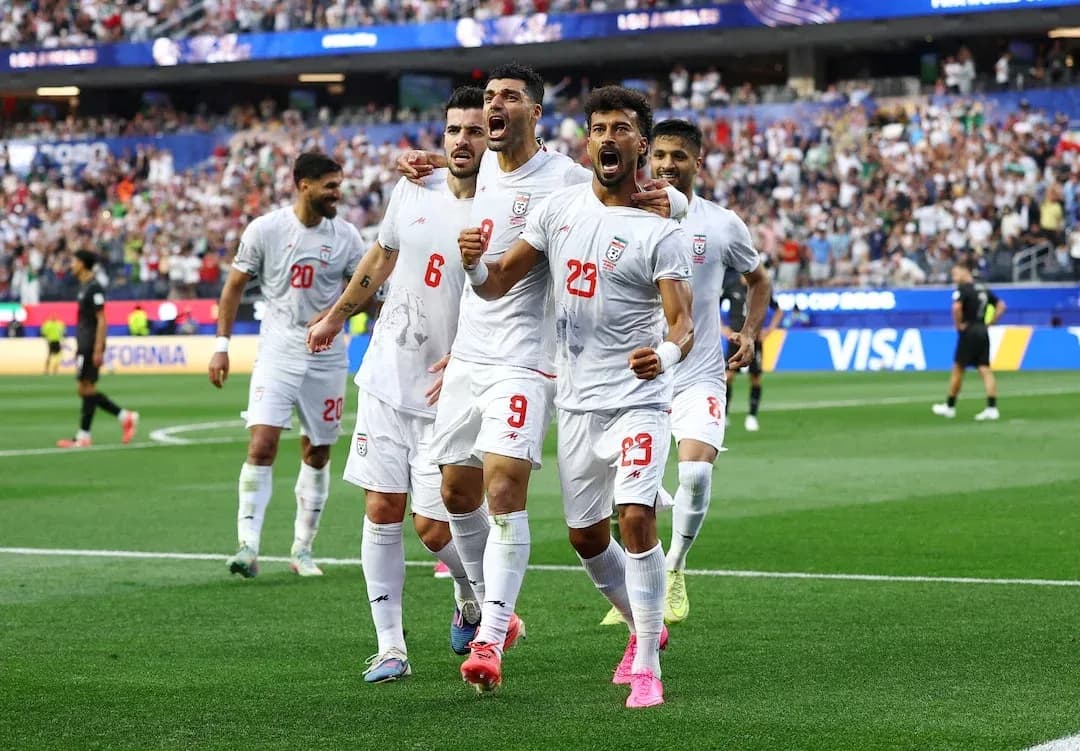
Under the SoFi Stadium lights, Iran and New Zealand opened their World Cup journeys with a 2-2 draw that felt less like a cautious group-stage sparring session and more like a statement of intent from two sides determined not to be passengers in Group G. Following this result, both teams sit level on 1 point, with identical overall records: 1 draw from 1 match, 2 goals scored and 2 conceded, and a goal difference of 0. The symmetry on the table mirrors what unfolded on the pitch – but beneath that balance, the tactical identities of the two squads are already sharply defined.
Iran’s season snapshot is clear: at home they have played 1 match, drawn 1, scored 2.0 goals on average and conceded 2.0. There is no clean sheet yet, but there is attacking ambition. New Zealand’s story is the away mirror image: on their travels they have played 1, drawn 1, with an away average of 2.0 goals scored and 2.0 conceded. Both sides have failed to keep a clean sheet overall, and neither has missed from the spot – in fact, there have been no penalties taken at all.
Tactical Setup
Tactically, Amir Ghalenoei’s Iran lined up in a classic 4-4-2, but the structure was more fluid than the numbers suggest. Alireza Beiranvand anchored the side from goal, protected by a back four of Milad Mohammadi, Ali Nemati, Shoja Khalilzadeh and the outstanding Ramin Rezaeian. In front of them, a narrow but technically adept midfield quartet – Aria Yousefi, Saeid Ezatolahi, Saman Ghoddos and Mohammad Mohebi – worked to connect the lines, while Shahriar Moghanlou and Mehdi Taremi formed a front two built on movement and combination play.
New Zealand, by contrast, arrived with a modern 4-2-3-1 that leaned heavily on structure and verticality. Max Crocombe started in goal, with Liberato Cacace, Michael Boxall, Finn Surman and Tim Payne forming a disciplined back four. Joe Bell and Marko Stamenic sat as the double pivot, screening the defence and launching transitions. Ahead of them, an attacking trio of Elijah Just, Sarpreet Singh and Callum McCowatt buzzed behind lone striker Chris Wood, who served as both target man and facilitator.
Disciplinary Profile
The disciplinary ledger is already tilting Iran’s way. Their season card profile shows a single yellow overall, and the distribution is revealing: 100.00% of their yellow cards have come in the 76-90 minute window, a clear late-game surge of risk as they chase or protect results. Ehsan Hajsafi embodies that edge. Coming from the bench, he logged 25 minutes, won 2 of 3 duels and committed 1 foul, earning 1 yellow card. He is simultaneously Iran’s leading yellow-card holder and, intriguingly, appears in the red-card list as well, underlining how closely he plays to the disciplinary line. New Zealand, by contrast, have yet to pick up a card of any colour, suggesting a controlled, perhaps slightly conservative defensive approach.
Individual Performances
Within that framework, individual performances have already begun to shape the narrative of this group. Elijah Just has exploded into the tournament as New Zealand’s headline act. In total this campaign he has scored 2 goals from 2 shots, both on target, with a perfect finishing return that has him sitting among the top scorers. Across 90 minutes, he completed 26 passes at 84% accuracy, supplied 1 key pass, attempted 2 dribbles with 1 success, and contributed defensively with 1 tackle and 1 interception. He is not just a finisher, but a wide creator who tracks back and competes – 11 duels contested, 5 won – the kind of all-phase midfielder who stretches defences and stabilises transitions.
If Just is New Zealand’s cutting edge, Chris Wood is the fulcrum. Without scoring, he has already become one of the tournament’s top assist providers, with 2 assists from 4 key passes. His 16 passes at 87% accuracy underline how cleanly he links play, while 3 shots (2 on target) show he remains a scoring threat. His 8 duels, with 2 won, reflect the physical battles he engages in to hold the ball up and create space for Just, Singh and McCowatt. For Iran, containing Wood is not just about aerial duels; it is about denying him the time to turn and slide those vertical passes into the channels.
On the Iranian side, the early talisman is, remarkably, a right-back. Ramin Rezaeian has delivered a complete two-way performance that places him among the standout players of the World Cup so far. Across his 90 minutes, he has 1 goal and 1 assist in total, from 1 shot on target. With 41 passes at 73% accuracy and 3 key passes, he is effectively a deep-lying playmaker from the flank, combining with Ghoddos and Mohebi to overload the right half-space. Defensively, he has been just as sharp: 3 tackles and 2 interceptions, plus 7 duels won out of 8, paint the picture of a defender who dominates his corridor. His dribble success – 1 attempt, 1 success – hints at the confidence with which he steps into the final third.
Key Matchups
This sets up one of the most intriguing “Hunter vs Shield” dynamics of the group. New Zealand’s primary offensive hunter is Elijah Just, drifting inside from the left or right, while Iran’s shield on that side is Rezaeian, who must simultaneously defend and drive forward. Every time Just receives between the lines, he will be probing the space behind Rezaeian; every time Rezaeian surges forward, he will be testing Just’s willingness to track back. The duel between those two will go a long way to deciding whether Iran can control the flanks or whether New Zealand can turn those wide channels into avenues for Wood’s late-box arrivals.
In the “Engine Room,” the confrontation is more subtle but just as decisive. For Iran, Saeid Ezatolahi and Saman Ghoddos are tasked with building play and screening transitions. They sit in front of Nemati and Khalilzadeh, recycling possession and looking for early balls into Taremi and Moghanlou. For New Zealand, Joe Bell and Marko Stamenic are the enforcers: Bell as the metronome, Stamenic as the breaker of lines and duels. Their job is to disrupt Ghoddos’s rhythm and prevent Iran from establishing sustained pressure, especially in the central channels where Taremi likes to drop and combine.
Statistical Overview
Statistically, both sides project as open, ambitious outfits. Iran’s overall average of 2.0 goals for and 2.0 against, combined with New Zealand’s identical 2.0/2.0 away average, suggests that neither side is built to grind out 1-0s at this stage; they are trading in high-event football. With no penalties awarded or missed so far, their attacking returns have come entirely from open play and structured combinations, rather than set-piece windfalls.
Defensively, the lack of clean sheets overall for both teams is a warning. Iran’s late yellow-card spike at 76-90 hints at matches that become stretched and emotional in the final quarter-hour. New Zealand’s clean disciplinary record suggests they may be better at staying within their structure, but conceding 2 goals on their travels underlines that their back four is still being stress-tested at this level.
From an Expected Goals perspective – even without explicit xG numbers – the volume and quality of contributions from Just, Wood and Rezaeian imply that both sides are generating chances at a rate consistent with their scoring output. Iran’s full-back-driven creativity and two-striker system naturally produce cut-backs and second-ball opportunities; New Zealand’s 4-2-3-1, with Wood as a pivot and Just as a finisher, is designed to create high-value central chances.
The prognosis, then, is of a group in which these two will continue to be protagonists rather than passengers. Iran’s attacking verve, anchored by Rezaeian’s all-action presence and Taremi’s movement, will ensure they remain a threat to any defence. New Zealand’s combination of Wood’s playmaking and Just’s ruthless finishing gives them a cutting edge that belies their underdog status. If either side can tighten defensively – turning those 2.0 goals against averages into something leaner – they will not just survive Group G; they will shape it.