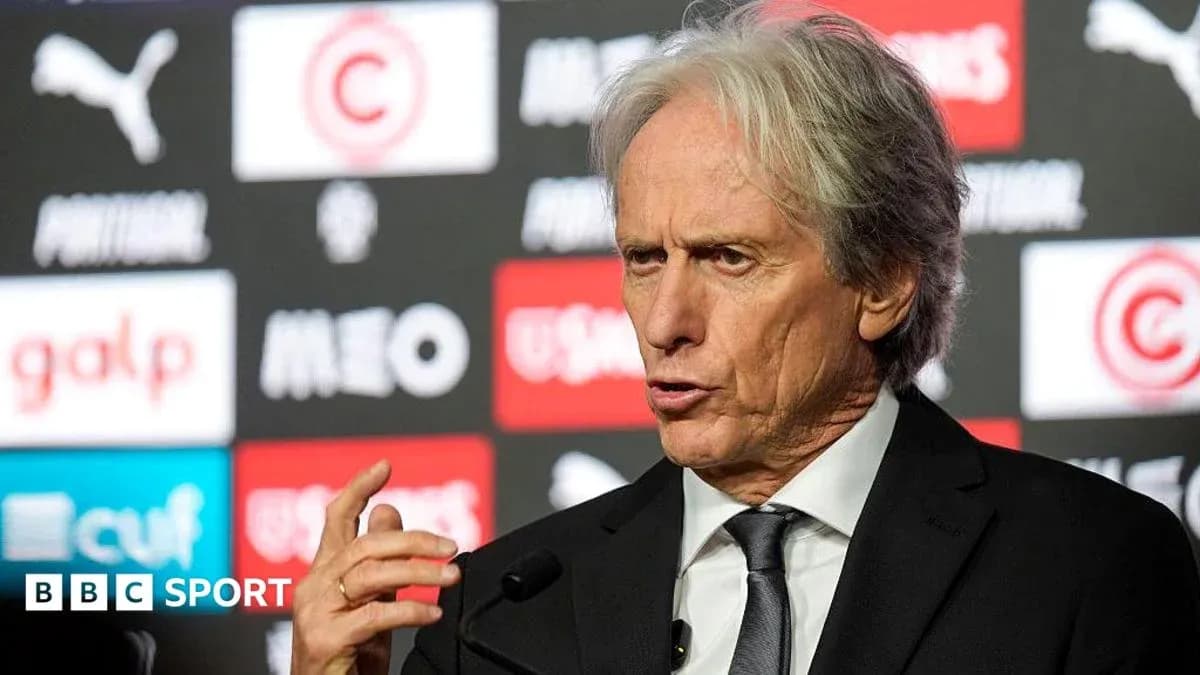
Jorge Jesus Takes Over Portugal National Team: Ronaldo's Future Uncertain
Portugal have turned to one of their most seasoned tacticians for the next World Cup cycle, handing Jorge Jesus a four-year deal that runs through to the 2030 tournament, which the country will co-host with Spain and Morocco.
The 71-year-old steps into the role in the wake of Portugal’s 1-0 defeat by Spain in the last 16 of this summer’s World Cup, a loss that closed the book on Roberto Martinez’s tenure. Martinez had already confirmed he would step down, ending a spell that began in January 2023 and never quite caught fire when it mattered most.
Now comes Jesus – combustible, meticulous, unapologetically demanding. A coach who has spent decades shaping teams in Portugal, Brazil and Saudi Arabia, and who walks into the job with one question looming over everything else.
Ronaldo still central to the plan
Ronaldo, 41, confirmed after Portugal’s elimination that this World Cup was his sixth and last. He stopped short of announcing a full retirement from international football, leaving a sliver of intrigue over his next steps with the national side.
Jesus, speaking on Friday, removed any doubt about how he views the captain.
For him, Ronaldo remains non‑negotiable.
The new coach called the five-time Ballon d'Or winner a “symbol of Portuguese football” and made it clear that as long as the forward is active and in the right condition, the national team will remain an option.
“As long as he's playing and is in a condition to be selected, I will pick him, within certain limits and under the conditions that I consider best for the national team,” Jesus said.
There has been no conversation between the two since Portugal’s exit, but Jesus is not expecting drama.
“I haven't spoken with [Ronaldo] yet. [He] is never going to be a problem for the national team. Not for the national team, nor for me,” he insisted, leaning on their shared past at Al Nassr. “I had great pleasure working with him this past year, [it's] easy to work with him.”
Their relationship is already proven. During Jesus’ one-year spell in Riyadh, the pair led Al Nassr to the Saudi Pro League title, adding another chapter to Ronaldo’s extraordinary late-career journey and reinforcing the coach’s reputation as a manager who can handle big personalities and bigger expectations.
Ronaldo’s club contract runs until 2027. Jesus’ mandate with Portugal runs to 2030. The overlap is obvious, and so is the temptation: one last dance on home soil at a World Cup co-hosted by Portugal.
A serial winner returns home
For the Portuguese federation, Jesus offers something familiar yet refreshed. He is one of the most decorated coaches in the country’s modern era, with a CV that carries weight in any dressing room.
At Benfica, his first spell brought three league titles in 2010, 2014 and 2015, alongside a brand of football that turned domestic dominance into an expectation rather than a hope. He then exported that intensity to Brazil, where his year at Flamengo in 2019 produced five major trophies, including the Brazilian title and the Copa Libertadores. Rio de Janeiro still remembers him as the outsider who arrived, conquered and left a standard that others have struggled to match.
His most recent statement came back in Saudi Arabia with Al Hilal, where he delivered a domestic treble in the 2023-24 season. Wherever he has gone, silverware has followed.
Now he inherits a Portugal side packed with talent but scarred by another early World Cup exit. The squad is deep, the generation still strong, yet the feeling lingers that this group has underachieved on the biggest stage since winning Euro 2016.
Jesus has four years to change that narrative.
A new cycle, a familiar edge
The first step comes quickly. His debut in the dugout will be Portugal’s Nations League opener in Group D against Wales on 24 September. It is not a gentle introduction, but then nothing about Jesus’ career has been gentle.
His teams press, argue, bite. They play with an edge that mirrors their coach on the touchline. That is precisely what many in Portugal feel has been missing in recent tournaments – not talent, but a certain ruthlessness when the stakes rise.
The World Cup in 2030 will arrive on home turf, shared with Spain and Morocco, and that alone raises the stakes of every decision from this point on. Who carries the armband? How long does Ronaldo stay in the picture? Which younger players are trusted to grow into leaders over the next four years?
Jesus has already answered one of those questions. As long as Cristiano Ronaldo is fit, playing and willing, the door to the national team stays open.
The rest of the rebuild starts now.