Jorge Jesus Takes Over as Portugal Coach After World Cup Disappointment
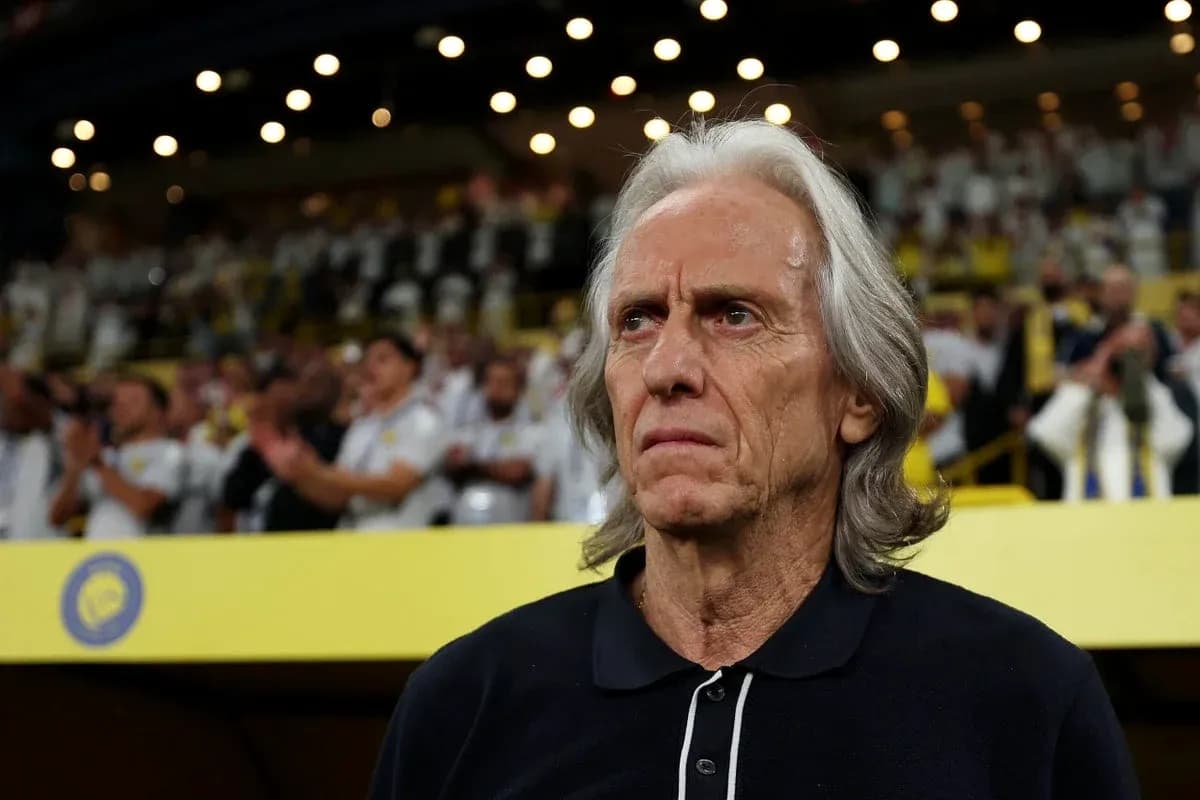
Jorge Jesus has been handed the Portugal job, stepping into one of the most scrutinised roles in international football after Roberto Martinez’s exit in the wake of another World Cup disappointment.
Martinez, appointed at the start of 2023, walked away following Portugal’s last-16 elimination to Spain on Monday. A project that began with optimism has ended with the same old question: how does a country this talented keep falling short on the biggest stage?
Portugal have not reached a World Cup semi-final since 2006. They have learned to live with that statistic; they have not learned to like it.
A serial winner with miles on the clock
Into that void comes Jesus, 71 years old and carrying a career that stretches across 36 years, two continents and almost every shade of pressure the game can offer.
He is no romantic appointment. He is a proven accumulator of trophies. Twenty-five of them, scattered across Portugal, Brazil and Saudi Arabia. Three league titles with Benfica, a Brazilian crown with Flamengo, Saudi Pro League triumphs with both Al Hilal and Al Nassr. Wherever he goes, the cabinet fills.
His club list reads like a tour of the Lusophone and Gulf football world: Benfica twice, Sporting CP, Flamengo, Fenerbahce, Al Hilal twice and, most recently, Al Nassr. The last three seasons have been spent in the Saudi Pro League, where the spotlight has grown hotter and the stakes higher with every marquee signing.
It was before joining Al Nassr last summer that Jesus offered a revealing glimpse into his mindset. Asked about taking over at the Riyadh club, where he would work with Cristiano Ronaldo, he said he “could not refuse the invitation” of the Portuguese legend. Ronaldo called. Jesus came. The hierarchy is clear.
At Al Nassr he delivered their first title in seven years, restoring a giant to the summit before departing at the end of the 2025-26 season. Ange Postecoglou has since taken that baton, but Jesus leaves behind the imprint of a coach who still knows how to win.
Portugal’s new era, without Ronaldo
Now he returns to the national stage at a moment of profound transition. Ronaldo, owner of a world-record 146 international goals in 233 appearances for Portugal, has already confirmed he will not play at another World Cup.
For two decades, every Portugal plan began with his name. For the next one, it will not.
The timing is brutal and fascinating. Portugal will co-host the 2030 World Cup alongside Spain and Morocco, with Uruguay, Argentina and Paraguay staging games at the start of the tournament. A home World Cup, shared but still emotionally theirs, looms on the horizon. The country will not accept another early exit on their own stage.
Yet this is not a broken football nation. Far from it. Portugal lifted the European Championship in 2016, claimed the Nations League in 2019 and added another Nations League title in 2025. They know what it is to win. They just have not translated that into a deep World Cup run since the days of Luis Figo and a young Ronaldo in 2006.
Jesus is being hired to close that gap: between a tournament team that can win continental titles and one that can go toe-to-toe with the elite in a World Cup semi-final or beyond.
The coach Brazil once courted
His reputation has long travelled beyond Portugal’s borders. In March 2025, The Athletic reported that Jesus was among the leading contenders to take over Brazil, mentioned in the same breath as Carlo Ancelotti. Ancelotti ultimately took that role after leaving Real Madrid in May, but the fact Jesus was in that conversation underlined how he is viewed at the top of the game: demanding, tactically sharp, battle-hardened.
This is not a coach learning on the job. This is a coach who has crossed the Lisbon divide in the most dramatic fashion, leaving Benfica in 2015 to join rivals Sporting CP. He has already lived through one of the most combustible moves in Portuguese club football and come out the other side still in demand.
He has also twice taken charge of Al Hilal, one of Asia’s superclubs, before making the switch to their Riyadh rivals Al Nassr. Derby lines do not frighten him. Nor do expectations.
A familiar face, a different challenge
The Portugal job, though, is different. At Benfica or Flamengo, a poor run brings anger, protests, banners. With the national team, it brings something deeper: a sense of a generation slipping away.
Jesus inherits a squad that no longer revolves around Ronaldo but still carries immense quality and depth. The question is not whether he can organise a team. It is whether he can reshape a footballing identity in time for 2030.
His track record suggests he will not tiptoe into the role. He has always coached with an edge, a visible intensity on the touchline, a willingness to make bold, sometimes divisive calls. That energy now moves from club dressing rooms to a national one that has known both unity and fracture in the Ronaldo era.
Portugal’s federation has chosen experience over novelty, steel over sentiment. They have turned to a man who has spent nearly four decades chasing trophies and rarely walking away empty-handed.
The World Cup will return to Portuguese soil in four years’ time. By then, the Ronaldo era will be memory, not reality. The stage will belong to a new generation — and to Jorge Jesus, tasked with proving that Portugal’s golden age did not end with one man’s farewell.